
KLM Royal Dutch Airlines Battles European Travel Chaos with Massive Long-Haul Expansion from Amsterdam to Bangkok and Nairobi: Latest Airline News
To combat severe airport disruptions and soaring passenger demand, KLM is heavily expanding wide-body operations from Amsterdam to Nairobi and Bangkok starting in May and June 2026.

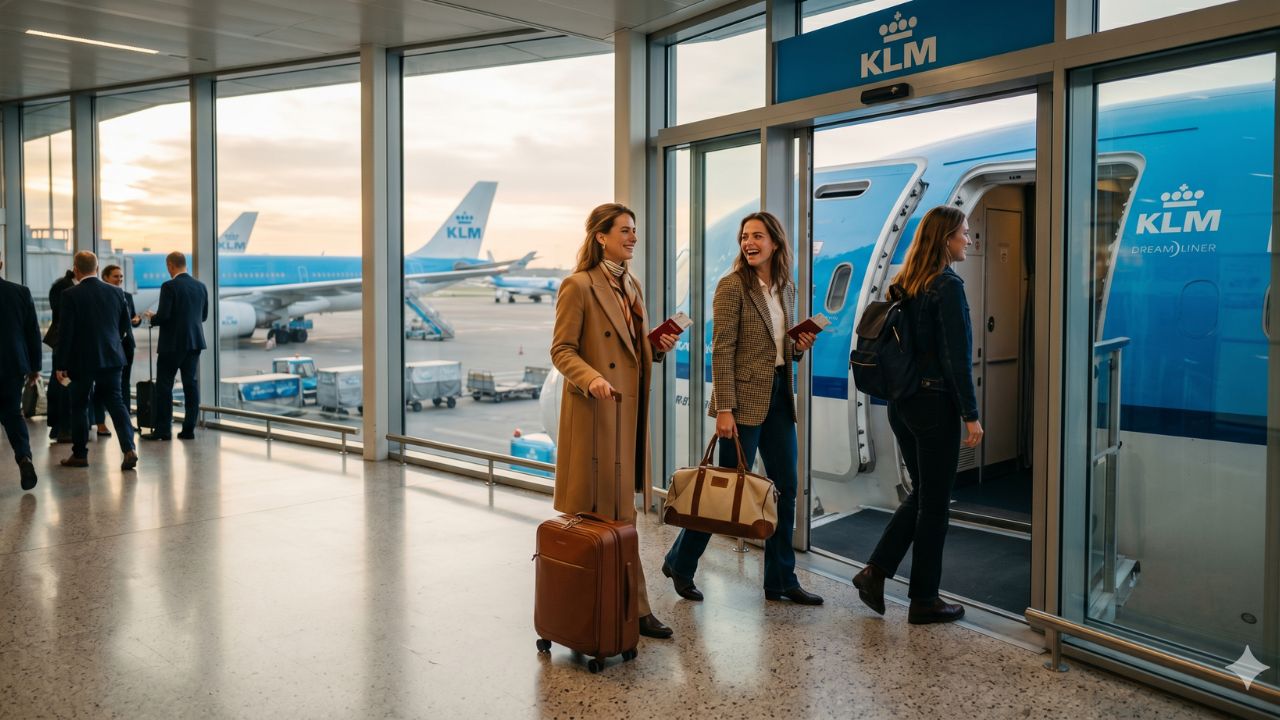
Image generated by AI
While global passengers relentlessly navigate a terrifying summer season completely defined by severe flight cancellations and unprecedented terminal overcrowding, one European legacy carrier is actively fighting back against the gridlock. Delivering highly positive airline news, KLM Royal Dutch Airlines has officially announced a massive, highly strategic expansion of its long-haul operations out of Amsterdam Airport Schiphol. In a direct, aggressive response to skyrocketing international passenger demand, the carrier is injecting highly coveted weekly extra frequencies into its ultra-lucrative routes bound for Bangkok, Thailand, and Nairobi, Kenya. By intentionally deploying massive wide-body aircraft to dramatically increase total seat capacity, KLM is executing a brilliant tactical maneuver designed specifically to shield global tourists and corporate executives from the devastating airport disruptions that currently plague modern European transit.
Escaping the Congestion: KLM's Strategic Capacity Injection
The total collapse of regional European flight reliability has forced major carriers to aggressively rethink their long-haul network growth strategies. Because sudden strikes and air traffic control failures frequently trigger massive waves of travel chaos, KLM executives realized that offering passengers vastly more flexible scheduling and enhanced long-haul capacity was absolutely vital to maintaining market dominance.
To execute this massive capacity injection, KLM confirmed that additional services to Bangkok will officially begin on the twenty-ninth May, followed rapidly by the launch of extra flights to Nairobi starting on the nineteenth June. The airline explicitly highlighted that these new weekly flight injections were forced into the schedule due to overwhelmingly strong bookings from European travelers desperate for reliable intercontinental travel. By actively substituting older, smaller aircraft with massive, state-of-the-art wide-body jets, KLM is successfully eliminating the horrific logistical necessity of funneling passengers through severely congested, multi-stop itineraries in the Middle East, offering a flawless, direct sanctuary for international transit.
Section-Wise Breakdown: Expanding the Global Footprint
To fully grasp how this massive expansion physically alters the international aviation landscape, it is absolutely essential to break down the operational impact across the specific mega-hubs involved in this strategy.
Amsterdam Airport Schiphol (AMS): The European Fortress
As KLM’s undisputed global fortress, Amsterdam Airport Schiphol is frequently on the absolute front lines of European travel chaos. When massive regional weather events trigger sudden flight cancellations, stranded passengers require immediate rebooking options. By heavily injecting these extra weekly long-haul departures out of AMS, KLM provides a massive safety valve for terminal congestion. The significantly larger wide-body aircraft ensure that if a connecting flight from London or Berlin is delayed, the carrier possesses the exact physical capacity to absorb those highly stressed passengers onto the next available departure to Asia or Africa.
Bangkok Suvarnabhumi (BKK): Dominating Southeast Asia
Bangkok remains one of Europe’s absolute premier long-haul destinations, serving as the critical gateway to the entire Asian continent. KLM’s massive injection of weekly flights starting on the twenty-ninth May is incredibly strategic. Because Bangkok acts as a high-density transit hub, providing massive capacity directly into the city allows European tourists and corporate travelers flawless, immediate access to vital regional destinations like Phuket, Chiang Mai, and Hanoi. By dominating the direct route, KLM successfully captures the absolute highest-yielding tourism demographics.
Nairobi Jomo Kenyatta (NBO): The African Safari Hub
For the incredibly lucrative East African adventure tourism sector, Nairobi serves as the absolute central hub. Commencing on the nineteenth June, KLM’s massive capacity increase directly supports the massive influx of European tourists seeking unparalleled wildlife adventures. Direct, reliable access to Nairobi ensures that elite safari-goers can seamlessly transition to internal flights connecting to the pristine Maasai Mara, Amboseli, and Tsavo national parks. Eliminating stressful intermediary layovers ensures that highly expensive, sensitive safari equipment—like massive telephoto lenses—is significantly less likely to be lost during transit.
Flight Details: The Wide-Body Expansion Matrix
To explicitly quantify the massive scale of this strategic capacity injection, the following mandatory table clearly outlines the specific operational metrics and aircraft deployments driving KLM's 2026 expansion:
| Operational Metric | Flight Details |
|---|---|
| Airline | KLM Royal Dutch Airlines |
| Hub Airport | Amsterdam Airport Schiphol (AMS) |
| Bangkok Expansion Start Date | twenty-ninth May (Weekly Flights) |
| Nairobi Expansion Start Date | nineteenth June (Weekly Flights) |
| Aircraft Deployed | Boeing 787 Dreamliner, Airbus A330 |
| Cabin Classes | Business, Premium Economy, Economy |
Passenger Impact: Elevating the In-Flight Experience
For the global traveler, the passenger impact of this massive capacity expansion goes significantly beyond merely providing more available departure times. By explicitly dedicating their premier long-haul fleet—specifically the highly advanced Boeing 787 Dreamliners and massive Airbus A330s—to these routes, KLM is completely overhauling the physical travel experience.
Passengers immediately benefit from significantly lower cabin altitudes and advanced humidity controls, which dramatically reduce severe jet lag upon arriving in Bangkok or Nairobi. Furthermore, these massive wide-body jets provide vastly increased belly cargo capacity, ensuring that excess baggage allowances for high-end safari gear or extensive corporate equipment are effortlessly accommodated. The highly structured inclusion of dedicated Business, Premium Economy, and Economy cabins guarantees that both budget-conscious tourists and high-net-worth business clients can easily secure their preferred level of in-flight comfort.
What This Means for Travelers: Actionable Advice
As KLM aggressively rolls out this massive capacity expansion starting in late May, travelers heading to Thailand or Kenya must rapidly adjust their booking strategies:
- Target the New Frequencies: Actively seek out the newly loaded weekly flights departing on or after the twenty-ninth May (Bangkok) and nineteenth June (Nairobi); these newly added flights frequently offer significantly lower promotional fare classes.
- Leverage Direct Routing: Fiercely prioritize these expanded direct flights out of Amsterdam to mathematically reduce your exposure to terrifying, multi-stop airport disruptions.
- Book Premium Economy Early: Because these wide-body aircraft feature dedicated Premium Economy cabins, budget-conscious corporate travelers should aggressively book these highly coveted seats months in advance to secure business-class comfort at a fraction of the cost.
- Monitor System Updates: Actively track real-time aviation updates regarding specific aircraft assignments, as the difference between a Dreamliner and an older A330 can significantly impact your total in-flight entertainment experience.
FAQ: KLM Amsterdam 2026 Long-Haul Expansion
When do the extra KLM flights to Bangkok officially begin? The airline will officially commence the massively expanded weekly services from Amsterdam to Bangkok starting on the twenty-ninth May.
When do the extra flights to Nairobi officially launch? The highly anticipated additional weekly flights connecting Amsterdam directly to Nairobi will officially begin operations on the nineteenth June.
What specific aircraft is KLM deploying on these expanded routes? To aggressively handle the massive surge in passenger demand, KLM is officially deploying its premier wide-body fleet, specifically utilizing highly advanced Boeing 787 Dreamliners and massive Airbus A330s featuring Business, Premium Economy, and Economy cabins.
Industry Analysis: Capturing the Post-Pandemic Rebound
From a macroeconomic and industry operations perspective, KLM’s massive capacity injection reveals a highly calculated European aviation strategy. Aviation analysts explicitly note that this aggressive expansion perfectly aligns with the massive, sustained post-pandemic recovery in long-haul international tourism. By deliberately injecting larger aircraft and significantly expanding flight frequencies into historically high-yield markets like Asia and Africa, KLM is fiercely optimizing its long-haul operational efficiency.
Furthermore, this strategy is brilliantly designed to massively boost international cargo revenues. The massive belly capacity of the Boeing 787 Dreamliner allows KLM to effortlessly transport highly lucrative commercial freight alongside passenger luggage. This dual-revenue model ensures that even if tourist demand slightly softens during the shoulder season, the sheer volume of global trade flowing between Amsterdam, Bangkok, and Nairobi guarantees that the routes remain spectacularly profitable for the European carrier.
Conclusion: Dominating the High-Yield Corridors
The highly anticipated launch of KLM Royal Dutch Airlines’ massively expanded schedule from Amsterdam to Bangkok and Nairobi marks a monumental turning point in the battle for international aviation supremacy. By aggressively deploying massive wide-body aircraft starting on the twenty-ninth May and nineteenth June, the carrier has flawlessly engineered a robust defense against systemic global travel chaos. As corporate executives and high-spending tourists flock to these highly reliable, incredibly comfortable direct connections, KLM completely solidifies its dominance over the lucrative Southeast Asian and East African corridors. Ultimately, this brilliant capacity expansion proves that aggressively increasing seat availability and deploying superior aircraft is the absolute ultimate weapon in modern global aviation.
Key Takeaways
- Massive Long-Haul Expansion: KLM is aggressively expanding its long-haul operations from Amsterdam Airport Schiphol directly to Bangkok and Nairobi.
- Strategic Launch Dates: The additional weekly services officially begin on the twenty-ninth May for Bangkok and the nineteenth June for Nairobi.
- Premium Wide-Body Fleet: The airline is exclusively deploying massive Boeing 787 Dreamliners and Airbus A330s to maximize passenger comfort and cargo capacity.
- Regional Connectivity: The extra flights provide flawless access to highly lucrative regional destinations like Phuket, Chiang Mai, Hanoi, and the Maasai Mara.
- Shielding Against Chaos: The massive injection of available wide-body seats actively shields international passengers from devastating flight cancellations and severe terminal congestion.
Related Travel Guides
Air France Combats Travel Chaos with Massive Expansion of Long-Haul Flights
Southwest Airlines Triggers Travel Chaos for UK Tourists with Overhaul of Seating Policy
France Upgrades CDG Airport Security Protocols to Combat Olympic Travel Chaos
Disclaimer
This article is for informational and educational purposes only. It does not constitute legal, financial, or professional advice. While we strive to provide accurate and up-to-date information, travel policies, regulations, and conditions change rapidly. Always verify information with official sources before making travel decisions. Nomad Lawyer makes no representations about the accuracy, reliability, completeness, or suitability of the information provided. Readers should consult qualified professionals for advice specific to their circumstances. The views expressed in this article are those of the author and do not necessarily reflect the views of Nomad Lawyer.
Kunal K Choudhary
Co-Founder & Contributor
A passionate traveller and tech enthusiast. Kunal contributes to the vision and growth of Nomad Lawyer, bringing fresh perspectives and driving the community forward.
Learn more about our team →