
Kilimanjaro International Airport to Arusha Transfer Guide: Costs, Routes, and Transit Options 2026
Comprehensive logistics guide for transfers from Kilimanjaro International Airport (JRO) to Arusha, detailing costs for taxis, shared shuttles, and private transfers for 2026.

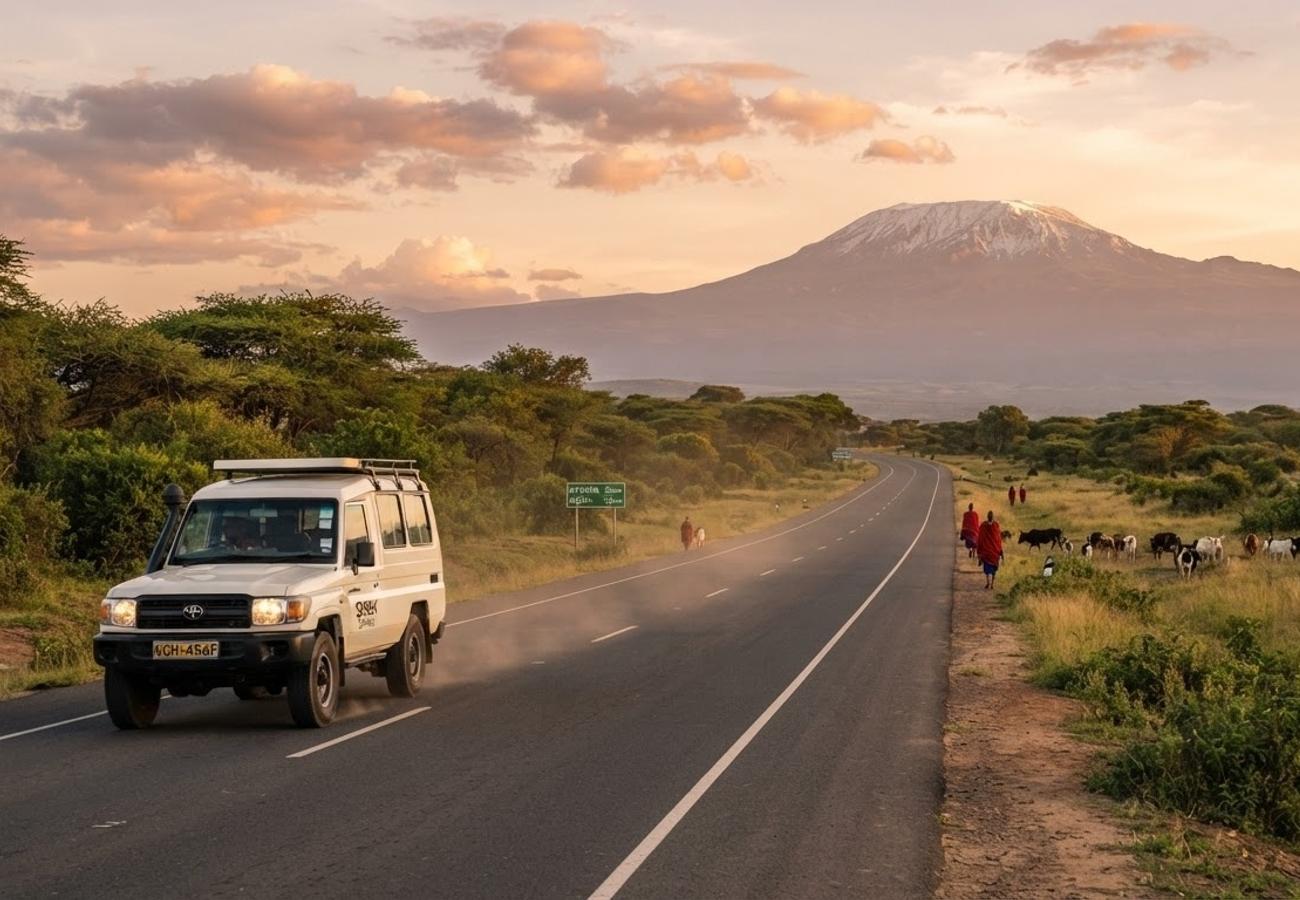
Image generated by AI
Landing at Kilimanjaro International Airport (JRO) marks the start of the Tanzanian circuit, but the 45 to 60-kilometer journey to Arusha requires strategic planning to avoid overpaying or transit delays. With costs ranging from $10 for shared shuttles to $90 for premium private transfers, choosing the right vehicle depends entirely on arrival time and luggage volume.
Transit Route and Logistics Overview
Kilimanjaro International Airport (JRO) is strategically positioned between Arusha and Moshi. The transit to central Arusha typically spans 45 to 60 kilometers via a paved two-lane highway. Travelers should budget between 60 and 90 minutes for the journey; however, those arriving in the early evening should anticipate increased congestion as they approach Arusha town.
A critical logistical detail for all arrivals is the lack of direct public bus or train connections from the terminal. All passengers must rely on pre-arranged transfers or on-the-spot taxi services. Because JRO handles a high volume of late-evening arrivals from Europe and the Middle East, availability of shared transport diminishes after 22:00, making pre-booking essential for night flights.
2026 Transfer Pricing and Specifications
The following data represents current ground-level pricing and operational parameters for transit from JRO to Arusha.
| Transfer Type | Estimated Cost (USD) | Estimated Cost (TZS) | Capacity | Best For |
|---|---|---|---|---|
| Shared Shuttle | $10 – $20 per person | 10,000 – 40,000 | Multi-passenger | Budget solo travelers |
| Airport Taxi | $55 – $75 per vehicle | 130,000 – 180,000 | 1–4 Passengers | Spontaneous arrivals |
| Private Transfer | $30 – $90 per vehicle | Variable | 1–4+ Passengers | Families, Night arrivals |
Detailed Transport Analysis
Airport Taxis
Licensed taxis are stationed on the forecourt immediately outside the arrivals hall. These are generally sedans or minivans. While convenient for those without a plan, there is no standardized meter system. Fares are negotiated upfront. For those staying in Usa River, costs are typically lower, while properties in Njiro or Sakina may command a premium.
Shared Shuttles
These are the most economical door-to-door options, often operating on a "fill-and-go" basis. They primarily serve central hotels and the Clock Tower area. While cost-effective, travel times are longer due to multiple drop-offs. These services are largely unavailable for flights landing after 22:00.
Pre-booked Private Transfers
Often arranged through safari operators or mid-range lodges, these transfers provide the highest level of reliability. Vehicles are frequently 4x4s or safari-spec vans, which are necessary for travelers carrying oversized gear such as trekking duffels or professional camera equipment.
Traveler Logistics Guide: Navigating JRO to Arusha
From a ground-level perspective, the transition from the aircraft to the hotel is where most friction occurs. To ensure a seamless transfer, follow these operational recommendations:
1. Managing Late-Night Arrivals If your flight (e.g., KLM or Qatar Airways) lands after 21:00, do not rely on shared shuttles. The risk of long wait times or total unavailability is high. Pre-book a private transfer or be prepared to pay the higher end of the taxi scale ($75).
2. Luggage Strategy Standard sedans can struggle with the bulky gear associated with Kilimanjaro climbs. If you are carrying soft-sided safari bags or large tripods, explicitly request a "minivan" or "4x4" during booking. Confirm the vehicle's capacity before agreeing to the final fare to avoid secondary vehicle charges.
3. Currency and Negotiation While US Dollars are widely accepted, having Tanzanian Shillings (TZS) can sometimes provide better leverage during taxi negotiations. Always agree on the total price—inclusive of all fees—before leaving the airport perimeter.
4. Security and Valuables When using shared shuttles, keep passports, smartphones, and travel documents in a zipped daypack on your lap. While the route is generally safe, the boarding and disembarking process at multiple hotel stops is the primary point of vulnerability for small items.
Infrastructure Impact Assessment
The reliance on a single primary highway between JRO and Arusha creates a bottleneck during peak evening hours. For the tourism sector, this necessitates a shift toward more coordinated transfer windows to avoid congestion in the Arusha city center. The continued growth of safari-specific transfer fleets (4x4s) has improved the ability of the region to handle high-volume "adventure luggage," reducing the need for secondary luggage transfers between vehicles.
Plan your arrival carefully to ensure the gateway to your safari is as smooth as the journey itself.
Related Travel Guides
Disclaimer
This article is for informational and educational purposes only. It does not constitute legal, financial, or professional advice. While we strive to provide accurate and up-to-date information, travel policies, regulations, and conditions change rapidly. Always verify information with official sources before making travel decisions. Nomad Lawyer makes no representations about the accuracy, reliability, completeness, or suitability of the information provided. Readers should consult qualified professionals for advice specific to their circumstances. The views expressed in this article are those of the author and do not necessarily reflect the views of Nomad Lawyer.
Kunal K Choudhary
Co-Founder & Contributor
A passionate traveller and tech enthusiast. Kunal contributes to the vision and growth of Nomad Lawyer, bringing fresh perspectives and driving the community forward.
Learn more about our team →