
Khao Yai National Park Flood Closure 2026: Haew Narok Bridge Damage and Visitor Safety Guide
Tourism access and overnight camping across Khao Yai National Park remain suspended after severe monsoon runoff destroyed the main pedestrian bridge to Haew Narok Waterfall.

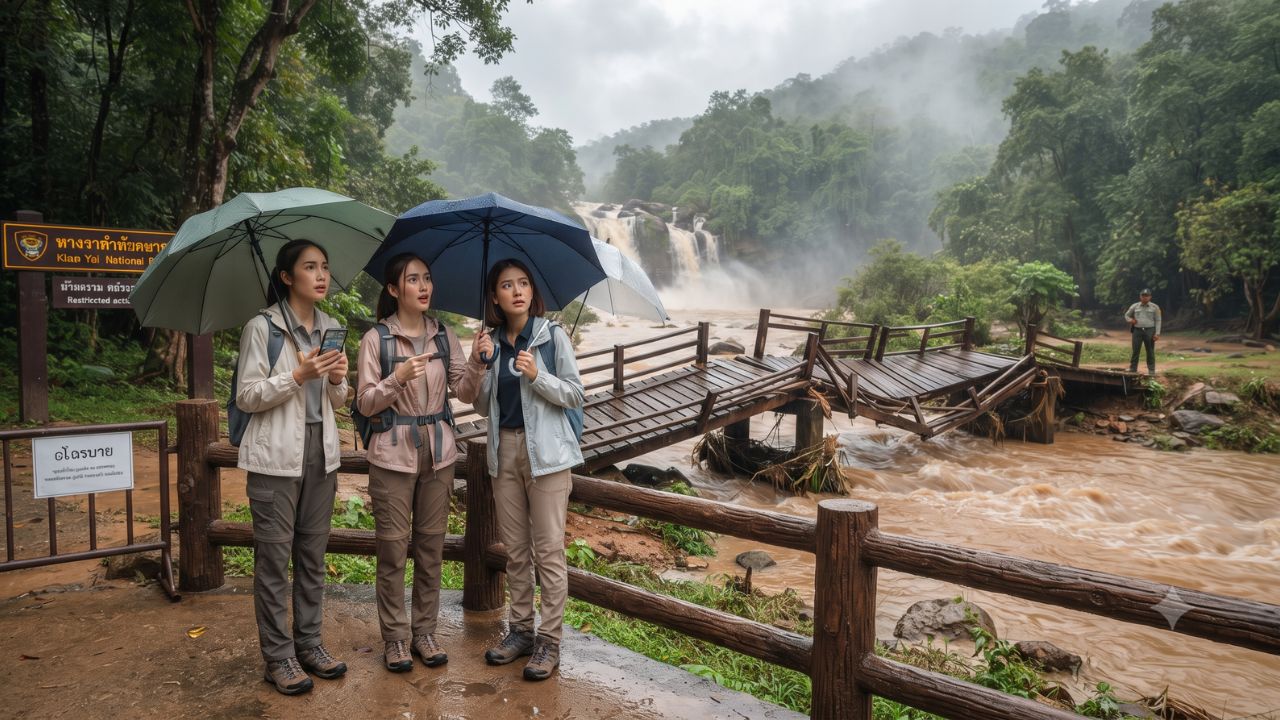
Following days of torrential monsoon downpours that unleashed severe mountain runoff, park authorities in Thailand have extended the indefinite closure of Khao Yai National Park after floodwaters destroyed the vital footbridge leading to Haew Narok Waterfall. While initial safety restrictions were scheduled to expire on 27 September 2026, the structural destruction of the viewpoint crossing alongside active landslide risks prompted the Department of National Parks, Wildlife and Plant Conservation (DNP) to halt all leisure entry and overnight camping until full engineering assessments conclude.
The Monsoon Flash Flood: What Happened at Haew Narok Waterfall
Khao Yai National Park, located roughly three hours northeast of Bangkok across Nakhon Ratchasima, Saraburi, Prachinburi, and Nakhon Nayok provinces, forms the cornerstone of the UNESCO-inscribed Dong Phayayen-Khao Yai Forest Complex. The park attracts over 1.5 million annual visitors who explore its mountain jungle trails, wild Asian elephant habitats, and thundering waterfalls.
During late September, prolonged rainfall saturated high-elevation catchment basins, sending rapid torrents through the gorge feeding Haew Narok—the park's highest three-tiered cascade. The force of the flash flood shattered the pedestrian footbridge that connects the jungle trail to the primary observation platform, rendering the route impassable and hazardous.
| Park Asset or Route | Current Operational Status | Key Safety & Environmental Conditions |
|---|---|---|
| Haew Narok Waterfall Trail | Indefinitely closed | Bridge destroyed by floodwaters; structural survey pending |
| Park Entry Gates (Pak Chong & Noen Hom) | Restricted entry | Rangers intercepting visitor traffic and offering detours |
| Campground Facilities (Lam Ta Khong) | Suspended | Overnight tent and cabin bookings temporarily halted |
| Main Ridgeline Driving Corridors | Closed to tourists | Active monitoring for mudslides, falling rocks, and fallen trees |
| 24-Hour Observation Posts | Fully operational | Specialized ranger teams tracking water discharge and rainfall |
With water levels fluctuating and slopes destabilized, park leadership determined that reopening access prior to complete structural clearance would expose travelers to mudslides, falling trees, and sudden water surges.
What Makes Khao Yai's Mountain Ecology Different
Khao Yai's steep topography creates rapid hydrological shifts during the southwest monsoon season. Water draining off high sandstone plateaus funnels quickly into narrow granite ravines. While these conditions create spectacular seasonal waterfalls during normal cycles, excessive precipitation transforms quiet mountain streams into high-velocity flood channels within hours.
According to advisories from the Tourism Authority of Thailand (TAT), park rangers have established round-the-clock monitoring stations along primary watersheds to measure precipitation thresholds and soil saturation rates. Gate wardens stationed at the northern Pak Chong checkpoint and southern Noen Hom entrance are actively redirecting independent motorists and tour vans toward surrounding valley attractions.
Visitor Insider Tips
- Verify DNP Portal Status Before Leaving Bangkok: Do not embark on the three-hour drive to Khao Yai without checking the official DNP Facebook page or tourist hotline for real-time gate re-opening notices.
- Explore Pak Chong Agritourism Alternatives: While high-elevation trails are closed, the lower Pak Chong Valley remains accessible, offering family-run vineyards, organic dairy farms, and open-air art gardens outside the flood zone.
- Reschedule Camp Reservations Promptly: Travelers holding advance permits for Lam Ta Khong campground or DNP park cabins should contact the park headquarters to transfer booking dates or claim official weather refunds.
- Pack Leech Socks and Waterproof Dry Bags: When lower forest routes eventually reopen, late monsoon humidity increases leech activity on damp trails; wear high anti-leech gaiters and enclose electronics in waterproof roll-top bags.
- Consider Saraburi or Muak Lek Nature Parks: For waterfall sightseeing outside the restricted mountain core, visit Muak Lek Waterfall or Chet Sao Noi Waterfall National Park in nearby Saraburi, which feature gentler terraced pools.
Cultural and Environmental Context
Temporary park shutdowns serve an essential conservation purpose in Thailand's protected biosphere reserves. Halting tourist vehicle traffic during severe monsoons allows wild elephant herds, gaur, and gibbons to navigate lowland corridors without human interference while vulnerable jungle soils recover from erosion.
Moreover, rigorous infrastructure safety protocols ensure that historic trails and observation structures are rebuilt to modern engineering standards capable of withstanding shifting tropical weather patterns.
FAQ: Visiting Khao Yai National Park During Rainy Season 2026
Why is Khao Yai National Park temporarily closed to tourists?
The park closed after severe monsoon floodwaters destroyed the pedestrian bridge at Haew Narok Waterfall and triggered landslide risks along mountain routes.
When will Khao Yai National Park reopen?
Park authorities have not set a firm reopening date; the park will reopen once floodwaters recede, bridge damage is repaired, and trails pass safety inspections.
Can travelers still visit the surrounding Pak Chong area?
Yes, private attractions, boutique resorts, and farm estates throughout the lower Pak Chong and Muak Lek valleys remain open outside the national park boundary.
How do I get a refund for canceled park camping permits?
Visitors with pre-booked camping permits or DNP bungalows can submit refund requests or reschedule booking dates through the official DNP online booking portal.
Respecting nature's seasonal power and adhering to ranger directives ensures that Thailand's premier rainforest sanctuary remains protected for future adventures.
Related Travel Guides
Disclaimer
This article is for informational and educational purposes only. It does not constitute legal, financial, or professional advice. While we strive to provide accurate and up-to-date information, travel policies, regulations, and conditions change rapidly. Always verify information with official sources before making travel decisions. Nomad Lawyer makes no representations about the accuracy, reliability, completeness, or suitability of the information provided. Readers should consult qualified professionals for advice specific to their circumstances. The views expressed in this article are those of the author and do not necessarily reflect the views of Nomad Lawyer.
Preeti Gunjan
Contributor & Community Manager
A passionate traveller and community builder. Preeti helps grow the Nomad Lawyer community, fostering engagement and bringing the reader experience to life.
Learn more about our team →