
Kenya Railways Adds Special Madaraka Express Trains Amid Aviation Disruptions

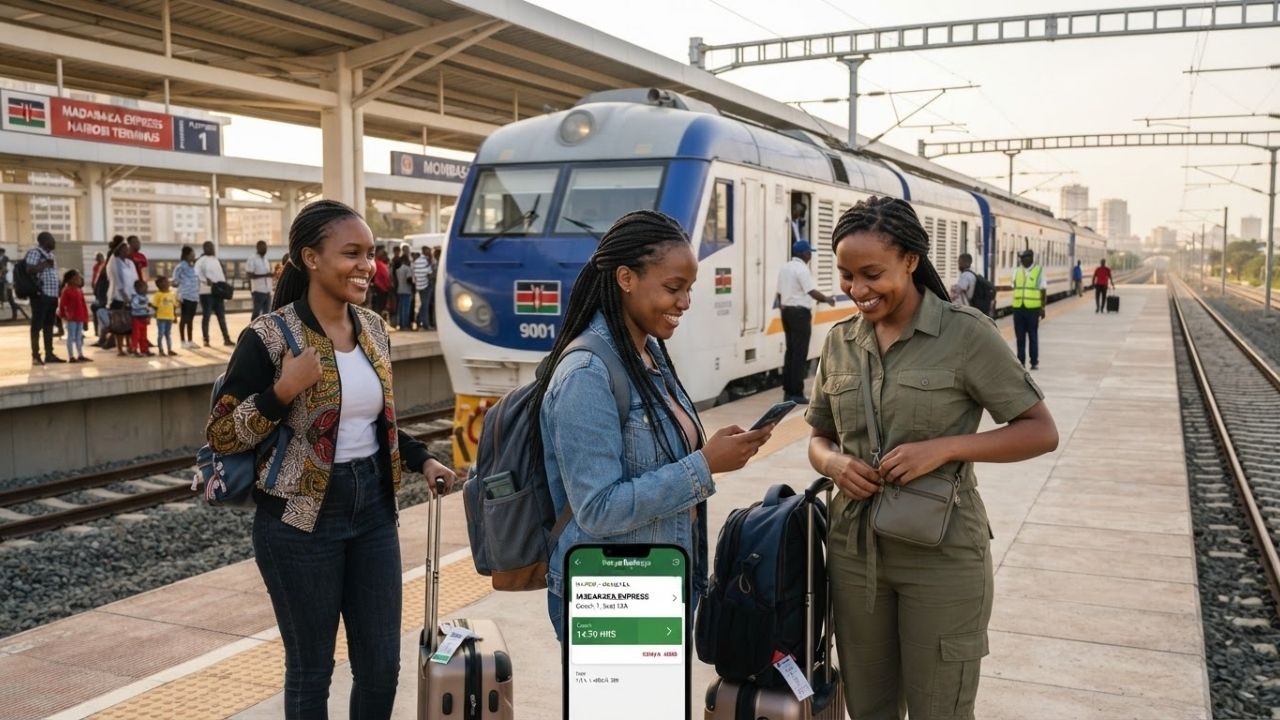
Image generated by AI
Kenya Railways has deployed additional Madaraka Express passenger services along the Standard Gauge Railway (SGR) connecting Nairobi and Mombasa to maintain intercity mobility during widespread aviation worker disputes.
[NAIROBI, Kenya, Sept. 1, 2026] — State rail operator Kenya Railways has introduced temporary passenger train services on the Standard Gauge Railway (SGR) between Nairobi Terminus and Mombasa Terminus to assist travelers stranded by ongoing domestic flight cancellations. Scheduled across August 31 and September 1, 2026, the extra Madaraka Express departures provide immediate seating relief along the country's primary economic and coastal tourism corridor.
The capacity expansion responds to a nationwide aviation dispute involving airport workers and regulatory authorities, which has grounded multiple domestic flights across Jomo Kenyatta International Airport (NBO) and Moi International Airport (MBA). By deploying standby locomotives and reserve passenger coaches, Kenya Railways is maintaining critical intercity travel between the capital and the Indian Ocean coastline.
Scheduled Timetable Expansion Adds Night and Day SGR Departures
The temporary schedule increases daily passenger capacity beyond the Standard Gauge Railway’s standard baseline of three daily departures per direction:
- August 31 Night Departure: An additional evening train departed Mombasa Terminus at 8:40 p.m., offering overnight passenger transit into Nairobi Terminus.
- September 1 Morning Departure: A special morning service departed Nairobi Terminus at 9:40 a.m., catering to business commuters and connecting passengers.
- September 1 Afternoon Departure: An additional afternoon service departed Mombasa Terminus at 4:30 p.m., assisting travelers returning to the capital.
These temporary departures operate under separate train numbers, supplementing the regular Madaraka Express schedule, which runs daily morning (8:00 a.m.), afternoon (3:00 p.m.), and late-night (10:00 p.m.) services in both directions.
Standby Locomotives and Coach Allocation Manage Transit Demand
To execute the temporary timetable without disrupting scheduled freight and regular passenger operations, Kenya Railways mobilized standby diesel-electric locomotives and reserve passenger coaches. Station managers at both Nairobi and Mombasa terminals adjusted platform allocations to accommodate the higher passenger throughput.
Railway engineers noted that expanding passenger capacity on fixed-track infrastructure requires managing several technical parameters:
- Rolling Stock Availability: Utilizing reserve coaches without compromising maintenance schedules for primary passenger fleets.
- Platform Length Constraints: Ensuring expanded coach configurations align with physical platform boundaries at intermediate stations such as Voi and Mtito Andei.
- Track Slot Allocation: Fitting special express services into single-track freight and passenger scheduling windows along the 472-kilometer SGR line.
Where adding complete extra trainsets was constrained by track slots, operators adjusted internal carriage seating arrangements to maximize available seat inventory for displaced airline passengers.
Comprehensive Data Breakdown: Madaraka Express Timetable and Route Metrics
The table below outlines the regular daily timetable alongside the temporary special services operating across August 31 and September 1, 2026:
| Service Category | Departure Origin | Destination Station | Scheduled Departure Time | Operating Date |
|---|---|---|---|---|
| Regular Morning Express | Nairobi Terminus / Mombasa | Mombasa / Nairobi Terminus | 8:00 a.m. Daily | Standard Timetable |
| Regular Afternoon Express | Nairobi Terminus / Mombasa | Mombasa / Nairobi Terminus | 3:00 p.m. Daily | Standard Timetable |
| Regular Night Express | Nairobi Terminus / Mombasa | Mombasa / Nairobi Terminus | 10:00 p.m. Daily | Standard Timetable |
| Special Night Service | Mombasa Terminus | Nairobi Terminus | 8:40 p.m. | August 31, 2026 |
| Special Morning Service | Nairobi Terminus | Mombasa Terminus | 9:40 a.m. | September 1, 2026 |
| Special Afternoon Service | Mombasa Terminus | Nairobi Terminus | 4:30 p.m. | September 1, 2026 |
The table below details key operational metrics for the Nairobi–Mombasa Standard Gauge Railway (SGR) corridor:
| Railway Operational Parameter | Official System Metric | Strategic Mobility Role |
|---|---|---|
| Route Length | 472 Kilometers (293 Miles) | Connects capital city to coastal port gateway |
| Standard Journey Time | ~5 to 6 Hours | Reliable overland alternative to 1-hour flights |
| Normal Daily Departures | 6 Total Services (3 each way) | Baseline passenger transit capacity |
| Primary Terminal Hubs | Syokimau (Nairobi) & Miritini (Mombasa) | Multi-modal connections to airports & city centers |
Strategic Transport Role During Domestic Aviation Disputes
The sudden influx of passengers onto the Madaraka Express underscores the strategic importance of dual-modal transport infrastructure in Kenya. Ongoing labor disputes involving aviation staff have disrupted flight schedules across domestic carriers, leaving thousands of business travelers, international tourists, and commuters seeking alternative land transport.
The Nairobi–Mombasa corridor forms the backbone of Kenya's travel economy:
- Economic Capital (Nairobi): Serves as the country's commercial, diplomatic, and air transport hub, connecting international arrivals to domestic regional networks.
- Coastal Tourism Circuit (Mombasa): Functions as the gateway to Indian Ocean beach resorts, Diani Beach, Malindi, and marine national parks.
By providing predictable, scheduled overland transit during airport stoppages, Kenya Railways has prevented severe economic bottlenecks across the coastal hospitality sector.
Why This Matters: Essential Guidance for Travelers Affected by Flight Delays
For domestic and international travelers navigating Kenya's transport network during aviation disruptions, the expanded SGR service delivers practical benefits:
- Guaranteed Transit Schedules: The Madaraka Express operates on fixed rail schedules unaffected by airport labor disputes or highway traffic congestion along the A109 highway.
- Online Booking Flexibility: Passengers can book tickets directly through Kenya Railways' official online ticketing portal or USSD mobile payment systems (*222#) to secure seats on special departures.
- Seamless Connecting Transit: Commuter rail feeder services connect Nairobi Terminus directly to Nairobi Central Railway Station, while taxi and bus transfers connect Mombasa Terminus in Miritini to downtown hotels and North/South coast beach resorts.
- Cost-Effective Alternative: SGR Economy and First Class tickets provide budget-friendly pricing compared to surge-priced domestic airfares during travel disruptions.
Frequently Asked Questions
Why did Kenya Railways introduce special Madaraka Express train services?
Kenya Railways deployed extra train services to provide alternative seating capacity for passengers affected by domestic flight disruptions caused by ongoing aviation labor disputes.
What are the departure times for the special Madaraka Express services?
Special services include an 8:40 p.m. departure from Mombasa on August 31, a 9:40 a.m. departure from Nairobi on September 1, and a 4:30 p.m. departure from Mombasa on September 1.
How long does the Madaraka Express train take between Nairobi and Mombasa?
The Standard Gauge Railway (SGR) express passenger train completes the 472-kilometer journey between Nairobi Terminus and Mombasa Terminus in approximately 5 to 6 hours.
How can travelers purchase tickets for Madaraka Express trains?
Travelers can purchase tickets online via the official Kenya Railways SGR booking portal, through mobile USSD payment codes (*222#), or directly at station ticket counters.
Related Travel Guides
Disclaimer
This article is for informational and educational purposes only. It does not constitute legal, financial, or professional advice. While we strive to provide accurate and up-to-date information, travel policies, regulations, and conditions change rapidly. Always verify information with official sources before making travel decisions. Nomad Lawyer makes no representations about the accuracy, reliability, completeness, or suitability of the information provided. Readers should consult qualified professionals for advice specific to their circumstances. The views expressed in this article are those of the author and do not necessarily reflect the views of Nomad Lawyer.
Raushan Kumar
Founder & Lead Developer
Full-stack developer with 11+ years of experience and a passionate traveller. Raushan built Nomad Lawyer from the ground up with a vision to create the best travel and law experience on the web.
Learn more about our team →