
Kasane Livingstone Rail Project Moves Toward Construction Phase in 2026
Botswana and Zambia advance the 430km Kasane Livingstone rail corridor toward construction following April 2026 steering committee meetings, promising faster Victoria Falls access and reshaping regional tourism transport.

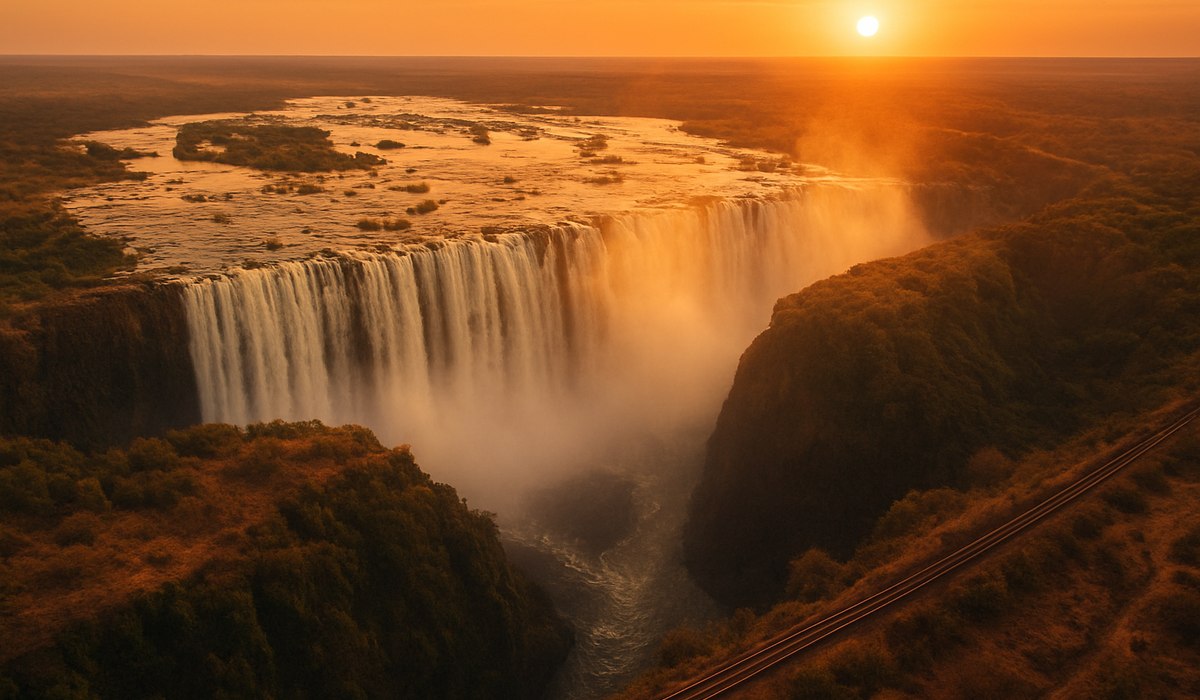
Image generated by AI
Kasane–Livingstone Rail Corridor Moves Toward Construction
Botswana and Zambia have accelerated the Mosetse–Kazungula–Livingstone (MKL) rail project from feasibility studies into active implementation planning. A joint steering committee meeting in Kasane on April 1, 2026, confirmed both nations' commitment to completing the 430-kilometer corridor that will connect Botswana's central rail network to Zambia's tourism hub at Livingstone. This development marks a significant shift in how travelers will access Victoria Falls, replacing fragmented road and air links with dedicated rail infrastructure.
The corridor has evolved from a long-discussed concept into a structured regional integration initiative backed by formal agreements and technical workstreams. Both governments are treating the kasane livingstone rail project as a flagship cross-border transportation investment, building momentum through coordinated ministerial sessions and detailed engineering planning.
Strategic Rail Corridor Gains Momentum From Kasane Meetings
The April 2026 Kasane meetings focused on establishing governance frameworks, finalizing technical specifications, and confirming timelines for the remaining pre-construction studies. Officials from both nations reaffirmed their commitment to a bankable feasibility study that had been endorsed in 2025, along with a sponsorship framework identifying potential funding mechanisms.
Recent progress follows a 2024 bilateral agreement that created the legal foundation for the cross-border rail link. The sequence of formal agreements—beginning with the 2024 legal framework, advancing through 2025 ministerial endorsements, and now reaching detailed implementation planning in 2026—demonstrates institutional maturity rather than speculative planning.
Transport analysts emphasize that kasane livingstone rail fills a critical gap in Southern Africa's rail network. Botswana's north-south spine currently terminates without direct connection to Zambia's historic Livingstone line, forcing most cross-border travelers onto congested road corridors. The new corridor will integrate with Zambia's planned internal rail rehabilitation, particularly the main line running north from Livingstone to the Copperbelt region. Both nations view this investment as complementary to broader regional connectivity initiatives.
Connecting Botswana's North–South Spine to Zambia's Tourism Hub
The kasane livingstone rail route is engineered to leverage existing transportation corridors and infrastructure assets. On the Botswana side, the line will follow established highway routes from Mosetse through Nata, continuing along the A33 toward Kasane and Kazungula. This design minimizes environmental disruption and construction costs by paralleling existing rights-of-way.
The Zambian segment represents a shorter 65-kilometer connection linking the Kazungula Bridge to Livingstone's established rail hub. Livingstone already serves as a junction for onward rail connections to Lusaka and the mineral-rich Copperbelt, making it an ideal terminus for the corridor. The bridge itself features a purpose-built rail deck that has remained isolated from both national rail networks—a structural asset the MKL project is designed to activate.
The February 2026 establishment of the Kazungula Bridge Authority added institutional coordination capacity for managing the crossing's multimodal operations. The authority's remit explicitly includes oversight of rail operations once the corridor is operational, a governance structure essential for realizing the bridge's full multimodal potential. Currently, trucks and road coaches dominate Kazungula Bridge traffic, but both nations have consistently prioritized rail as the next development phase in their transport master plans.
Governance Structures and Timeline for Construction
The steering committee established formal working groups addressing engineering standards, environmental compliance, and financial sustainability. Both governments committed to completing outstanding technical studies within defined timelines, though specific construction start dates remain contingent on funding mobilization and final approvals.
Officials outlined a phased implementation approach: finalizing detailed engineering designs, securing international financing through development banks and bilateral partners, and launching construction contracts by late 2026 or early 2027. The timeline reflects both nations' determination to advance the project while maintaining rigorous technical and environmental standards.
Governance arrangements include regular steering committee sessions alternating between Botswana and Zambia, establishing symmetrical decision-making authority. Technical working groups will coordinate on signaling systems, gauge standards, and operational protocols, ensuring the corridor meets international rail norms and integrates smoothly with both countries' existing networks.
The institutional framework demonstrates sophisticated project management, departing from speculative bilateral discussions toward binding commitments with measurable milestones. This evolution suggests stakeholder confidence in the project's economic viability and regional strategic importance.
Regional Transport Impact and Tourism Implications
The kasane livingstone rail corridor will reshape how 1.7 million annual Victoria Falls visitors distribute across transportation modes. Currently, most travelers rely on minibus services, private transfers, and regional airlines connecting Botswana's Chobe region to Livingstone. These fragmented systems create inefficiencies: road congestion at border crossings, extended journey times, and limited capacity during peak seasons.
Rail service will establish a direct, high-capacity spine linking Kasane's safari lodges to Livingstone's hospitality infrastructure. Industry observers position the corridor as a dedicated "tourism corridor," capable of handling both leisure travelers and local commuters in integrated scheduling. Hotels and lodges in both Kasane and Livingstone have signaled investment plans contingent on improved rail connectivity, suggesting accommodation expansion once services commence.
National tourism master plans in Botswana and Zambia identify Kasane and Kazungula as strategic nodes within the wider Victoria Falls economic catchment. Enhanced rail connectivity is expected to support planned hotel developments, eco-lodge expansions, and adventure tourism infrastructure investments. The corridor will also support freight movement, reducing long-haul road transport and associated greenhouse gas emissions while improving supply chain reliability for regional tourism operations.
Travel operators are already incorporating corridor plans into medium-term itinerary development. Tour companies anticipate offering multiday experiences combining Chobe National Park safaris with Victoria Falls activities, connected by convenient rail schedules rather than dawn road transfers.
Project Implementation Timeline and Cost Estimates
| Milestone | Timeline | Status | Key Details |
|---|---|---|---|
| 2024 Bilateral Agreement | Completed | ✓ Signed | Legal framework established for cross-border rail link |
| 2025 Feasibility Study | Completed | ✓ Endorsed | Bankable study approved by joint ministerial session |
| April 2026 Steering Committee | Completed | ✓ Held in Kasane | Governance frameworks and working groups confirmed |
| Engineering Design Completion | Late 2026 | In Progress | Detailed specifications for 430km corridor finalized |
| Funding Mobilization | 2026–2027 | In Planning | International development bank engagement underway |
| Construction Commencement | Late 2026–2027 | Proposed | Subject to financing and final regulatory approvals |
| Corridor Completion | 2029–2031 | Estimated | Full operations and integration with national networks |
| Rail Deck Activation | Upon Completion | Future | Kazungula Bridge rail section integrated into operations |
What This Means for Travelers
The kasane livingstone rail project will fundamentally alter Victoria Falls access patterns for independent travelers and organized tour groups:
-
Direct Rail Connectivity: Expect dedicated passenger services linking Kasane lodges directly to Livingstone accommodation within 18–24 months of construction completion, eliminating road transfer requirements.
-
Reduced Journey Times: Rail schedules will compress current 4–6 hour road transfers into 3–4 hour journeys, freeing time for additional activities or rest.
-
Enhanced Booking Integration: Travel platforms will incorporate rail tickets alongside accommodations and activities, creating seamless multiday itineraries combining Chobe safaris with Victoria Falls experiences
Disclaimer
This article is for informational and educational purposes only. It does not constitute legal, financial, or professional advice. While we strive to provide accurate and up-to-date information, travel policies, regulations, and conditions change rapidly. Always verify information with official sources before making travel decisions. Nomad Lawyer makes no representations about the accuracy, reliability, completeness, or suitability of the information provided. Readers should consult qualified professionals for advice specific to their circumstances. The views expressed in this article are those of the author and do not necessarily reflect the views of Nomad Lawyer.
Kunal K Choudhary
Co-Founder & Contributor
A passionate traveller and tech enthusiast. Kunal contributes to the vision and growth of Nomad Lawyer, bringing fresh perspectives and driving the community forward.
Learn more about our team →