
Defeating Asian Travel Chaos: Kansai Airport Mega-Expansion Shields Passengers from Disruptions as United, Emirates, and ANA Scale Operations
As massive delays and terminal gridlock heavily plague major Asian aviation hubs, Japan’s Kansai Airport completes a highly anticipated mega-expansion to guarantee frictionless international travel.

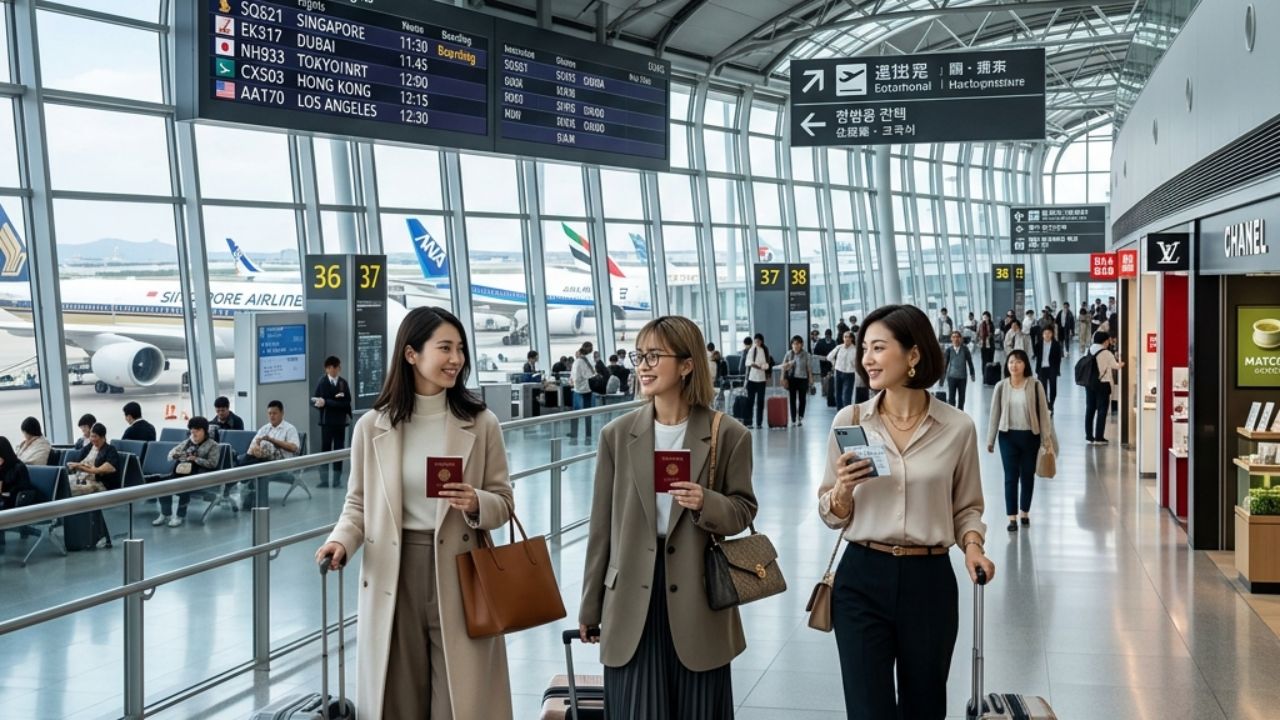
Image generated by AI
A Strategic Infrastructure Victory Against Aviation Gridlock
While massive sectors of the global passenger network frequently battle highly unpredictable operational bottlenecks and severe, localized scheduling breakdowns, a highly transformative infrastructure development in Japan is offering tourists a permanent escape. Delivering highly urgent, breaking airline news, verified aviation sources confirm that Japan’s Kansai International Airport (KIX) has officially completed its first large-scale international terminal upgrade since 1994. While desperate travelers elsewhere attempt to navigate sudden, terrifying airport disruptions, hours-long immigration queues, and massive terminal gridlock, these exclusive aviation updates reveal that this massive architectural overhaul is specifically engineered to aggressively combat terminal congestion.
By massively expanding international departure capacity and completely revolutionizing passenger amenities, Kansai Airport is directly targeting the very bottlenecks that frequently trigger uncontrollable, rolling travel chaos across Asia. In an era where severe terminal overcrowding can actively cause cascading flight cancellations and completely sever vital holiday itineraries, this major expansion guarantees a dramatically smoother journey for millions of visitors. As Osaka prepares for a historic tourism boom, leading global carriers—including Singapore Airlines, American Airlines, Cathay Pacific, China Eastern, ANA, Emirates, Korean Air, and United—are instantly capitalizing on this new capacity to massively scale operations.
Expanded Overview: Revolutionizing the Osaka Gateway
The sudden completion of this highly optimized mega-expansion serves as an undeniable example of how proactive infrastructure investment can completely dismantle the administrative and physical gridlock that plagues international travel. Historically, the massive post-pandemic surge in inbound tourism placed incredibly severe operational hurdles on aging Japanese airports. Limited boarding gates and severely cramped immigration halls exposed travelers to the exact type of congestion that dismantles highly optimized summer travel schedules.
However, the sheer magnitude of the Kansai terminal upgrade has completely bypassed that unreliability. The highly ambitious renovation aggressively adds crucial additional boarding gates, massively expands immigration and security processing areas, and heavily enhances premium retail and dining spaces. This development directly positions Kansai as the absolutely premier central gateway for Japan’s aggressively growing international tourism sector. The enlarged international departure area allows major carriers to hasten aircraft handling, drastically reducing peak runway congestion and completely eliminating the threat of rolling terminal delays.
Section-Wise Breakdown of the Infrastructure Upgrade
Elite Passenger Flow and Security Processing
The absolute core of the Kansai expansion is an aggressive redesign of passenger flow dynamics. The massively enhanced immigration and security areas are specifically engineered to drastically decrease terrifying wait times, completely insulating passengers from the incredibly slow processing speeds found at other Asian hubs. Faster check-ins and hyper-efficient security processing mean that even during absolute peak travel periods, the terminal operates entirely without friction.
Massive Airline Route Boosts
The newly expanded terminal infrastructure directly supports incredibly massive route expansions. With the immediate introduction of more international gates, massive intercontinental carriers now have the physical space required to plan highly aggressive increases in frequencies and highly anticipated new services. The improved gate availability actively attracts premium carriers who previously avoided the airport due to severe physical constraints.
Capturing the Global Tourism Surge
Inbound tourism to Japan has rebounded with phenomenal, unprecedented strength, with multiple global source markets vastly surpassing pre-pandemic levels. The expanded terminal at Kansai specifically supports this massive rebound by seamlessly absorbing greater passenger throughput from highly critical regions. Top inbound markets actively fueling this surge include China, South Korea, Taiwan, the United States, and major European nations (including the UK, Germany, and France). Visitors from these high-value countries directly contribute to massive hotel occupancy increases in Osaka and Kyoto, driving immense regional economic activity.
Verified Airline Route Expansion Impact Table
To fully comprehend the massive scope of this operational overhaul, the following table explicitly details how major global carriers are directly utilizing the newly expanded Kansai terminal infrastructure:
| Airline | Current Hubs | Route Expansion Impact | Focus Regions |
|---|---|---|---|
| Emirates | Dubai | Ability to scale existing Osaka service | Middle East, Europe |
| Singapore Airlines | Singapore | Increased flight slots to Osaka | Southeast Asia |
| American Airlines | Dallas / Chicago | Enhanced U.S. connectivity | North America |
| United Airlines | San Francisco / Newark | Additional flight opportunities | North America |
| Cathay Pacific | Hong Kong | Better gate availability for regional flights | Asia Pacific |
| China Eastern | Shanghai | Expanded daily services | China |
| Korean Air | Seoul | Increased shuttle services | Korea |
| ANA (All Nippon Airways) | Tokyo | Interline and codeshare boosts | Domestic + International |
Passenger Impact: Streamlined Itineraries and Zero Bottlenecks
For the modern international tourist, the passenger impact of this massive terminal upgrade is absolutely phenomenal. In a summer season heavily defined by the constant threat of cascading airport delays across Asia, the redesigned Kansai terminal drastically reduces a passenger's exposure to severe terminal anxiety upon departure or arrival. The international flight capacity increase is not just an operational metric—it translates to vastly expanded premium lounges, diverse dining options featuring local and international brands, and heavily improved wayfinding signage.
Tourists flying through Kansai now enjoy absolute, unprecedented convenience and choice, heavily mitigating the physical exhaustion of international transit. Travelers planning trips through Kansai are actively encouraged to check flight status early, as airlines like United and Emirates are constantly adjusting schedules to utilize the massive new capacity.
Industry Analysis: Aligning Capacity with Surging Demand
From a macroeconomic and industry operations perspective, Kansai Airport’s highly calculated expansion exposes the severe vulnerabilities of competing Asian mega-hubs that have failed to modernize. The travel ecosystem requires a highly synchronized mix of airline network growth and tourism investment to function properly.
By actively offering more flight slots, reducing localized congestion to improve on-time performance, and creating massive, highly attractive departure areas, Kansai is heavily draining premium traffic away from heavily congested competitors. For airlines and regional governments fiercely focused on capturing international growth, this massive expansion underscores Japan’s highly aggressive commitment to dominating Asia’s incredibly dynamic aviation landscape.
Conclusion: A Highly Resilient International Gateway
The highly publicized completion of the Kansai Airport terminal expansion represents a massive victory for global tourists seeking a highly reliable, frictionless Japanese gateway. By completely bypassing the congested, outdated infrastructure that so frequently spawns massive terminal gridlock elsewhere, this modernized facility guarantees a pristine, rapid journey into the heart of the Kansai region. As international arrivals into Osaka and Kyoto continue to aggressively break historical records, travelers can confidently rely on this newly fortified infrastructure to completely avoid the terrifying summer travel chaos plaguing the broader aviation industry.
Key Takeaways
- Massive Infrastructure Victory: Japan’s Kansai International Airport has successfully completed its absolute largest international terminal upgrade since 1994.
- Defeating Terminal Gridlock: The massive overhaul introduces new boarding gates and massively expanded immigration zones to completely eliminate the threat of severe airport disruptions.
- Global Carriers Capitalize: Massive global operators including United, American Airlines, Emirates, and Singapore Airlines are instantly scaling route frequencies utilizing the new physical capacity.
- Targeting High-Value Markets: The expansion perfectly aligns with a highly aggressive surge in premium inbound tourism from the US, Europe, China, South Korea, and Taiwan.
- Enhanced Passenger Experience: Travelers directly benefit from vastly accelerated security processing, entirely new luxury retail zones, and a completely frictionless travel environment.
Disclaimer: The specific infrastructure upgrades, airline route expansions, and operational capacities presented in this report are based on verified aviation announcements regarding the Kansai Airport 2026 terminal completion. Official airline schedules and precise gate allocations are highly subject to continuous, real-time update based on carrier operations and regional air traffic control. Prospective passengers are urgently advised to monitor their specific booking status and terminal assignments directly via official airline portals.
Disclaimer
This article is for informational and educational purposes only. It does not constitute legal, financial, or professional advice. While we strive to provide accurate and up-to-date information, travel policies, regulations, and conditions change rapidly. Always verify information with official sources before making travel decisions. Nomad Lawyer makes no representations about the accuracy, reliability, completeness, or suitability of the information provided. Readers should consult qualified professionals for advice specific to their circumstances. The views expressed in this article are those of the author and do not necessarily reflect the views of Nomad Lawyer.
Kunal K Choudhary
Co-Founder & Contributor
A passionate traveller and tech enthusiast. Kunal contributes to the vision and growth of Nomad Lawyer, bringing fresh perspectives and driving the community forward.
Learn more about our team →