
Kam Air Expands 2026 International Network Across Middle East, Central Asia, and South Asia to Rebuild Afghanistan's Global Aviation Connectivity
Kam Air accelerates international expansion in 2026 with new routes to Doha, Istanbul, Dubai, and New Delhi, strengthening Afghanistan's regional aviation connectivity and tourism sector recovery.

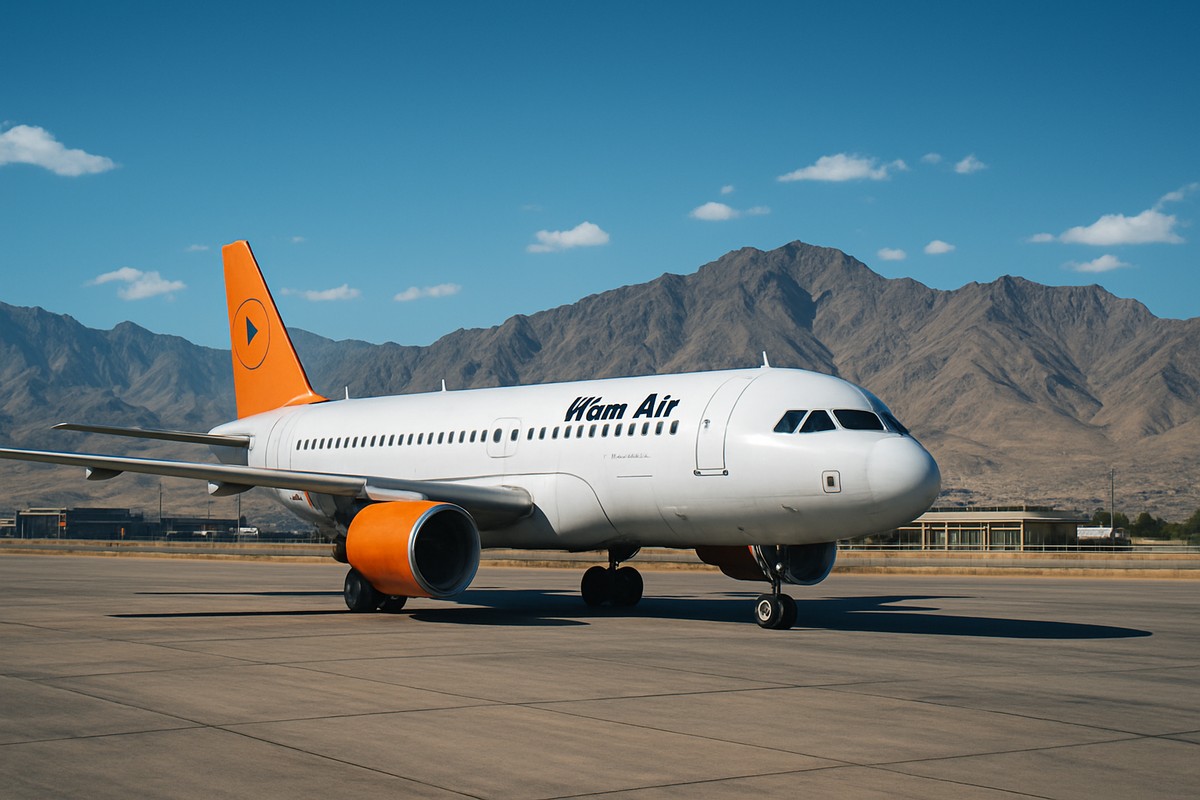
Image generated by AI
Kam Air Expands 2026 International Network Across Middle East, Central Asia, and South Asia to Rebuild Afghanistan's Global Aviation Connectivity
Afghanistan's Leading Carrier Launches Strategic Route Expansion as Regional Tourism and Business Travel Recover
Kabul — Kam Air, Afghanistan's flagship international carrier, is executing an ambitious 2026 expansion strategy that reconnects the war-torn nation to critical global aviation hubs across the Middle East, Central Asia, and South Asia. The expansion marks a pivotal moment in Afghanistan's post-conflict aviation sector recovery, with the airline establishing itself as the primary bridge linking Afghan travellers, businesses, and tourists to international markets through routes spanning Istanbul, Doha, Dubai, Abu Dhabi, Jeddah, Medina, New Delhi, Tashkent, and Almaty.
The strategic network rebuild signals growing confidence in regional travel demand while addressing pent-up demand for medical tourism, religious pilgrimage, business connectivity, and leisure travel from Afghanistan—a nation where commercial aviation remains nascent following two decades of conflict.
The Strategic Turnaround: From Isolation to Regional Connectivity
Kam Air's 2026 expansion represents far more than routine route additions. For Afghanistan, a country historically marginalized from mainstream international aviation networks, the expansion reflects a fundamental shift in regional diplomatic and commercial relations. The airline is systematically repositioning itself as the essential gateway connecting Afghan nationals, expatriates, and international investors to the Gulf Cooperation Council (GCC) states, Indian subcontinent, and Central Asian republics.
The network now encompasses 10 primary international destinations across four regions, with daily or near-daily frequencies on core routes like Kabul-Dubai and strategic scheduled service to emerging corridors including the newly relaunched Kabul-Doha route, set to commence operations on May 16, 2026.
Doha Returns as Kam Air's Most Strategic Hub—May 16 Relaunch
The May 16 resumption of Kabul-Doha service represents the year's most significant development in Afghanistan's international air connectivity. Hamad International Airport, Doha's state-of-the-art facility, serves as a global super-connector with direct access to:
- North America — seamless onward connections via Qatar Airways' extensive US and Canadian network
- Europe — comprehensive European hub connectivity through alliance partnerships
- Southeast Asia — critical gateway for Afghan students and business professionals
- Africa — expanding economic linkages for trade and investment flows
- Australia — medical and family travel destinations for diaspora communities
For Afghanistan's business and labour mobility sector, Doha relaunch is transformative. The Gulf labour corridor represents one of Afghanistan's largest overseas employment sectors, with hundreds of thousands of nationals working across Qatar, UAE, Saudi Arabia, and Bahrain. Direct Kabul-Doha connectivity dramatically reduces journey times and visa-processing complications.
Istanbul Remains Critical as Europe-Asia Corridor
The Mazar-e Sharif–Kabul–Istanbul Sabiha Gökçen service continues operating as one of Kam Air's most strategically important corridors, linking northern Afghanistan directly to Turkey's sprawling aviation infrastructure.
Mazar-e Sharif to Istanbul Flight Profile
| Route Segment | Details |
|---|---|
| Departure (Mazar-e Sharif) | 3:45 PM |
| Kabul Layover | Approximately 5 hours 45 minutes |
| Arrival (Istanbul) | 2:30 AM (+1 day) |
| Total Journey Time | Approximately 12 hours 15 minutes |
| Starting Economy Fare | ~$560 USD |
Istanbul functions as a dual-purpose destination: primary tourism draw and critical transit hub. Turkish tourism authorities have reported strong recovery in Afghan visitor arrivals, particularly for shopping, cultural tourism, and family visits. Istanbul's position as a trans-continental bridge makes it essential for Afghan passengers onward traveling to Europe, North America, and secondary Middle Eastern destinations.
Dubai Dominates as Regional Passenger Hub—Daily Operations
Dubai continues commanding the largest passenger volumes on Kam Air's international network, with daily Kabul-Dubai and frequent Mazar-e Sharif-Dubai frequencies supporting multifaceted travel demand:
- Tourism & leisure — world-class shopping, hospitality, and entertainment infrastructure
- Medical tourism — advanced healthcare facilities attracting Afghan patients for specialized procedures
- Business connectivity — major corporate hub for Afghan companies and regional investors
- Expatriate mobility — estimated 2+ million South Asian expatriates use Dubai as transit point
- Onward connectivity — extensive alliance partnerships enabling long-haul access to Europe, Africa, North America
The UAE route network's commercial dominance reflects both geographic proximity to Afghanistan and Dubai's unparalleled status as a regional aviation and commerce nexus.
Kam Air's 2026 International Route Network
| Region | Destinations | Key Purpose |
|---|---|---|
| Turkey | Istanbul (SAW) | Europe transit, tourism |
| Qatar | Doha (DOH) | Global hub, employment, onward connections |
| United Arab Emirates | Dubai (DXB), Abu Dhabi (AUH) | Tourism, business, medical treatment |
| Saudi Arabia | Jeddah (JED), Medina (MED) | Religious pilgrimage, Umrah, Hajj |
| India | New Delhi (DEL) | Medical tourism, education, business |
| Uzbekistan | Tashkent (TAS) | Central Asian gateway, tourism |
| Kazakhstan | Almaty (ALA) | Regional connectivity, trade |
| Pakistan | Islamabad (ISB) | Regional access, family travel |
Religious Tourism as Strategic Revenue Driver
Saudi Arabia routes to Jeddah and Medina represent critical revenue generators, particularly during Umrah and Hajj seasons. Islamic religious travel generates substantial passenger volumes and commands premium fares. Kam Air's ability to serve these markets directly from Kabul eliminates costly multi-stop itineraries that previously deterred Afghan pilgrims.
New Delhi Medical Tourism Corridor Expands
India's healthcare sector has become a major draw for Afghan patients seeking specialized medical treatment unavailable domestically. Kabul-New Delhi service supports:
- Cardiac surgery and cardiology — leading facilities in Delhi and surrounding regions
- Oncology and cancer treatment — cutting-edge centres attracting regional patients
- Orthopedic procedures — high-volume destinations for Afghan patients
- Ophthalmology — cataract and vision correction procedures at fraction of Western costs
- Education opportunities — Afghan students pursuing higher education at Indian universities
Healthcare tourism represents one of the highest-margin travel segments and drives consistent year-round demand.
Central Asia Gateway Strategy—Tashkent and Almaty
Kam Air's expansion into Uzbekistan (Tashkent) and Kazakhstan (Almaty) reflects a broader geopolitical reorientation toward Central Asia. These routes support:
- Regional tourism — cultural heritage, Silk Road tourism, natural attractions
- Business and trade connectivity — growing economic linkages across Central Asia
- Diplomatic expansion — strengthening ties with post-Soviet republics
- Secondary onward connectivity — Tashkent and Almaty as gateways to Russia, China, and broader Asia
Tashkent's re-emergence as a northern gateway represents a strategic pivot away from over-reliance on southern (Gulf) routes, diversifying Kam Air's network risk profile.
Fleet Strategy: Boeing 737 and Airbus A340 Optimized Operations
Kam Air operates a deliberately calibrated fleet architecture designed to match aircraft capacity with route-specific demand patterns:
| Aircraft Type | Primary Usage | Key Routes |
|---|---|---|
| Boeing 737 | Regional short/medium-haul flights | Domestic (Kabul, Mazar-e Sharif, Herat, Kandahar) and regional |
| Airbus A340 | High-capacity international long-haul | Istanbul, Jeddah, Medina, extended Central Asia flights |
The A340 fleet allows Kam Air to manage seasonal demand surges on popular international routes, particularly during Hajj/Umrah seasons and summer holiday peaks.
Geopolitical Headwinds: Airspace Restrictions and Routing Challenges
Despite expansion momentum, Kam Air—like all regional carriers—faces operational friction from evolving Middle Eastern airspace restrictions and security monitoring. Iran and Lebanon airspace concerns have forced northern routing protocols that occasionally extend flight times by 30 to 60 minutes on European-bound flights.
These rerouting measures particularly impact:
- Kabul-Istanbul corridor (adds ~45 minutes diversion routing)
- Kabul-Turkish routes generally (security corridor avoidance)
- Flights through Iranian airspace (restricted access protocols)
Despite these constraints, operational continuity across Kam Air's major network remains maintained.
Domestic Connectivity as Network Feeder System
Kam Air's robust domestic operations remain essential infrastructure supporting international expansion:
- Kabul (international hub)
- Mazar-e-Sharif (northern gateway)
- Herat (western regional centre)
- Kandahar (southern regional connexion)
Domestic routes function as feeder services channeling regional Afghan passengers toward international hubs, maximizing load factors on international departures and enabling point-to-point tourism distribution.
Global Aviation and Tourism Implications
Kam Air's 2026 expansion reverberates across broader regional aviation economics:
- Afghanistan's tourism sector recovery — improved accessibility driving inbound tourism growth
- Regional aviation competition — increased capacity on Middle East-South Asia routes
- Labour market connectivity — simplified employment migration for Gulf-bound workers
- Trade facilitation — air cargo capacity supporting emerging Afghan export markets
- Regional diplomatic signals — aviation expansion reflecting normalized international relations
Outlook: Consolidation and Capacity Growth Ahead
Kam Air's trajectory suggests continued fleet modernization and route expansion through 2026-2027. Industry analysts expect:
- Additional A340 aircraft acquisition to meet peak-season demand
- Increased frequency on core routes (Dubai, Doha, Istanbul)
- Secondary city expansion potentially including Peshawar, Lahore connections
- Regional codeshare partnerships with international carriers to expand reach
- Capacity increases on high-demand leisure and pilgrimage routes
The airline's success directly correlates with Afghanistan's broader economic stabilization and regional integration—making Kam Air's commercial trajectory a proxy for the nation's post-conflict recovery trajectory.
Conclusion
Kam Air's 2026 international expansion represents the most significant aviation infrastructure development in Afghanistan since the Taliban government's consolidation. By systematically connecting Kabul and northern Afghanistan to critical Middle Eastern, Central Asian, and South Asian hubs, the airline is rebuilding Afghanistan's role within regional aviation networks while addressing fundamental passenger demand for tourism, business connectivity, medical treatment, and religious pilgrimage.
The network now encompasses 10 primary destinations across four regions, with strategic emphasis on high-value segments including religious tourism (Saudi Arabia), medical tourism (India), business connectivity (Gulf states), and diaspora family travel (multiple regions). Despite ongoing geopolitical headwinds affecting airspace routing, Kam Air has positioned itself as the essential carrier bridging Afghanistan's historically isolated aviation sector to mainstream regional and international networks.
For Afghan travellers, businesses, and the broader tourism sector, the expansion marks a transformative shift toward normalized international connectivity and regional economic integration.
Key Takeaways
- Kam Air's 2026 network spans 10 primary international destinations across Turkey, Qatar, UAE, Saudi Arabia, India, and Central Asia
- Doha relaunch on May 16 opens critical access to global onward connections through Hamad International Airport
- Istanbul corridor continues strategic importance as Europe-Asia transit gateway with 12-hour 15-minute journey times
- Dubai dominates passenger volumes through daily operations supporting tourism, medical, and business travel
- Religious tourism to Jeddah and Medina generates high-margin revenue during Umrah and Hajj seasons
- New Delhi medical tourism corridor serves Afghan healthcare seekers with specialized treatment unavailable domestically
- Central Asia expansion (Tashkent, Almaty) reflects geopolitical reorientation and diversified network strategy
- Airspace restrictions from Iran-Lebanon concerns add 30-60 minute routing delays on select routes
- Boeing 737 and Airbus A340 fleet optimized for regional and long-haul capacity requirements
- Domestic feeder routes (Mazar-e-Sharif, Herat, Kandahar) support international hub connectivity and regional distribution
Related Travel Guides
- Global Travel Price Surge: Fuel and Exchange Rates Impact 2026 Holidays
- Etihad Airways Boosts US Network with Chicago and Charlotte Flights
- Airline Disruptions and Passenger Rights: What Travelers Must Know in 2026
Disclaimer: Aviation schedules, tourism statistics, and travel advisories are subject to rapid change. Always verify information with official airline, government, or tourism authority sources before making travel or business decisions.
Kunal K Choudhary
Co-Founder & Contributor
A passionate traveller and tech enthusiast. Kunal contributes to the vision and growth of Nomad Lawyer, bringing fresh perspectives and driving the community forward.
Learn more about our team →