
Kalka-Shimla Toy Train Restores Partial Service After Severe Monsoon Landslides
The UNESCO World Heritage Kalka-Shimla Toy Train resumes partial service from Dharampur to Shimla following monsoon landslides near Parwanoo.

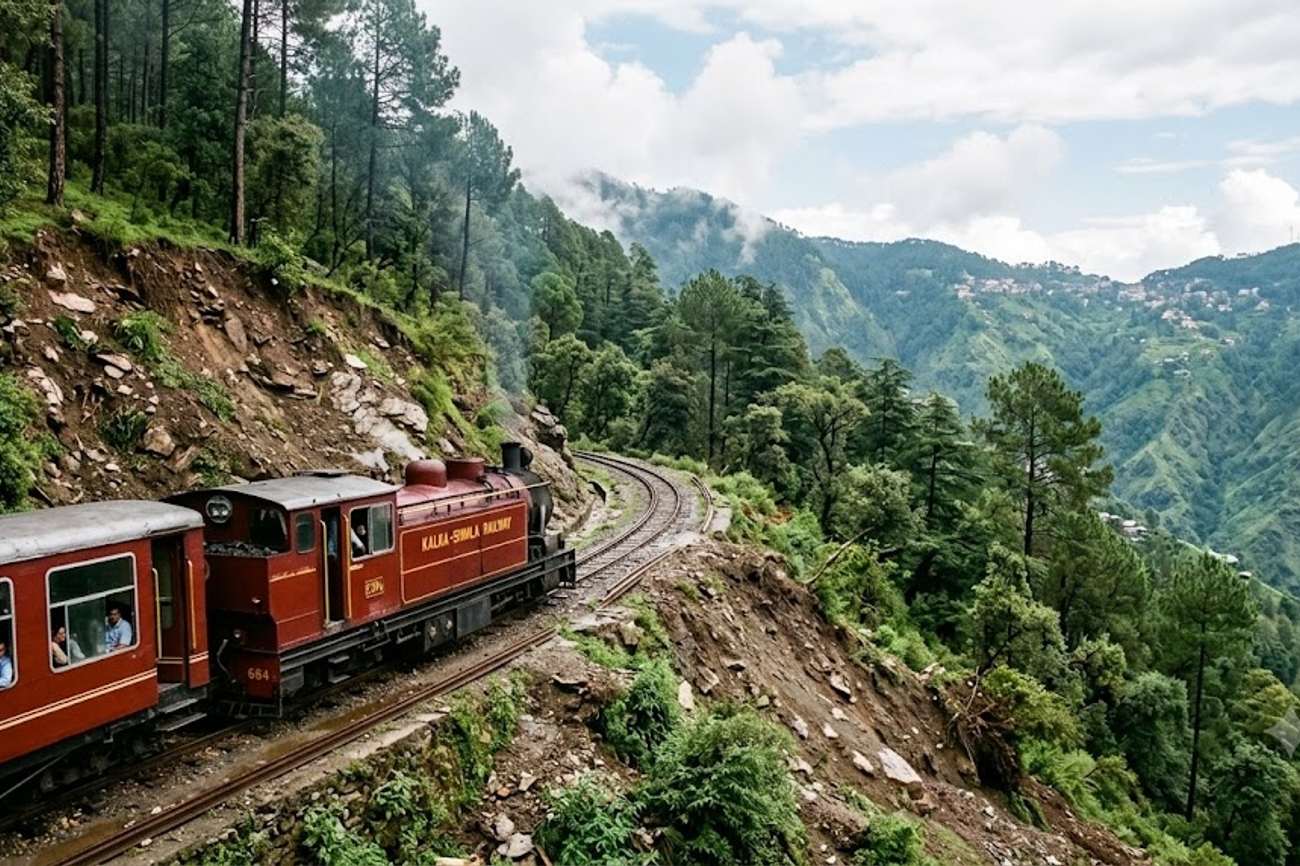
Image generated by AI
[Shimla, September 8, 2026] — Heavy monsoon rainfall has triggered a significant landslide in the Solan district of Himachal Pradesh, severely damaging a primary section of the Kalka-Shimla narrow-gauge railway. The disaster, centered near Parwanoo, resulted in the erosion of supporting soil beneath the tracks, compromising the structural integrity of the UNESCO World Heritage site and forcing an immediate halt to standard operations.
The Kalka-Shimla route is globally recognized for its colonial-era engineering, featuring an intricate network of loops, tunnels, and bridges designed to connect the plains with the former summer capital of the British Raj. However, the inherent instability of the Himalayan terrain makes the corridor susceptible to extreme weather events, and the recent torrents have once again highlighted the vulnerability of this historic infrastructure.
Passenger Disruptions and Hybrid Transit Solutions
The immediate aftermath of the landslide led to the cancellation of six passenger train services, creating significant logistical challenges for tourists and commuters. Many travelers found their pre-planned itineraries disrupted, leading to temporary congestion at transit hubs.
To maintain the flow of tourism, railway officials implemented an interim "bridge" strategy. Passengers arriving at Kalka are currently redirected to road transport to cover the damaged segment of the journey. Upon reaching Dharampur, travelers can board the heritage trains to complete their trip to Shimla. Despite the inconvenience of switching modes of transport, reports indicate that many visitors have embraced the hybrid commute, viewing the road transit through the lush mountain scenery as a complementary part of the Himalayan experience.
Economic Impact on Himachal Pradesh Tourism
The suspension of full-scale rail operations has sent ripples through the local economy of Himachal Pradesh. The Kalka-Shimla railway serves as a primary artery for tourist arrivals, and the week-long operational halt led to a noticeable dip in footfall.
Local stakeholders, including taxi operators, regional hospitality providers, and small-scale vendors, reported a sharp decline in daily revenue. Because the regional economy is heavily dependent on the predictability of the mountain railway, any disruption during the lead-up to the peak season creates financial instability for community businesses. With the arrival of international tourists expected in the coming weeks, there is urgent pressure from local commerce leaders to accelerate the permanent restoration of the Parwanoo section to ensure the region can capitalize on the upcoming travel surge.
Current Operational Status and Safety Protocols
Following comprehensive safety audits by technical engineering teams, partial services have been officially resumed on the stretch between Dharampur and Shimla. This segment was deemed structurally sound and safe for locomotive movement.
However, the section originating from Kalka remains closed to rail traffic. Civil engineering crews are currently engaged in intensive stabilization efforts to rebuild the foundations washed away near Parwanoo. Until these works are certified as complete and the terrain is deemed secure, direct end-to-end journeys will remain unavailable.
Passengers are advised to adhere to the following guidelines:
- Monitor official railway advisories for real-time updates.
- Account for additional travel time to accommodate the road transfer between Kalka and Dharampur.
- Confirm ticket validity for the segmented journey.
Modernizing Disaster Response for Heritage Rail
The handling of this crisis marks a shift in how Indian railway administration manages weather-related disasters on heritage routes. In previous decades, landslide damage often resulted in indefinite closures with little to no communication or alternative transit options provided to the public.
Current protocols now prioritize "phased restoration" and "segmented operations." By isolating the damaged section near Parwanoo and maintaining service on the Dharampur-Shimla leg, authorities have minimized the total economic blackout of the region. Furthermore, the integration of localized bus-bridging strategies and improved digital communication with ticket holders represents a move toward a more resilient disaster response framework. This approach attempts to balance the rigid requirements of preserving a UNESCO World Heritage site with the modern necessity of maintaining regional tourism mobility.
Why This Matters: The Traveler's Perspective
For the modern traveler, this incident underscores a growing reality of Himalayan tourism: the intersection of heritage beauty and environmental volatility. The shift to a hybrid road-rail journey is not merely a logistical workaround; it is a reflection of how climate-induced instability is reshaping travel in mountain regions.
From a logistical standpoint, the "bridge" system between Kalka and Dharampur means that the "Toy Train" experience is no longer a seamless single-ticket journey but a multi-modal excursion. Travelers should be aware that while the destination remains accessible, the romanticism of a continuous rail journey from the plains to the peaks is temporarily interrupted. This event highlights the importance of travel flexibility and the need for robust contingency planning when visiting ecologically sensitive zones during the monsoon season.
Related Travel Guides
Disclaimer
This article is for informational and educational purposes only. It does not constitute legal, financial, or professional advice. While we strive to provide accurate and up-to-date information, travel policies, regulations, and conditions change rapidly. Always verify information with official sources before making travel decisions. Nomad Lawyer makes no representations about the accuracy, reliability, completeness, or suitability of the information provided. Readers should consult qualified professionals for advice specific to their circumstances. The views expressed in this article are those of the author and do not necessarily reflect the views of Nomad Lawyer.
Preeti Gunjan
Contributor & Community Manager
A passionate traveller and community builder. Preeti helps grow the Nomad Lawyer community, fostering engagement and bringing the reader experience to life.
Learn more about our team →