
Japan Claims World #1 Spot in 2026 Travel Index: Insider Guide to Navigating the Master of Tourism

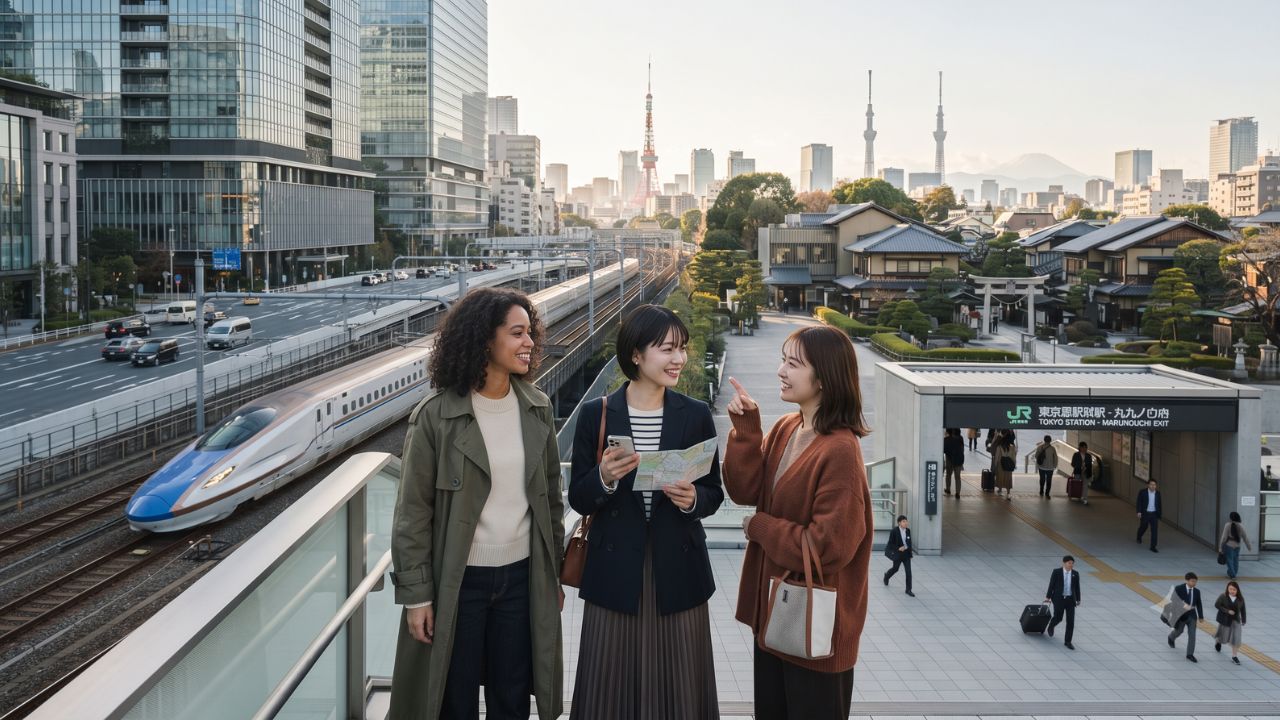
While international headlines often focus on crowd congestion in Kyoto, Japan has quietly dethroned the United States, Spain, and France to become the world’s number one tourism economy in the 2026 Travel & Tourism Development Index. Scoring 5.27 out of 7 across 110 evaluated economies, Japan secured the top global ranking not by chasing raw headcounts, but by building the planet's most seamless transport infrastructure, preserving living cultural assets, and aggressively redistributing visitors into its regional prefectures.
The global travel sector generated approximately US$11.6 trillion in economic value in 2025—accounting for 9.8 percent of worldwide economic activity and 366 million jobs—with projections approaching US$12 trillion and 376 million positions in 2026. Within this high-stakes environment, Japan welcomed roughly 42.7 million international arrivals in 2025, generating US$59.7 billion in foreign visitor spending. However, the true story for savvy travelers in 2026 is how Japan’s master-class infrastructure makes it effortless to bypass congested hotspots and experience authentic regional traditions.
The Global Index Shift: Quality and Systems Over Pure Volume
The 2026 index evaluates countries across 17 distinct pillars, emphasizing sustainability, digital infrastructure, policy resilience, and transport reliability rather than simple hotel reviews. While advanced economies dominated nine of the top ten spots—with the United States ranking second at 5.23, Spain third at 5.22, Australia fourth at 5.18, and France fifth at 5.17, followed by Germany (5.09), the United Kingdom (5.08), China (5.00), Switzerland (4.97), and Italy (4.93)—the assessment underscores that sustainable visitor dispersion is the new benchmark of travel excellence. Benchmarks published by the World Economic Forum emphasize that resilient economies must balance surging demand with municipal infrastructure and environmental preservation.
Concurrently, emerging Asia-Pacific economies are advancing at more than double the pace of mature markets. Approximately 92 percent of surveyed nations improved their scores since 2024, with Albania posting a 7 percent surge, Vietnam rising 6.3 percent, and Laos climbing 6.1 percent alongside rapid gains across Malaysia and Thailand.
Yet Japan’s distinct edge remains its unmatched rail integration, public safety, and proactive crowd-management policies that allow travelers to transition from mega-metropolises to centuries-old mountain farming villages within minutes.
What Makes Japan's Travel Ecosystem Different
Japan's supremacy stems from an interconnected transport matrix that functions with clockwork precision. The Shinkansen bullet train network, operated across regional Japan Railways entities, connects southern Kyushu to northern Hokkaido at speeds exceeding 300 kilometers per hour, eliminating airport transit stress.
Equally significant is Japan's commitment to cultural preservation. Rather than relegating heritage to static glass museum cases, historical craft disciplines—such as Arita porcelain firing, Echizen washi papermaking, and Wajima lacquerware—remain active community industries. International travelers working closely with resources from the Japan National Tourism Organization find that stepping outside the conventional Tokyo-Kyoto-Osaka corridor reveals a completely different pace of life where ryokan inns, natural onsen hot springs, and hyper-seasonal kaiseki dining flourish without westernized commercialization.
To protect sacred spaces, Japan has also pioneered practical visitor dispersion models. From timed-entry reservation passes at iconic shrines to new luggage restrictions on urban transit lines, these policies ensure that historic districts remain functional living neighborhoods for local residents.
Visitor Insider Tips
Mastering travel in Japan in 2026 requires understanding regional rail passes, digital payment integrations, and local customs.
- Bypassing the Golden Route: Instead of spending your entire itinerary between Tokyo and Kyoto, allocate half your trip to lesser-visited regions. Board the Hokuriku Shinkansen to Kanazawa and Toyama for world-class seafood and preserved Edo-era geisha districts, or explore the mist-shrouded temple trails of the Kumano Kodo pilgrimage route in Wakayama.
- Transit and Luggage Hacks: Take full advantage of Takuhaibin (luggage forwarding services) operated by carriers like Yamato Transport. For roughly 2,000 to 3,000 yen per bag, you can ship your heavy suitcases between hotels overnight, allowing you to board bullet trains and rural buses with only a light daypack. On Shinkansen lines, remember that oversized baggage (total dimensions exceeding 160 centimeters) requires a dedicated reserved seat booking.
- Cash versus IC Cards: While Apple Pay and digital Suica or Pasmo transit cards work seamlessly for subways, convenience stores, and urban vending machines, rural craft studios, temple donation boxes, and neighborhood noodle bars still require physical yen. Always carry 10,000 to 20,000 yen in cash when venturing outside tier-one cities.
- Onsen Etiquette Rules: When visiting traditional hot spring baths, wash and rinse your body thoroughly at the seated shower stalls before entering the communal mineral pool. Keep your small modesty towel out of the water, tie long hair back, and verify the facility’s tattoo policy in advance, as many traditional onsen still require waterproof patches or private kashikiri bath bookings.
- Base Neighborhoods in Major Hubs: In Tokyo, skip the overwhelming crowds of Shinjuku and base yourself in quieter, well-connected neighborhoods like Yanaka, Kanda, or Monzen-Nakacho. In Kyoto, look for Machiya townhouse stays in northern Kamigyo-ku rather than congested Gion.
Cultural and Environmental Context
Japan faces two interconnected challenges: extreme overtourism in a handful of iconic sightseeing pockets and accelerating depopulation across its rural prefectures. In response, regional governments are transforming sustainable tourism into a revitalization engine. Abandoned rural kominka (traditional timber farmhouses) are being carefully restored into boutique heritage lodgings, funneling foreign spending directly into aging agricultural villages.
Environmental stewardship also shapes Japan's travel landscape. With dozens of protected cultural and natural sites cataloged through the UNESCO World Heritage Centre—including the ancient cedar forests of Yakushima and the sacred mountain temples of Nikko—conservation authorities enforce strict trail caps, zero-waste pack-it-out mandates, and renewable energy adoption at mountain lodges to protect delicate alpine ecosystems.
FAQ: Visiting Japan 2026
What is the best time of year to visit Japan? Late October through early December offers crisp weather, stunning autumn maple foliage, and lower humidity than summer. Late March to mid-April brings cherry blossoms but carries peak crowd densities and premium lodging rates.
Do international tourists need a visa for Japan? Citizens from over 70 countries, including the United States, Canada, the United Kingdom, Australia, and EU member states, enjoy visa-free entry for tourism stays up to 90 days.
Is it difficult to travel around Japan without speaking Japanese? No. English signage is universal across rail networks, major stations, and airports. Translation apps, digital IC transit cards, and bilingual service counters make independent travel remarkably straightforward.
How does the nation handle rising tourism labor shortages? With industry forecasts projecting an 8.6-million worker gap in global hospitality, Japan utilizes automated multi-language check-in kiosks, digital ordering systems, and high-speed luggage logistics to maintain exceptional hospitality standards.
By trading congested tourist magnets for the quiet cedar forests of the Tohoku highlands and the artisan workshops of the San'in coast, travelers will find that Japan's true magic begins right where the tour buses turn back.
Related Travel Guides
Disclaimer
This article is for informational and educational purposes only. It does not constitute legal, financial, or professional advice. While we strive to provide accurate and up-to-date information, travel policies, regulations, and conditions change rapidly. Always verify information with official sources before making travel decisions. Nomad Lawyer makes no representations about the accuracy, reliability, completeness, or suitability of the information provided. Readers should consult qualified professionals for advice specific to their circumstances. The views expressed in this article are those of the author and do not necessarily reflect the views of Nomad Lawyer.
Naina Thakur
Contributor & Travel Specialist
Travel enthusiast and legal writer covering visa regulations, responsible tourism, and cultural journeys across global destinations.
Learn more about our team →