
Japan Teams Up With Singapore and ASEAN Nations in Manila to Boost Connectivity and Future Travel
Japan Teams Up With Singapore and ASEAN Nations in Manila to Boost Connectivity and Future Travel

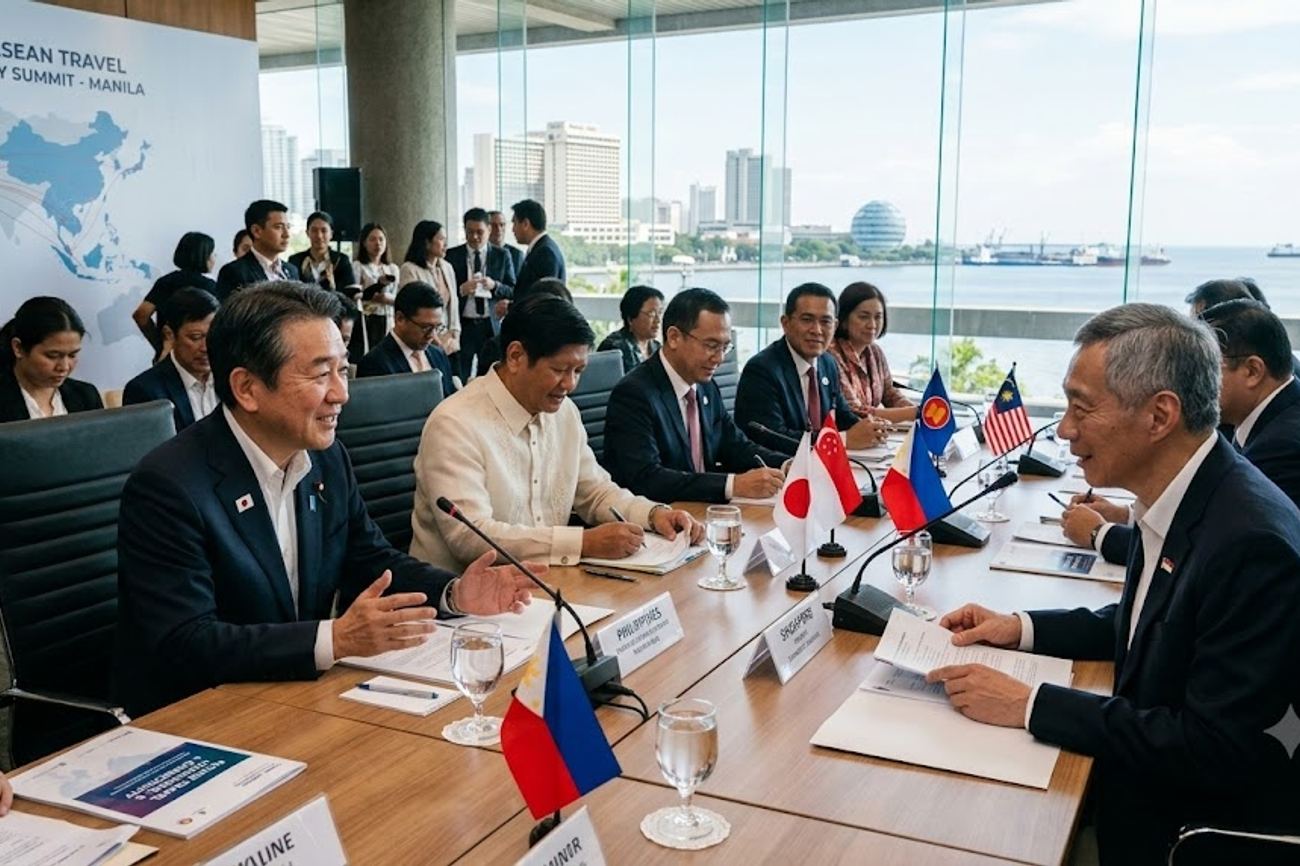
Image generated by AI
[Manila, November 2024] — Japan and the Association of Southeast Asian Nations (ASEAN) are initiating a strategic overhaul of their economic partnership to catalyze long-term regional connectivity and digital integration. High-level meetings held in Manila focused on upgrading the ASEAN-Japan Comprehensive Economic Partnership (AJCEP), signaling a shift toward a more integrated economic framework that encompasses services, technology, and cross-border investment.
The discussions involved representatives from Japan and various ASEAN member states, including Singapore, with the primary objective of expanding the economic relations that govern the movement of goods, services, and people. While the summit did not produce immediate changes to visa policies or the launch of new flight routes, the framework establishes the structural requirements necessary for future aviation and tourism expansion. The participants emphasized that sustainable regional growth depends on the synergy between trade agreements and the physical and digital infrastructure that supports international mobility.
The Manila Economic Framework
The immediate trigger for these talks is the desire to modernize the AJCEP to reflect the current digital and economic realities of the Asia-Pacific region. Rather than focusing on narrow trade tariffs, the Manila discussions pivoted toward a broader vision of "regional integration." This involves a coordinated effort to align regulatory standards for services and investments, which serves as the prerequisite for any large-scale expansion in the travel and hospitality sectors.
By strengthening the legal and economic ties between Japan and ASEAN, the two entities aim to create a more stable environment for private sector investment. This is particularly relevant for the aviation industry, where airport expansions and new route developments often require significant capital investment and inter-governmental cooperation. The Association of Southeast Asian Nations (ASEAN) and Japanese officials are targeting a "sustainable regional economy" that prioritizes innovation over traditional trade models.
Entities and Markets Impacted
The scope of this partnership is broad, affecting multiple national economies and specific industrial sectors. While no single route was highlighted, the following areas are the primary focus of the updated cooperation:
- Member States: Japan and all ASEAN nations, with specific mentions of Singapore as a key partner in the economic dialogue.
- Infrastructure Sector: Airport operators and transport providers across Southeast Asia and Japan who stand to benefit from increased regional investment.
- Digital Services: Fintech and travel-tech firms specializing in digital payments and smart mobility.
- Hospitality Industry: Hotel chains and tourism developers looking to expand their footprint through the AJCEP framework.
- Business Travel Market: Corporate entities operating in manufacturing and technology, which drive the demand for high-frequency business travel.
What This Means for Travelers
For the average passenger or business traveler, there are no immediate changes to the current travel landscape. You will not find new visa-free entries or additional flight schedules as a direct result of the Manila meetings. However, the "passenger impact" manifests as a long-term shift in how travel is experienced in Asia.
Digital Friction Reduction The emphasis on digital transformation suggests a move toward unified digital payment systems and streamlined online booking processes. Travelers can expect a gradual reduction in "digital friction"—the annoyance of switching between disparate payment platforms or booking systems when crossing borders between Japan and ASEAN countries.
Infrastructure Quality Increased investment flows often lead to the modernization of terminals and the introduction of more efficient ground transportation. Travelers moving through major hubs may see improvements in "smart mobility" services, such as integrated ticketing and AI-driven passenger flow management.
Business Travel Volume As economic ties strengthen in manufacturing and tech, the volume of business travel is expected to rise. This typically leads to increased competition among airlines, which can result in more frequent flight options and better business-class offerings on key corridors between Tokyo, Osaka, Singapore, Bangkok, and Jakarta.
The Roadmap for Regional Mobility
The transition from economic dialogue to tangible travel benefits will follow a phased approach. The Japan Tourism Agency and corresponding ASEAN bodies will likely use the upgraded AJCEP as a foundation to propose specific tourism-centric deals in future summits.
The first phase involves the alignment of investment laws, allowing Japanese firms to invest more easily in Southeast Asian tourism infrastructure. The second phase is expected to be the implementation of digital innovation tools, such as standardized e-payment gateways that work across the region. The final phase—which is the most anticipated by travelers—would be the negotiation of revised visa regimes and the opening of new aviation corridors to meet the increased demand generated by these economic ties.
The success of this initiative depends on the ability of the member states to translate high-level economic goals into operational reality. If the investment targets are met, the region will see a surge in hotel capacity and airport efficiency, effectively preparing the Asia-Pacific market for a new era of high-volume, tech-enabled travel.
FAQ: ASEAN-Japan Connectivity 2024
Are there new visa-free travel rules between Japan and ASEAN countries? No. The Manila meetings focused on economic and investment frameworks. There were no announcements regarding changes to visa requirements or the implementation of new visa-waiver programs for travelers.
Will there be more flights between Japan and Southeast Asia soon? While no specific new routes were announced, the agreement to increase investment in transport networks is intended to create the economic conditions that encourage airlines to expand their schedules in the future.
How will "digital transformation" affect my next trip to Japan or ASEAN? Expect a gradual rollout of more integrated digital payment systems and smarter mobility tools, making it easier to handle transactions and navigate transport hubs without relying on local currency or fragmented apps.
Who is the primary coordinator for these tourism and trade links? The ASEAN-Japan Centre serves as the foundational body supporting these exchanges, working alongside government agencies to facilitate trade, investment, and tourism cooperation between the two regions.
The blueprint for a more connected Asia has been drawn in Manila; the industry now waits for the first flights to follow the money.
#JapanASEAN2024 #AJCEP #ManilaSummit #AsiaTravelConnectivity #DigitalMobility #ASEANJapanCentre
Related Travel Guides
- Saarburg In Germany Offers A Unique Waterfall Experience In Its Historic Old Town
- Philippines’ Secret Island Gem Lagen Island Roars Back With Stunning Beaches, Exclusive Resorts And Sustainable Luxury Experiences
- Sri Lanka Issues Travel Alert as Massive Central Highlands Landslide Cuts Off Hatton Bogawantalawa Road Disrupting Hill Country Tourism Routes
Disclaimer
This article is for informational and educational purposes only. It does not constitute legal, financial, or professional advice. While we strive to provide accurate and up-to-date information, travel policies, regulations, and conditions change rapidly. Always verify information with official sources before making travel decisions. Nomad Lawyer makes no representations about the accuracy, reliability, completeness, or suitability of the information provided. Readers should consult qualified professionals for advice specific to their circumstances. The views expressed in this article are those of the author and do not necessarily reflect the views of Nomad Lawyer.
Naina Thakur
Contributor & Travel Specialist
Travel enthusiast and legal writer covering visa regulations, responsible tourism, and cultural journeys across global destinations.
Learn more about our team →