
Japan Investment Surge in Thailand EEC Drives 44.662 Billion Baht Boost for Business Travel 2026
Japanese capital injections into Thailand's Eastern Economic Corridor (EEC) are transforming Chonburi, Rayong, and Chachoengsao into premier MICE and corporate travel hubs.

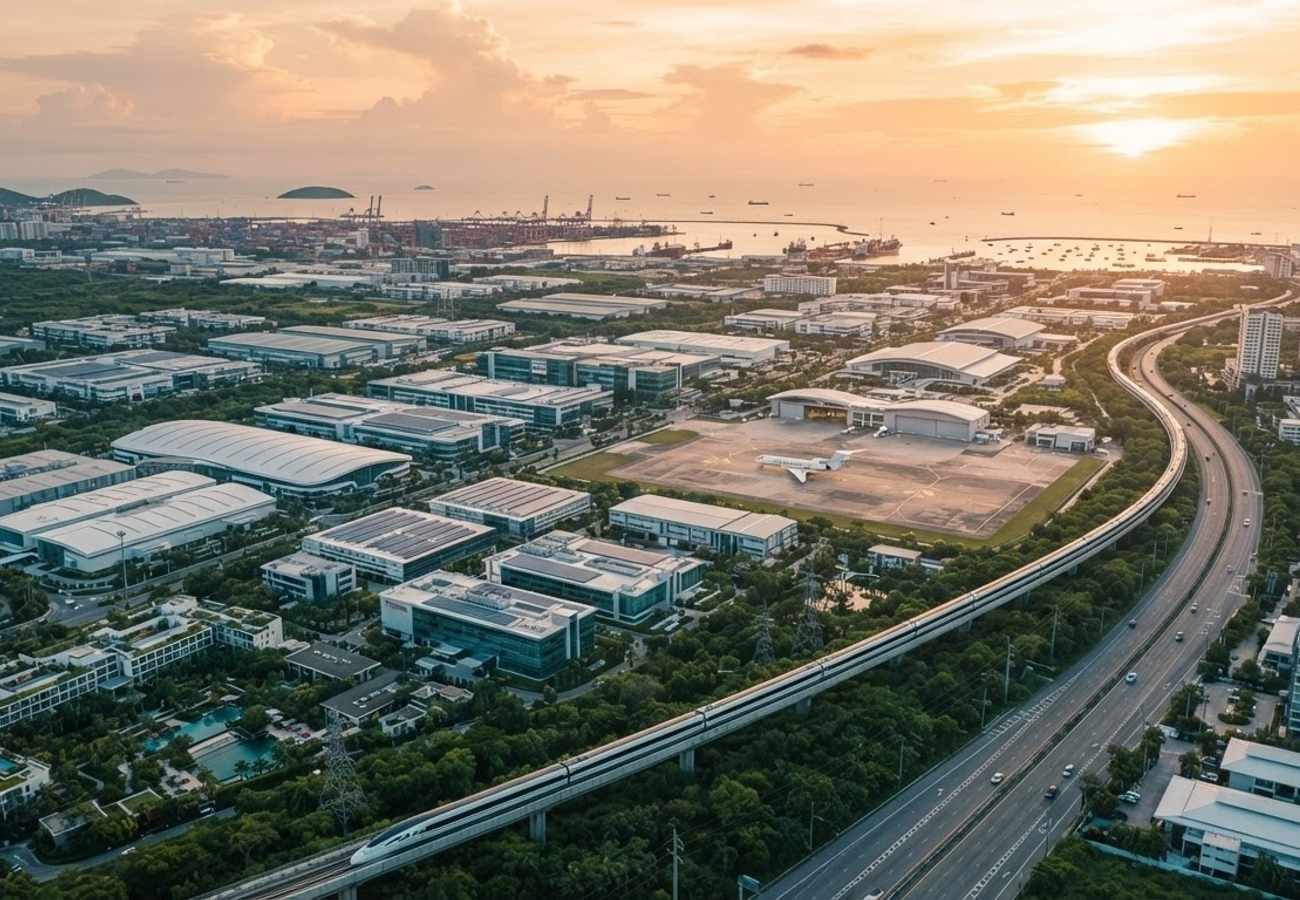
Image generated by AI
Japanese capital injections into Thailand's Eastern Economic Corridor (EEC) are transforming Chonburi, Rayong, and Chachoengsao into premier MICE and corporate travel hubs. With 44.662 billion baht in approved investments from 87 Japanese firms, the region is shifting from low-end tourism toward high-spending corporate aviation and logistics.
The industrial landscape of eastern Thailand is undergoing a structural pivot. Data from the Department of Business Development under the Ministry of Commerce reveals that between January and June 2026, 640 foreign businesses were approved for investment in Thailand, totaling 187.614 billion baht—a 68% increase year-on-year.
While China recorded a higher volume of approved businesses, Japan dominated in terms of capital value. Japanese investors alone accounted for 87 approved entities with a combined investment of 44.662 billion baht, surpassing the individual investment values of the United States, Singapore, and Hong Kong.
This influx of capital is not merely an industrial metric; it is a catalyst for a new dimension of transit. The establishment of new facilities necessitates a recurring cycle of management visits, engineering inspections, technical training, and regional corporate conferences.
EEC Investment and Business Activity Distribution (H1 2026)
The Eastern Economic Corridor has become the primary magnet for this activity, capturing a significant share of foreign business movement.
| Metric | H1 2026 Data | Year-on-Year Change |
|---|---|---|
| Foreign Investors in EEC | 199 Businesses | +26% vs 2025 |
| Share of Total Foreign Investors | 31% | N/A |
| Total Foreign Investment (Thailand) | 187.614 Billion Baht | +68% |
| Japanese Investment Value | 44.662 Billion Baht | N/A |
| Total BOI Investment Applications | 1.47 Trillion Baht | +37% |
Strategic Regional Integration
The EEC is designed as an integrated economic zone rather than a series of isolated factories. The policy targets high-value clusters including advanced automotive production, digital industries, smart electronics, bioeconomy activities, and health services.
This integration creates a unique transit dynamic across three key provinces:
- Chonburi: The primary nexus where the industrial powerhouse meets the hospitality infrastructure of Pattaya.
- Rayong: A hybrid zone combining energy and manufacturing estates with coastal tourism and island accessibility.
- Chachoengsao: The critical transport link connecting the eastern industrial belt to the capital, Bangkok.
From a ground-level perspective, this layout allows corporate travelers to conduct plant visits or technical audits during the week while utilizing the existing high-end hotel and leisure infrastructure of the region, reducing the need for secondary transit to Bangkok.
Traveler Logistics Guide: Navigating the EEC
For professionals and corporate teams moving between Japan and the EEC, the logistics landscape is shifting away from the traditional Suvarnabhumi (BKK) centric model.
Optimal Entry Points While BKK remains the primary international gateway, the development of U-Tapao Airport is the most critical factor for EEC transit. U-Tapao is strategically positioned closer to the industrial hubs of Rayong and the hospitality centers of Pattaya. Travelers should prioritize flights or transfers that utilize U-Tapao to avoid the 2-3 hour commute from Bangkok.
Connection Strategies The "Eastern Aviation City" and integrated rail developments are designed to streamline movement. When booking corporate itineraries:
- Prioritize Transit-Oriented Development (TOD): Look for accommodations located near the emerging rail links connecting the three EEC provinces.
- Layover Optimization: For those connecting from Japan, ensure ground transport is pre-arranged via the EEC’s specialized business corridors to bypass local traffic congestion in Chonburi.
- Digital Transit: Utilize Thai digital customs and immigration portals to expedite entry, as the surge in business arrivals is increasing pressure on traditional checkpoints.
Infrastructure Impact and Future Outlook
The long-term viability of this business travel surge depends on the completion of the EEC Capital City and the U-Tapao expansion. The EEC Office has outlined a vision for a smart-city center in Chonburi intended to accommodate 1.34 trillion baht of investment and generate 200,000 direct jobs.
The synergy between Japanese industrial roots—specifically in electric vehicles and semiconductors—and Thailand's hospitality readiness means the region does not need to build its tourism base from scratch. The existing capacity of venues like the NICE Pattaya Convention and Exhibition center provides a ready-made platform for the MICE (Meetings, Incentives, Conferences, and Exhibitions) sector to scale immediately.
The shift from leisure-centric tourism to a high-value corporate ecosystem marks a new era for Thailand's eastern seaboard.
Related Travel Guides
Disclaimer
This article is for informational and educational purposes only. It does not constitute legal, financial, or professional advice. While we strive to provide accurate and up-to-date information, travel policies, regulations, and conditions change rapidly. Always verify information with official sources before making travel decisions. Nomad Lawyer makes no representations about the accuracy, reliability, completeness, or suitability of the information provided. Readers should consult qualified professionals for advice specific to their circumstances. The views expressed in this article are those of the author and do not necessarily reflect the views of Nomad Lawyer.
Preeti Gunjan
Contributor & Community Manager
A passionate traveller and community builder. Preeti helps grow the Nomad Lawyer community, fostering engagement and bringing the reader experience to life.
Learn more about our team →