
Heavy Rain Triggers Rail Disruptions Across Japan and India
Severe rainfall causes widespread train cancellations in Tokyo, Hokkaido, and West Bengal. Get the latest route updates and local travel insider tips.

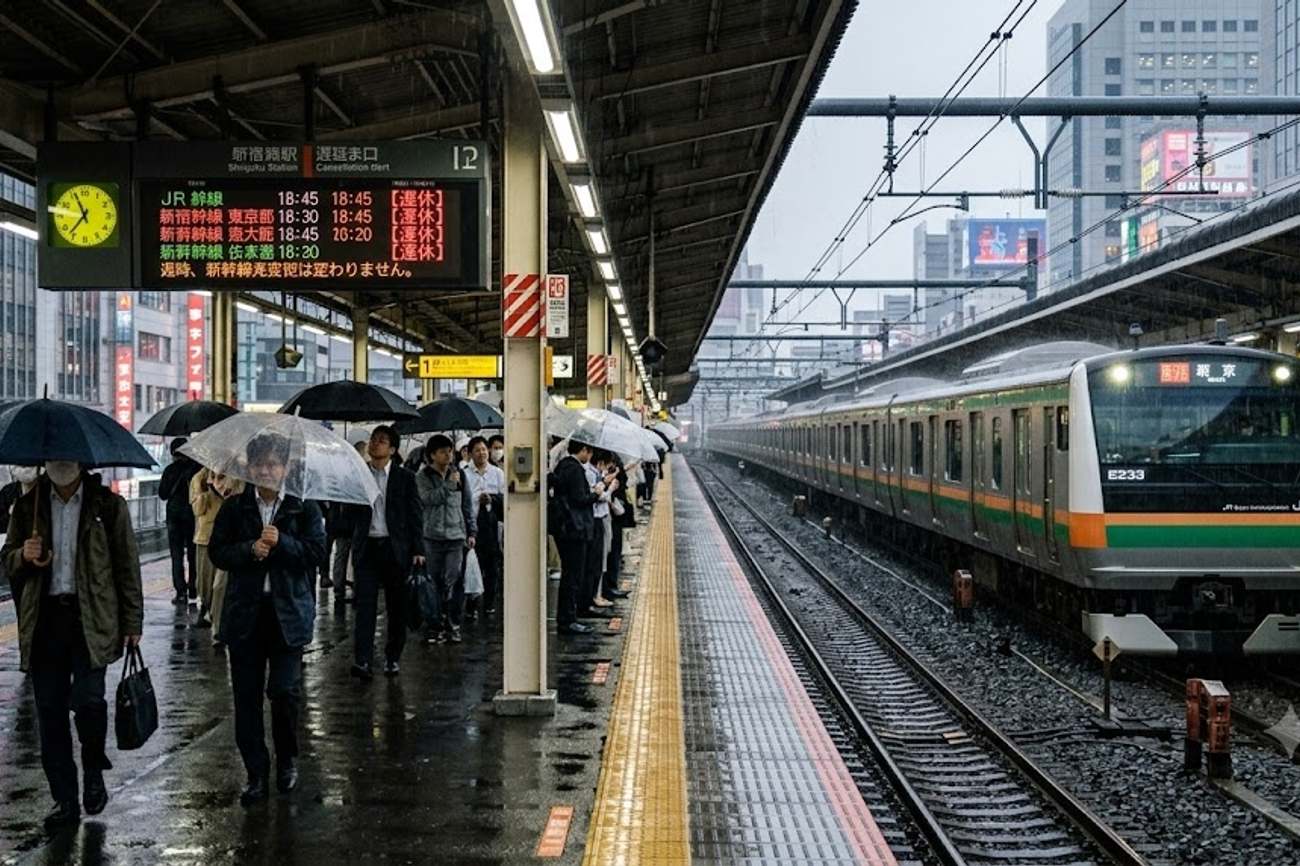
Image generated by AI
The Local Trend Revealed
A pattern of severe weather-driven infrastructure failure is currently impacting two of the world's most dense railway networks. In Japan, the disruption is split between preventive suspensions in the Tokyo metropolitan area and physical infrastructure damage in Hokkaido. Meanwhile, in India, the crisis is centered in West Bengal, where intense rainfall caused the soil beneath tracks near New Farakka station in the Murshidabad district to weaken and subside.
In Tokyo, the impact spans a massive network of commuter lines. Services including the Yamanote, Chuo, Keihin-Tohoku, Yokosuka, Tokaido, Ueno-Tokyo, Shonan-Shinjuku, Saikyo, Musashino, Keiyo, and Chuo-Sobu lines are facing delays and cancellations. Regional impact is even more severe; the Mito Line (between Oyama and Tomobe) and the Suigun Line have faced full-day suspensions, while the Hachiko Line (between Yorii and Komagawa) and parts of the Koumi Line have stopped entirely without replacement bus options.
In Hokkaido, the vital link between Sapporo and Hakodate remains severed due to damage between Oshamambe and Toyoura. Most Hokuto limited express services are cancelled, with normal operations not expected until September 10.
Cultural & Environmental Value
For the traveler, these events highlight a shift in how regional transport authorities manage climate risk. In Tokyo, the trend is toward "preventive suspension"—halting trains before accidents occur. In contrast, the situation in West Bengal reflects the vulnerability of legacy infrastructure to soil erosion. The cancellation of flagship services like the Vande Bharat, Shatabdi Express, and Darjeeling Mail demonstrates that even high-speed, modern corridors are susceptible to environmental instability.
The real impact for the visitor is a sudden shift in mobility. When the rail spine of a region fails, the local economy feels it immediately as demand spikes for road transport, often leading to congestion and inflated pricing for private hire.
Visitor Insider Tips
Navigating these disruptions requires more than just checking an app. Here is how to handle these specific regions during weather crises:
- Tokyo Transit Hacks: When the Yamanote or Chuo lines stall, avoid the main hubs. Use the Tokyo Metro (subway) lines, which are underground and far less affected by rain than the JR surface lines.
- Hokkaido Alternatives: With the Sapporo-Hakodate rail link down, avoid the Kutchan detour—it is too infrequent. Prioritize highway buses or domestic flights for time-sensitive travel.
- West Bengal Navigation: If long-distance trains are diverted near New Farakka, avoid booking last-minute buses at the station; instead, use verified regional transport aggregators to find seats further away from the disruption epicenter.
- Cultural Etiquette: During mass cancellations in Japan, queues for information desks can become immense. Use the official JR East English apps rather than approaching staff, as they are often overwhelmed during these peaks.
Tourism Outlook
The long-term outlook suggests a necessary acceleration in "climate-proofing" rail infrastructure. From the stabilization of embankments in West Bengal to the enhanced drainage systems in Hokkaido, the focus is shifting from rapid recovery to permanent resilience. Travelers should expect "weather-adaptive scheduling" to become a standard part of the itinerary in these regions.
Related Travel Guides
Disclaimer
This article is for informational and educational purposes only. It does not constitute legal, financial, or professional advice. While we strive to provide accurate and up-to-date information, travel policies, regulations, and conditions change rapidly. Always verify information with official sources before making travel decisions. Nomad Lawyer makes no representations about the accuracy, reliability, completeness, or suitability of the information provided. Readers should consult qualified professionals for advice specific to their circumstances. The views expressed in this article are those of the author and do not necessarily reflect the views of Nomad Lawyer.
Naina Thakur
Contributor & Travel Specialist
Travel enthusiast and legal writer covering visa regulations, responsible tourism, and cultural journeys across global destinations.
Learn more about our team →