
Jamaica Aligns With Curaçao and More as St. Maarten’s SMART 2027 Connects Caribbean Travel Leaders
St. Maarten prepares to host SMART 2027 from June 14–18, connecting Jamaica, Curaçao, and regional partners to create multi-island Caribbean travel itineraries.

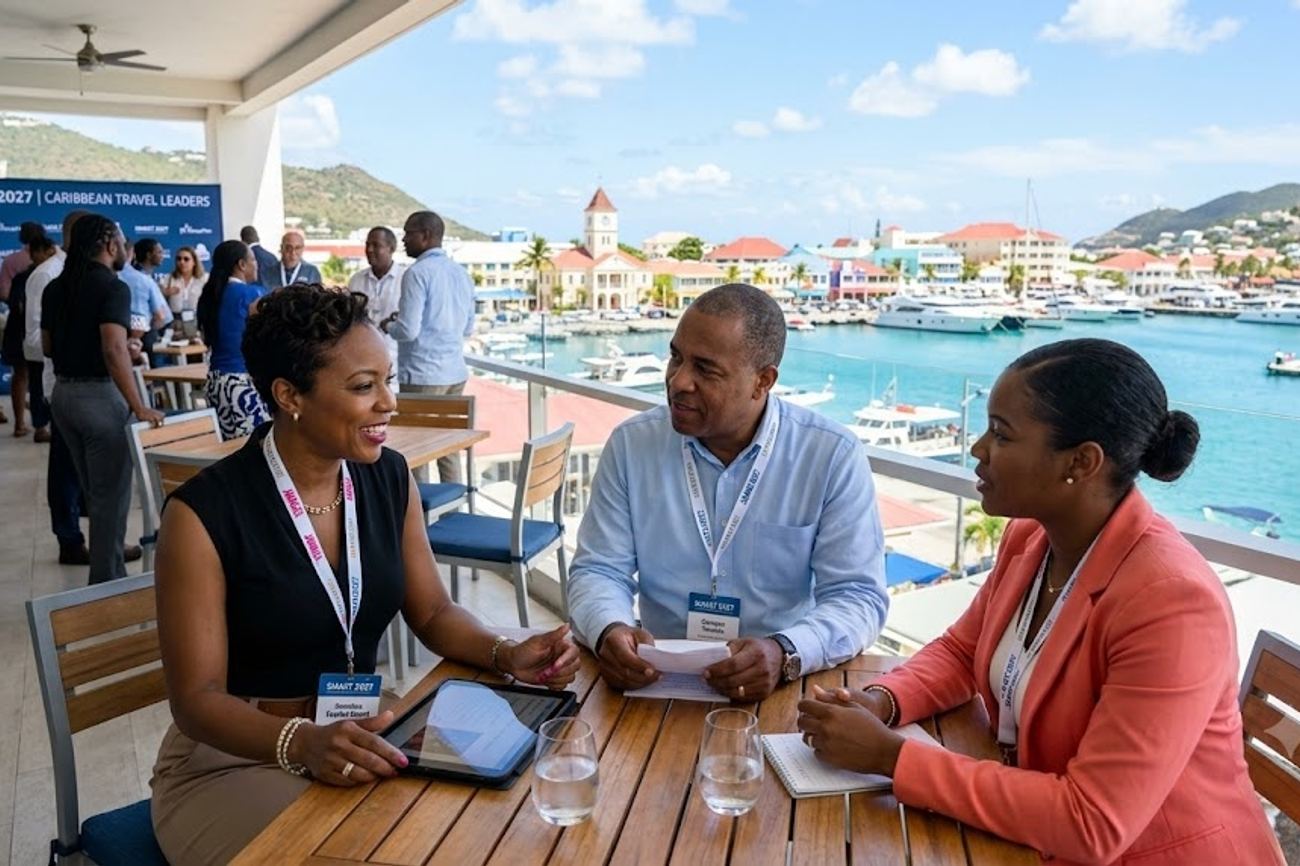
Image generated by AI
Across an island measuring barely thirty-seven square miles shared between two European sovereign nations, St. Maarten handled over 2.45 million combined air and cruise movements in 2025 while serving as the primary commercial springboard for twenty-seven Caribbean destinations. As dates are formally locked for SMART 2027—the nineteenth edition of the St. Martin / St. Maarten Annual Regional Tradeshow running from June 14 to 18, 2027—the northeastern Caribbean is moving past the era of isolated, single-resort vacations. Following an 18th edition that drew 57 buyer companies and 62 suppliers to the JW Marriott St. Maarten Beach Resort & Spa in Dawn Beach, regional heavyweights including Jamaica and Curaçao are joining forces with smaller island partners like Anguilla, Saba, and Montserrat. For seasoned travelers and island-hoppers, this expanding alliance turns St. Maarten into a launchpad for fluid, multi-island Caribbean journeys.
Experiencing St. Maarten and its neighboring archipelagos means discovering an interconnected maritime community where open horizons replace rigid international borders. A traveler can eat breakfast in a Dutch marina, enjoy lunch at an open-air French creole bistro, and board a twenty-minute ferry to sleep on British sand in Anguilla. By consolidating commercial relationships through regional trade platforms, island tourism authorities are designing integrated holiday packages that combine high-energy transit gateways with serene, low-density island retreats.
The SMART 2027 Alignment: How Regional B2B Platforms Reshape Island Travel
The momentum heading into SMART 2027 reflects rapid structural growth across the Caribbean travel economy. During the 18th annual tradeshow held from June 22 to 26, 2026, at the JW Marriott St. Maarten Beach Resort & Spa in Dawn Beach, international commercial participation surged across every key metric. Buyer company presence rose from 51 in 2025 to 57 in 2026, an 11.8% increase. Supplier participation jumped from 44 to 62 companies, representing a 40.9% rise, while vendor participation climbed 50% from 20 to 30 businesses. To accommodate the influx of delegates from 27 countries and territories, organizers expanded the physical exhibition space by 40%.
The tradeshow generated more than 1,500 scheduled business appointments, creating direct commercial connections between international wholesalers and local Caribbean operators. For smaller territories, this centralized marketplace delivers outsized impact. The delegation from Montserrat, for instance, completed 35 targeted business meetings with partners from St. Maarten, the United States, the Netherlands, Spain, and the Dominican Republic, while meeting with regional entities like the St. Maarten Tourism Bureau, Anguilla Tourist Board, and Statia Tourism.
Organized through close collaboration among the St. Maarten Tourism Bureau, Office de Tourisme de Saint-Martin, Club du Tourisme, and the St. Maarten Hospitality & Trade Association, SMART is transforming how destinations collaborate. Participating destinations including Anguilla, the British Virgin Islands, Curaçao, Jamaica, Montserrat, Saba, St. Eustatius, St. Kitts and Nevis, Trinidad and Tobago, and Turks and Caicos Islands demonstrate that Caribbean islands increasingly view each other as partners rather than rivals. Travelers can review official destination frameworks directly through the St. Maarten Tourism Bureau and the Office de Tourisme de Saint-Martin.
What Makes St. Maarten and Its Neighbors Different: Binational Heritage and Island Networks
St. Maarten presents an identity unlike any other island in the Caribbean Sea. The southern territory is Dutch Sint Maarten, known for duty-free retail in Philipsburg and megayacht moorings across Simpson Bay, while the northern territory is French Saint-Martin, celebrated for art galleries in Marigot and beachfront bistros in Grand Case. With influences from more than 100 nationalities, the island functions without physical border controls, allowing visitors to experience Dutch colonial architecture and Parisian epicurean flair along a single winding roadway.
Beyond the host island, the network connects vastly different geographic and cultural environments. Just a short boat ride south, Saba rises abruptly from deep waters as a volcanic peak wrapped in cloud forest, offering alpine-style hiking along Mount Scenery. Nearby St. Eustatius, known locally as Statia, preserves dormant volcanic hiking around The Quill alongside submerged historic shipwrecks.
Further south in the Dutch Caribbean, Curaçao contributes rich colonial history, with its colorful Handelskade waterfront in Willemstad inscribed by the UNESCO World Heritage Centre. To the west, Jamaica adds global cultural weight through reggae roots, mountain coffee plantations, and distinct culinary traditions. Rather than forcing long-haul travelers to select just one flavor of the Caribbean, the emerging network makes it practical to link distinct cultural worlds into a unified voyage.
Visitor Insider Tips: Navigating Seasons, Crossings, and Flavors
Making the most of St. Maarten and its regional connections requires understanding seasonal visitor flows, currency nuances, and maritime transport.
Timing and Crowd Patterns Official 2025 tourism statistics highlight distinct seasonal travel flows. St. Maarten recorded 855,994 air passenger arrivals and 1,597,940 cruise passengers across 592 ship calls in 2025. Cruise traffic is heavily concentrated in the first quarter (635,968 passengers; 39.8%) and fourth quarter (560,700 passengers; 35.1%), meaning roughly 75% of cruise visitors arrive between October and March. For a tranquil stay with uncrowded sands and lower hotel rates, plan your journey during the late spring window in May and June, coinciding with the SMART event period.
Local Dining and Creole Flavors Skip generic hotel buffets to explore the island's dual gastronomic identity. In Grand Case, dine at traditional open-air lolos—family-run barbecue shacks where cooks grill red snapper, ribs, and lobster over split oil drums, served with sweet fried johnnycakes and plantains. In Philipsburg, sample local guavaberry liqueur crafted from rare wild berries gathered in interior hills, paired with fresh saltfish patties.
Border Etiquette and Currencies Crossing between the Dutch and French sides is seamless, marked only by historic stone monuments. However, practical logistics differ: the Dutch side operates predominantly in US Dollars and Netherlands Antillean Guilders, while the French side uses the Euro. Most establishments accept credit cards, but keeping small denominations of cash prevents unfavorable conversion rates at seaside stalls.
Island-Hopping Transport Take advantage of St. Maarten's role as a regional ferry hub. Daily catamarans depart Marigot for Anguilla's pristine bays in under thirty minutes, while high-speed ferries from Philipsburg reach St. Barths and Saba in forty-five to ninety minutes. For travelers venturing to Jamaica or Curaçao, Princess Juliana International Airport provides regular inter-island air connections linking major Caribbean hubs.
Cultural and Environmental Context: Sustainable Stewardship Across Island Borders
Managing over 2.45 million combined air and cruise movements across a delicate 37-square-mile landmass requires proactive environmental guardianship. In 2025, air arrivals alone brought 541,615 visitors from North America (including 462,038 from the United States) and 221,179 from the European Union (led by 87,952 from France and 85,741 from the Netherlands). This intense tourism volume places significant pressure on coastal coral reefs, coastal mangrove nurseries, and freshwater supplies.
Local conservation bodies, including Nature Foundation St. Maarten and the Réserve Naturelle de Saint-Martin, actively protect marine habitats through mooring buoy systems that prevent anchor damage and strict sea turtle nesting monitoring. By promoting regional itineraries to smaller territories like Saba, Statia, and Montserrat, tourism leaders are working to disperse economic benefits across the eastern Caribbean, reducing excessive physical strain on St. Maarten's primary coastal strips.
Visitors can practice responsible tourism by choosing reef-safe mineral sunscreen, refusing single-use plastics, and patronizing locally owned eco-excursions and historic heritage trusts. Supporting regional island-hopping initiatives ensures that visitor spending directly benefits family businesses, artisanal fishers, and cultural preservation initiatives across the wider Caribbean basin.
FAQ: Visiting St. Maarten and the Caribbean 2026-2027
When will SMART 2027 take place in St. Maarten? SMART 2027 is officially scheduled to run from June 14 to 18, 2027, bringing together international buyers, regional suppliers, and tourism boards across the Caribbean.
Do travelers need a passport to cross between Dutch St. Maarten and French Saint-Martin? No. There are no border controls or immigration checkpoints between the two territories. Travelers can move freely across the island by car, bicycle, or foot.
How do visitors travel between St. Maarten and neighboring islands? Frequent daily ferries link St. Maarten to Anguilla, Saba, and St. Barths, while Princess Juliana International Airport operates regional flights to Statia, St. Kitts, Jamaica, and Curaçao.
What is the quietest season to visit St. Maarten? May through September represents the quietest period, featuring significantly fewer cruise ship arrivals, peaceful beaches, and discounted hotel accommodation rates across both sides of the island.
From the turquoise waters of Dawn Beach to the historic ramparts of Willemstad and the misty heights of Saba, the Caribbean's emerging travel network proves that island neighbors shine brightest together.
Related Travel Guides
Disclaimer
This article is for informational and educational purposes only. It does not constitute legal, financial, or professional advice. While we strive to provide accurate and up-to-date information, travel policies, regulations, and conditions change rapidly. Always verify information with official sources before making travel decisions. Nomad Lawyer makes no representations about the accuracy, reliability, completeness, or suitability of the information provided. Readers should consult qualified professionals for advice specific to their circumstances. The views expressed in this article are those of the author and do not necessarily reflect the views of Nomad Lawyer.
Kunal K Choudhary
Co-Founder & Contributor
A passionate traveller and tech enthusiast. Kunal contributes to the vision and growth of Nomad Lawyer, bringing fresh perspectives and driving the community forward.
Learn more about our team →