
Italy Tourism Crisis Deepens as Venice Proposes Massive €50 Entry Fee to Curb Overcrowding, Impacting Rome, Capri, and Heritage Cities: New Travel Alert
The Italy tourism crisis escalates as Venice proposes raising day-tripper fees up to €50, alongside crowd control measures in Rome and Capri.

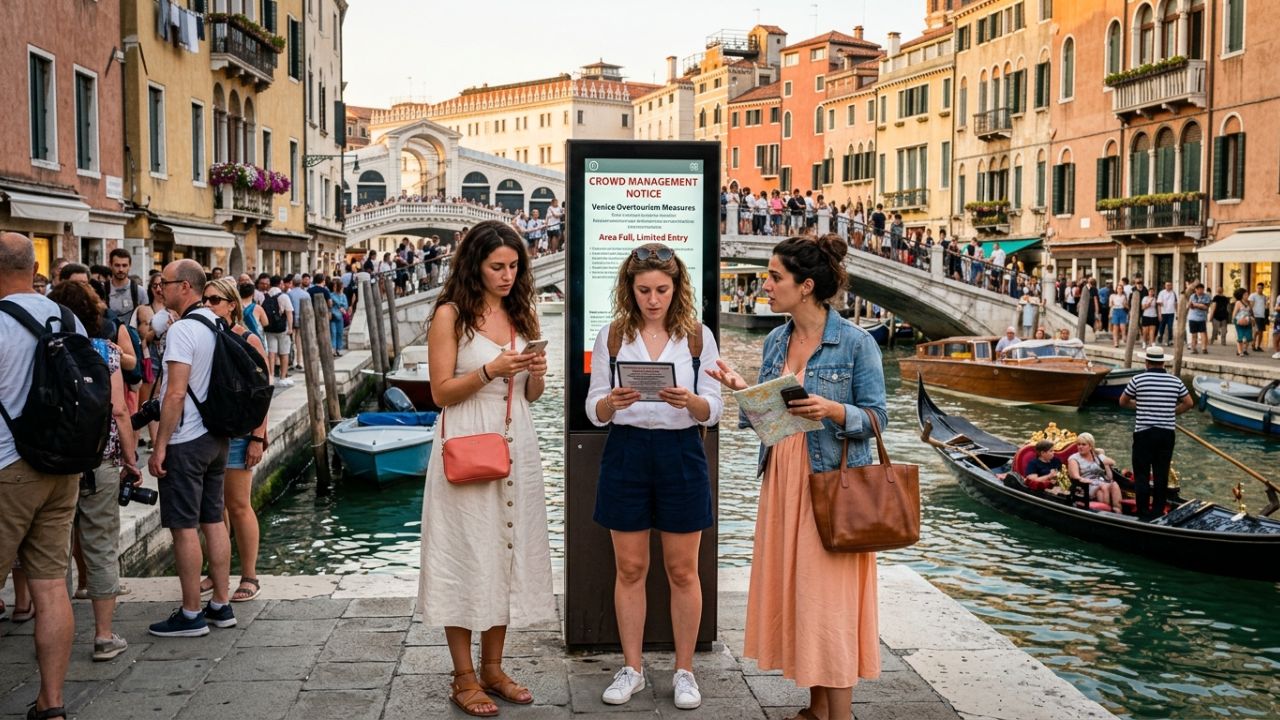
Image generated by AI
Published on June 21, 2026
The Italy tourism crisis is intensifying as local officials in Venice propose raising the day-tripper entry fee up to €50 to manage severe seasonal overcrowding. This proposal comes alongside nationwide overtourism struggles affecting other major heritage hubs like Rome and the island of Capri, prompting authorities to implement stricter crowd controls. Travelers planning visits to Italy's most famous historic centers must prepare for new payment rules, digital registrations, and access restrictions.
Quick Summary
- Fee Escalation Proposed: Venice authorities are evaluating a sharp increase in the day-tripper access fee from the current €5–€10 up to a maximum of €50 per person on peak days.
- National Overtourism Crisis: Strict visitor restrictions are expanding across Italy, including new entrance regulations at Rome’s Trevi Fountain and regulated tour operations on Capri.
- Digital Enforcement: Venice continues to track day-tripper arrivals through online reservation portals and QR codes, with non-compliant visitors facing fines up to €300.
- Exemptions Remain: Overnight hotel guests, local residents, students, and workers are still excluded from paying the day-tripper access fee.
- Access vs. Conservation: The proposed price hike has triggered intense social and legal debates regarding the fairness of charging entry to functional, living cities.
To safeguard historical landmarks and local livability, municipal governments across Italy are adopting structured regulatory tools. The City of Venice is leading these efforts by seeking to replace the initial token system with a stronger economic pricing model. As international arrivals continue to exceed urban capacity, other heritage destinations are closely watching Venice's strategy to determine how to protect historic sites without shutting down the tourism economy.
Event and Incident Details: Venice Entry Fee Plan Amid the Italy Tourism Crisis
Venice is currently considering a major revision of the day-tripper entry fee system that was first introduced in 2024. Under the existing framework, day travelers who book ahead pay a base rate of €5, while last-minute bookings increase to €10. The system applies only on roughly 60 designated high-demand days each year, particularly targeting peak seasonal periods driven by cruise ships, European weekend trips, and summer vacations.
The new proposal would raise the fee on high-demand days to between €30 and €50 per person. Travelers must register on the city's official digital platform, receive a validation QR code, and pass through verification checkpoints located at main entry zones like the Santa Lucia railway station. Those who attempt to enter the historic center without registering face hefty fines ranging up to €300.
To help travelers understand the current and proposed regulatory frameworks, the table below highlights the key differences and destination metrics:
| Location / Parameter | Existing Rules & Pricing | Proposed / New Regulations | Target Impact & Crowding Figures |
|---|---|---|---|
| Venice Day-Tripper Fee | €5 (advance) / €10 (last-minute) | €30 to €50 on high-demand days | Aims to manage surges of up to 80,000 daily visitors |
| Venice Penalty | Digital QR check at station entry zones | Retained with fines up to €300 | Targets unregistered day-trippers |
| Rome (Trevi Fountain) | Free unrestricted pedestrian access | Controlled access with pricing near the fountain | Easing crowd densities in narrow historic streets |
| Capri (Island Access) | Standard regional transport access | Regulated tour group sizes and mandatory audio guides | Addresses peak summer flows of up to 50,000 daily arrivals |
| Exempted Visitors | Residents, workers, students, overnight guests | Retained across all proposed models | Excludes visitors paying the local tourist tax |
Risk and Impact: How the Italy Tourism Crisis Affects Local Businesses and Travelers
The escalation of entry charges and crowd control policies across Venice, Rome, and Capri introduces a range of risks and disruptions:
- Infrastructure Overload: Extreme overcrowding places immense strain on local public transport, municipal waste management, and fragile historical infrastructure.
- Environmental Stress: Heavy visitor foot traffic contributes directly to the deterioration of sensitive environments, especially the fragile lagoon ecosystem in Venice.
- Rising Maintenance Costs: Municipalities face escalating costs for historic preservation, waste removal, and public service upkeep due to mass tourism.
- Deterrence of Mid-Range Travelers: Travel operators warn that high entry fees could discourage budget-conscious and mid-range tourists, affecting local shops and restaurants.
- Digital Confusion and Fines: Last-minute travelers who are unaware of the pre-registration requirements risk getting hit with the maximum €300 fine.
- Capri Transit Strain: The island of Capri faces intense congestion with summer tourist arrivals peaking at 50,000 per day, threatening local mobility.
What Authorities Are Saying
Venetian municipal leaders argue that the initial €5 day-tripper fee served as a helpful test run but did not do enough to deter peak-day overcrowding. Recorded visitor footfall during monitored periods only dropped slightly, falling from an average of 16,000 to just over 13,000 travelers. Officials state that the proposed €30 to €50 charge is not meant to be a hard cap on visitors, but rather a behavioral tool to encourage people to visit during off-peak times.
Additionally, authorities note that the higher revenues generated by these entry fees will be directly reinvested into public services. This includes funding complex waste management systems, optimizing water transit routes, and conserving structural heritage threatened by rising sea levels and foot traffic.
Practical Traveler Advice: Navigating Overtourism Regulations
To avoid fines and enjoy a smoother trip, travelers visiting Italy's historic cities should adapt to the new regulatory landscape:
- Book Overnight Stays: Since overnight guests are exempt from day-tripper fees, booking registered accommodation automatically bypasses Venice's entry charge.
- Pre-Register Online: If visiting Venice as a day-tripper on one of the 60 high-demand peak days, register early to secure your validation QR code.
- Monitor Peak Day Calendars: Check official city portals ahead of time to find out if your travel dates fall on regulated high-demand days.
- Prepare for Rome Access Controls: If planning to visit the Trevi Fountain, consult Rome's official tourism portal for updated access rates and pedestrian routing.
- Comply with Capri Audio Rules: Ensure your tour guides utilize mandated audio devices and adhere to the strict group limits to prevent penalties.
Broader Context: Preserving Heritage Sites Under UNESCO Guidance
The challenges in Venice, Rome, and Capri are part of a wider effort to protect environmentally sensitive and UNESCO-protected zones across Europe. While tourism is a major source of revenue for Italy, the public costs of restoring ancient heritage and maintaining infrastructure are immense.
Because of this, European destinations are increasingly moving away from unrestricted access. Venice's day-tripper system is serving as a major test case for new methods of tourism management, as cities try to balance economic benefits with the preservation of their historic centers.
What to Expect Next / Looking Ahead
The proposed fee increase is currently triggering intense legal debates in Italy. Legal experts are reviewing whether charging high fees to enter a living, functioning city conflicts with constitutional rights to free movement. Critics also argue that local authorities should focus more on regulating the short-term rental market, which has reduced residential housing and pushed locals out of historic neighborhoods.
Travelers should expect similar restrictions to expand to other historic Italian cities as municipalities seek to manage record-breaking tourist volumes.
Conclusion
The proposed hike in Venice's day-tripper entry fee marks a critical shift in how heritage destinations manage overtourism. By staying informed about digital registration rules, planning off-peak visits, and respecting local regulations, travelers can support the preservation of Italy's iconic cities. Balancing visitor access with cultural conservation will remain the central focus for Italian tourism planners moving forward.
Related Travel Guides
- Indonesia Enforces Strict Rupiah Transaction Mandate for Bali Tourist Payments Amid Currency Pressure, Rejecting Foreign Cash in Resorts and Tours: What Every Traveller Must Know
- Dominican Republic Declares Emergency After Bayahibe Beach Resort Fire Forces Evacuation of 1,690 International Tourists and Sparks Safety Investigation: Everything You Need to Know
- United States Severe Weather Warning as Thunderstorms and Flash Flooding Threaten Central and Eastern States, Disrupting Summer Travel Across Colorado, Wyoming, Nebraska, and Beyond: Latest Update
FAQ
Does Rome require an entry fee to visit the city?
No, there is no entry fee for the city itself. However, Rome is introducing controlled access pricing around the Trevi Fountain to reduce congestion in the surrounding pedestrian areas.
Who is exempt from paying the Venice day-tripper entry fee?
Exemptions apply to residents of Venice, workers, students, individuals born in the city, and overnight hotel guests who pay the standard overnight tourist tax.
What happens if I visit Venice on a peak day without a QR code?
Visitors who enter the historic center without booking and obtaining a digital QR code face municipal fines ranging from €50 to €300.
What are the crowd management rules on the island of Capri?
To cope with peak summer crowds of up to 50,000 daily visitors, Capri has implemented regulated tour group sizes and requires guides to use audio devices to reduce noise.
Why is Venice planning to raise the day-tripper fee to €50?
Venice is considering the increase because the initial €5 fee did not significantly reduce peak-day overcrowding, which can reach 80,000 visitors in a single day, putting heavy strain on the city's infrastructure.
Disclaimer
This article is for informational and educational purposes only. It does not constitute legal, financial, or professional advice. While we strive to provide accurate and up-to-date information, travel policies, regulations, and conditions change rapidly. Always verify information with official sources before making travel decisions. Nomad Lawyer makes no representations about the accuracy, reliability, completeness, or suitability of the information provided. Readers should consult qualified professionals for advice specific to their circumstances. The views expressed in this article are those of the author and do not necessarily reflect the views of Nomad Lawyer.
Raushan Kumar
Founder & Lead Developer
Full-stack developer with 11+ years of experience and a passionate traveller. Raushan built Nomad Lawyer from the ground up with a vision to create the best travel and law experience on the web.
Learn more about our team →