
Italy and Spain Lead European Luxury Rail Boom as Slow Travel Spending Hits Record Highs in 2026
Luxury rail experiences now account for 20% of all train spending in Europe as Italy and Spain drive a shift toward high-end slow travel over short-haul flights.

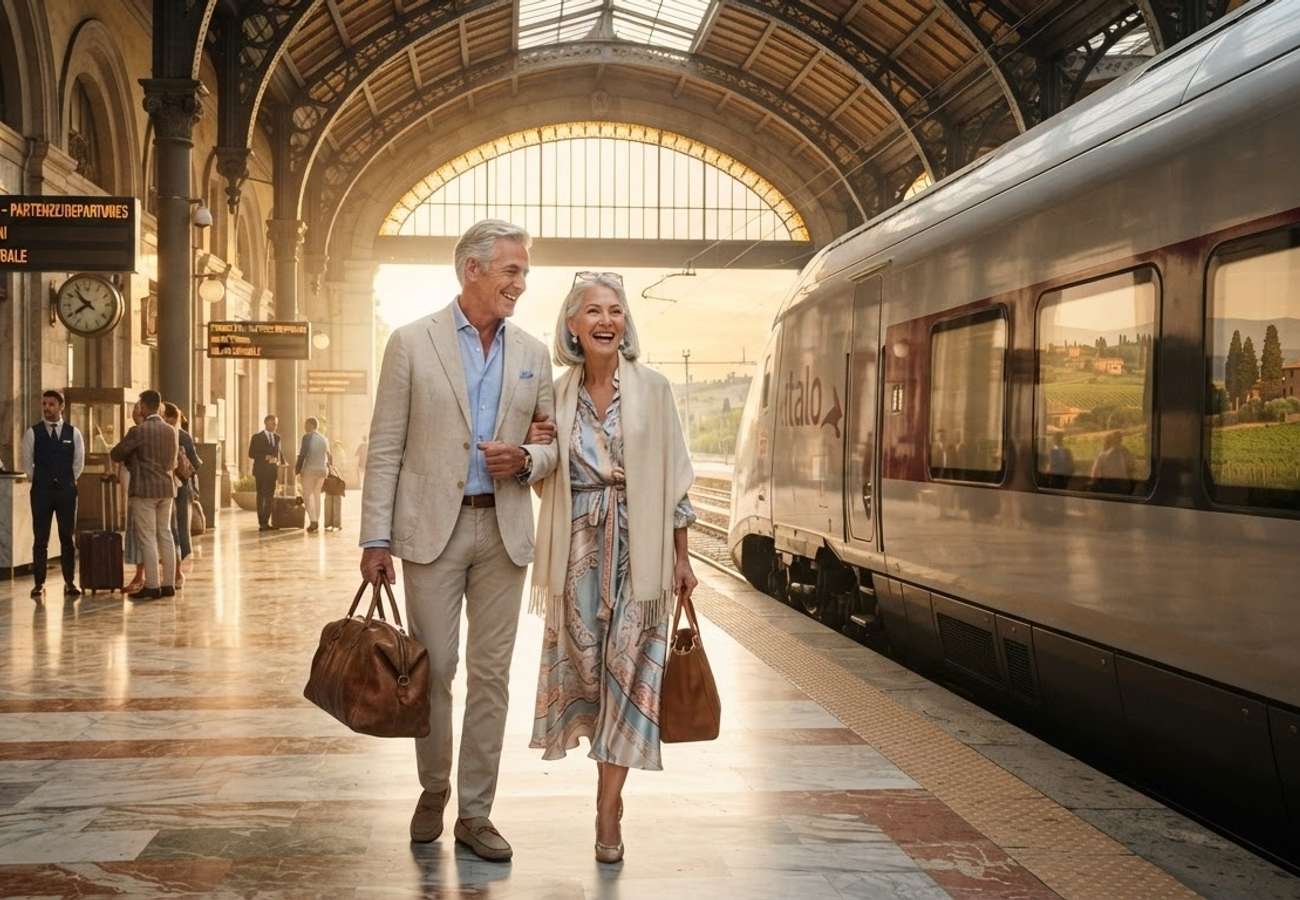
Image generated by AI
[Rome, July 9, 2026] — Europe is experiencing a fundamental shift in tourism dynamics as high-end rail journeys and "slow travel" philosophies reach record-breaking financial milestones. Recent industry data reveals that premium rail experiences now represent 20% of all train-related expenditures across the continent, marking a significant departure from the perception of rail as merely a budget-friendly alternative to aviation.
This surge is largely driven by a cultural pivot in Italy and Spain, where travelers are increasingly abandoning short-haul regional flights in favor of sophisticated, scenic rail corridors that prioritize comfort and cultural immersion over raw transit speed.
Shifting Consumer Priorities Toward Immersive Rail Journeys
The rise of luxury rail is not merely a change in transport logistics but a reflection of evolving traveler values. A growing segment of the market no longer views the train as a tool to reach a destination, but rather as the primary attraction of the holiday itself.
Industry observers note that the demand for panoramic windows, gourmet on-board dining, and private sleeper cabins is driving operators to design itineraries that blend major urban hubs with rural vineyards and historic villages. By eliminating the friction of airport transfers and security queues, these premium services allow passengers to engage more deeply with the European landscape.
Italy and Spain Spearhead the Premium Rail Movement
Southern Europe has emerged as the epicenter of this rail renaissance. In Italy, reports indicate that travelers are allocating over 50% of their rail budgets to premium slow-travel options. This trend is particularly evident on routes linking the cultural capitals of Rome, Florence, Venice, Milan, and Naples.
Similarly, Spain has leveraged its extensive high-speed infrastructure to make rail the preferred choice for both domestic and international tourists. The connectivity between Madrid, Barcelona, Seville, Valencia, and Málaga has effectively shifted tourism traffic away from regional airports and into the heart of Spanish cities. This investment in modern infrastructure has allowed both nations to capture a larger share of the luxury tourism market.
Expansion of High-Speed Connectivity Across the EU
The growth of the luxury sector is occurring alongside a broader strategic push by the European Commission to enhance cross-border rail efficiency. The EU's high-speed rail strategy is designed to make trains a more competitive alternative to short-haul aviation by simplifying international ticketing and strengthening passenger rights.
Current travelers can leverage a sophisticated network of high-speed services to traverse the continent:
- France: TGV network
- Italy: Frecciarossa
- Spain: AVE
- Germany: ICE
- Austria: Railjet
These networks facilitate multi-city itineraries, allowing tourists to arrive in a city center and depart without the need for long-distance taxi transfers from outlying airports.
Scenic Corridors as Primary Tourism Destinations
While high-speed rail handles the logistics, scenic routes are becoming standalone destinations. Switzerland remains a global leader in this regard, with the Glacier Express and Bernina Express continuing to draw visitors to UNESCO-listed alpine landscapes and remote mountain passes.
In Austria, rail corridors connecting Vienna, Salzburg, and Innsbruck provide a gateway to the Alps, while France has seen a rise in luxury transit between Paris, Lyon, and the French Riviera. These routes appeal specifically to demographics interested in gastronomy, photography, and heritage exploration.
Integration of Major Aviation Gateways and Rail Hubs
The practicality of rail-based holidays is supported by the seamless integration of major international airports with city-center railway stations. Most international visitors enter the region through primary hubs and immediately transition to high-speed rail.
| Arrival Airport | Connecting Rail Hub | Key Destination Access |
|---|---|---|
| Rome Fiumicino | Roma Termini | Florence, Naples, Venice |
| Milan Malpensa | Milano Centrale | Venice, Switzerland, Austria |
| Madrid-Barajas | Madrid Atocha | Seville, Valencia, Barcelona |
| Barcelona-El Prat | Barcelona Sants | Madrid, French Riviera |
| Paris Charles de Gaulle | Paris Gare de Lyon | Lyon, Provence, Marseille |
| Zurich Airport | Zurich Hauptbahnhof | Alpine regions, Bern, Geneva |
This infrastructure ensures that luxury travelers can move from a long-haul flight to a premium train cabin with minimal friction. Furthermore, the concentration of boutique hotels and luxury apartments near these central stations enhances the appeal of rail over car rentals.
The Intersection of Sustainability and High-End Tourism
The luxury rail boom is inextricably linked to the rise of sustainable tourism. By reducing the reliance on short-haul flights, affluent travelers are lowering their carbon footprints without sacrificing comfort.
The "slow travel" ethos encourages longer stays in individual locations and a more flexible approach to scheduling. This shift is prompting tourism operators to move away from "checklist tourism" and toward curated packages that combine luxury rail transit with exclusive local excursions and high-end accommodation.
Key Industry Data and Projections
The following statistics and timelines highlight the scale of the European rail transformation:
Market Statistics
- Premium Spending: 20% of total European rail expenditure is now attributed to luxury services.
- Regional Leaders: Italy and Spain show the highest growth in demand for premium slow-travel.
- Primary Markets: France, Switzerland, and Austria remain core pillars of the luxury rail ecosystem.
Strategic Timeline
- 2025: Launch of the European Commission's high-speed rail action plan.
- 2026: Luxury rail spending reaches an all-time record high.
- 2030: Targeted EU goal to significantly expand high-speed connectivity and passenger volume.
Why This Matters: The Future of European Mobility
The transition toward luxury rail represents more than a trend; it is a structural shift in the European travel economy. By successfully positioning the train as a luxury product rather than a utility, Europe is effectively decoupling "high-end travel" from "air travel."
This shift provides a dual benefit: it relieves the immense pressure on regional airports and creates a new revenue stream for rail operators that can be reinvested into infrastructure. For the traveler, the "information gain" here is the realization that the journey is no longer a gap between two destinations, but a curated experience. As the EU continues to integrate ticketing and reduce border friction, the luxury rail network will likely become the primary artery for high-net-worth tourism across the continent.
The era of the rushed itinerary is fading, replaced by a renewed appreciation for the elegance of the rails.
Related Travel Guides
Disclaimer
This article is for informational and educational purposes only. It does not constitute legal, financial, or professional advice. While we strive to provide accurate and up-to-date information, travel policies, regulations, and conditions change rapidly. Always verify information with official sources before making travel decisions. Nomad Lawyer makes no representations about the accuracy, reliability, completeness, or suitability of the information provided. Readers should consult qualified professionals for advice specific to their circumstances. The views expressed in this article are those of the author and do not necessarily reflect the views of Nomad Lawyer.
Kunal K Choudhary
Co-Founder & Contributor
A passionate traveller and tech enthusiast. Kunal contributes to the vision and growth of Nomad Lawyer, bringing fresh perspectives and driving the community forward.
Learn more about our team →