
The Shifting Gates of Schengen: How Italy and Spain's Extended Border Checks Impact Mediterranean Travel
Following a security review sparked by the influx of over 72,000 migrants into Ceuta, Italy and Spain extend temporary internal Schengen border inspections for another 15 days, altering airport and maritime routines across Southern Europe.

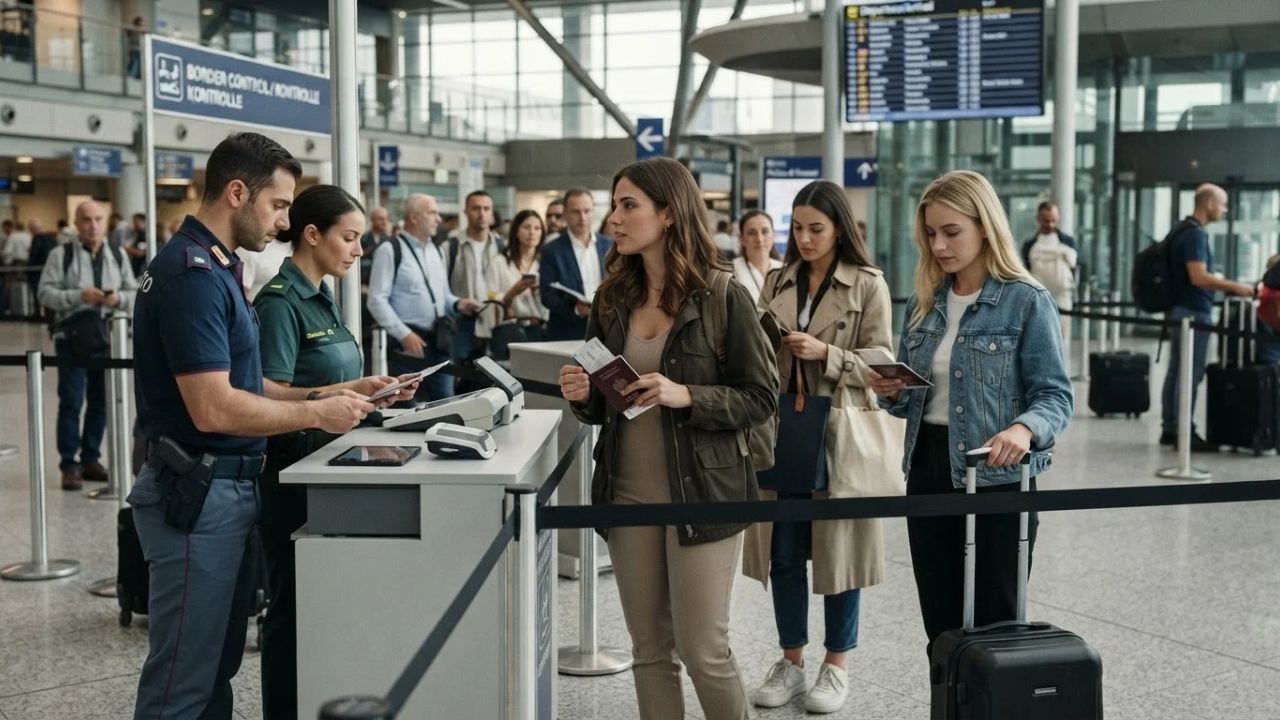
Temporary border verifications between Spain and Italy introduce new travel rhythms across Mediterranean transit hubs
Across the 27-nation Schengen Zone, where over four hundred million citizens and international voyagers have long crossed internal frontiers without presenting a passport, Italy and Spain have taken the extraordinary bilateral step of extending spot border checks for an additional 15 days. The heightened security protocol, originally triggered after an unprecedented crisis in July saw more than 72,000 migrants attempt to breach the border fences separating Morocco from the Spanish North African enclave of Ceuta, has suspended the illusion of frictionless Mediterranean transit. While thousands were subsequently repatriated, the human cost was devastating, with humanitarian monitors confirming that more than 140 people lost their lives attempting to swim around breakwaters or scale fortified razor barriers. Against the backdrop of Spain's landmark immigration regularization drive—which attracted over one million applications from long-term undocumented residents before its filing window closed—the ripple effects of this frontier emergency have traveled directly across the Balearic and Tyrrhenian seas.
For travelers boarding morning commuter flights between Madrid-Barajas and Rome Fiumicino, or taking overnight passenger ferries across the Mediterranean from Barcelona to the Roman port of Civitavecchia, the extension signals a tangible shift in transit etiquette. Random police checkpoints, boarding gate document sweeps, and port authority verifications mean that travel between Western Europe's two most celebrated cultural powerhouses now demands heightened vigilance, longer connection buffers, and a return to physical travel paperwork.
The Ceuta Catalyst: How an African Enclave Shook European Transit
To understand why security officials in Rome and Madrid have reinstated border verifications across their shared maritime and air corridors, one must look south across the Strait of Gibraltar to the tiny autonomous city of Ceuta. Perched on the North African coastline opposite Gibraltar, Ceuta forms one of only two European Union land borders on the African continent, alongside its sister enclave Melilla. When more than 72,000 individuals converged on the frontier during intense summer pressure points, local reception centers were overwhelmed, sparking rapid diplomatic strain and emergency security debates across the European Union.
Italy responded by establishing spot inspections on passenger flights and maritime services arriving from Spanish gateways, citing concerns regarding irregular transit corridors and transnational security risks. Spain swiftly reciprocated, introducing equivalent screening protocols for inbound travelers from Italian airports and ports. With both governments formally notifying EU authorities of the 15-day extension, the measure underscores the fragile balance between national sovereignty and the open-border principles that have anchored the Schengen project for three decades.
Although EU treaties dictate that internal border checks must serve only as a measure of last resort in the face of demonstrable threats to public order, exceptional provisions allow member states temporary flexibility. What was intended as a fleeting emergency reaction has settled into an operational rhythm. For international tourists exploring the Mediterranean basin, the takeaway is clear: the assumption of invisible borders between EU nations cannot be taken for granted during periods of geopolitical friction.
What Makes the Spain-Italy Corridor Different: A Tale of Two Maritime Empires
The travel corridor linking Spain and Italy is not merely an airline ledger; it is the most heavily trafficked cultural artery in Southern Europe. Every day, thousands of travelers move between the Moorish courtyards of Andalusia and the Renaissance plazas of Tuscany. Unlike the flat rail corridors linking France, Belgium, and Germany, mobility between Spain and Italy relies heavily on sea highways and dense aerial routes operated by both flag carriers and regional low-cost airlines.
The ferry routes connecting Barcelona to Civitavecchia, Genoa, and Porto Torres in Sardinia represent a classic Mediterranean slow-travel tradition. Boarding a vessel operated by Grimaldi Lines with an espresso in hand, travelers historically enjoyed the freedom of boarding with minimal scrutiny once through initial maritime security. Under current protocols, maritime passenger terminals are experiencing targeted document sweeps by Italian Guardia di Finanza and Spanish Policia Nacional units upon arrival, examining passports and confirming legal Schengen entry stamps.
Simultaneously, the cultural ties binding these nations remain unbreakable. Travelers moving through official programs curated by Spain's Official Tourism Portal and Italia.it regularly pair Roman ruins in Merida with the Colosseum in Rome, or Catalan modernism in Barcelona with Venetian canals. Even Ceuta itself represents a remarkable cultural crossroad: fortified by the UNESCO-listed Royal Walls (Murallas Reales), the enclave functions as a living laboratory where Sephardic Jewish traditions, Andalusian Catholic fiestas, Moroccan Muslim heritage, and a vibrant Sindhi Hindu merchant community coexist within an eight-square-mile peninsula.
Visitor Insider Tips: Navigating Mediterranean Transit Under Active Border Controls
- Always Carry Your Physical Passport on Internal Flights: Never assume a digital photograph, a domestic driver's license, or a national identity card from a non-EU nation will suffice at the departure gate. Police conducting random spot checks on flights from Madrid, Barcelona, Rome, and Milan require original passports. Non-EU visitors must verify that their entry stamp into the Schengen Area remains clearly legible to avoid lengthy questioning during spot verifications.
- Build Extended Connection Buffers at Major Hubs: If you are booking separate tickets with connecting flights through Madrid-Barajas (MAD) or Rome Fiumicino (FCO), leave a minimum buffer of three hours between flights. While Schengen-to-Schengen connections ordinarily skip immigration, sudden spot checks at arrival gates or transfer concourses can cause unexpected delays that jeopardize tight connections.
- Arrive Early for Mediterranean Ferry Crossings: If traveling on ferry crossings between Barcelona and Italian ports like Civitavecchia or Genoa, arrive at the maritime terminal at least ninety minutes prior to embarkation. Vehicles are undergoing secondary trunk and documentation inspections by customs agents, which slows loading and disembarkation queues significantly.
- Explore Ceuta with Proper Logistics: If adding Ceuta to an Andalusian itinerary, take the high-speed passenger catamaran from Algeciras across the Strait of Gibraltar—a thrilling one-hour crossing where dolphins frequently leap alongside the hull. Stroll the historic Monte Hacho fortress overlooking the Strait, taste fresh Atlantic swordfish (pez espada) seasoned with North African cumin and coriander, and visit the maritime Mediterranean Park designed by legendary architect Cesar Manrique.
- Monitor Official Embassies and Transport Updates: Keep abreast of security declarations through official transport platforms. The 15-day extension may be reviewed or renewed depending on security evaluations. Rely on registered train networks and scheduled commercial operators rather than unverified private shuttle services when moving near border checkpoints.
Cultural and Environmental Context: Migration, Identity, and the Mediterranean Sea
The Strait of Gibraltar and the Mediterranean Sea have functioned as both bridges and barriers for thousands of years. Today, the maritime borderlands represent one of the planet's most poignant cultural and humanitarian crossroads. The death of more than 140 individuals seeking entry into Ceuta serves as a tragic reminder that the very waters celebrated by luxury cruise liners and leisure sailors also witness profound human struggle and displacement.
Spain's decision to process more than one million applications under its recent immigration regularization initiative illustrates the domestic effort to integrate long-term migrant populations into the formal economy, particularly in agricultural regions like Almeria and Murcia, where fruit and vegetable farms supply northern European supermarkets. In Italy, coastal communities in Sicily and Calabria have balanced immense rescue responsibilities with maritime cultural preservation.
For the conscious traveler, moving through these border zones requires empathy and cultural awareness. Tourism cannot exist in an artificial bubble detached from the geopolitical realities of the regions we explore. By supporting local community initiatives, patronizing multi-ethnic dining cooperatives in cities like Barcelona and Palermo, and respecting the complex challenges faced by frontline border towns, visitors contribute to a travel culture that values human dignity alongside architectural beauty.
FAQ: Navigating Spain and Italy Border Checks 2026
Do non-EU travelers need a separate visa to travel between Spain and Italy? No. A valid short-stay Schengen visa or visa-free tourist privilege covers travel across both countries. However, you must carry your original passport with your initial Schengen entry stamp readily available for inspection.
Are all flights between Spain and Italy undergoing strict passport control? No. The checks are carried out as random spot inspections at boarding gates, arrival corridors, and baggage collection halls by national police forces, rather than universal immigration booths.
Can I still travel by passenger ferry between Barcelona and Rome? Yes. Daily commercial ferry services operate normally between Barcelona and Civitavecchia. Passengers should simply anticipate potential passport spot checks and vehicle inspections at both ports.
Is it safe to travel to the Spanish city of Ceuta currently? Yes. Ceuta remains calm and open to regular domestic and international tourism. Visitors crossing from mainland Spain via ferry encounter standard Spanish civic services, secure heritage sites, and active dining precincts.
Across the sunlit waters of the Mediterranean, the true essence of travel endures not in the absence of barriers, but in the enduring spirit of human connection that bridges every shore.
Related Travel Guides
- Beyond the Grand Tour: How Cape Town, Marrakech, and Africa’s Luxury Capitals Are Rewriting High-End Travel
- The Living Soul of the Continent: How Zanzibar, Ethiopia, and Africa’s Heritage Cities Are Redefining Cultural Travel
- Crossing the Strait: The Insider Guide to Ferries, Enclaves, and Mediterranean Rail Between Spain and Italy
Disclaimer
This article is for informational and educational purposes only. It does not constitute legal, financial, or professional advice. While we strive to provide accurate and up-to-date information, travel policies, regulations, and conditions change rapidly. Always verify information with official sources before making travel decisions. Nomad Lawyer makes no representations about the accuracy, reliability, completeness, or suitability of the information provided. Readers should consult qualified professionals for advice specific to their circumstances. The views expressed in this article are those of the author and do not necessarily reflect the views of Nomad Lawyer.
Raushan Kumar
Founder & Lead Developer
Full-stack developer with 11+ years of experience and a passionate traveller. Raushan built Nomad Lawyer from the ground up with a vision to create the best travel and law experience on the web.
Learn more about our team →