
Iran Launches Major Missile Strike on Israel: Middle East Airspace Closures Devastate Tourism and Aviation Across Six Nations in June 2026
Iran's direct missile assault on Israel shatters April ceasefire, forcing emergency airspace closures across Lebanon, Jordan, Syria, Iraq, and Iran. Regional tourism and aviation face unprecedented disruption.

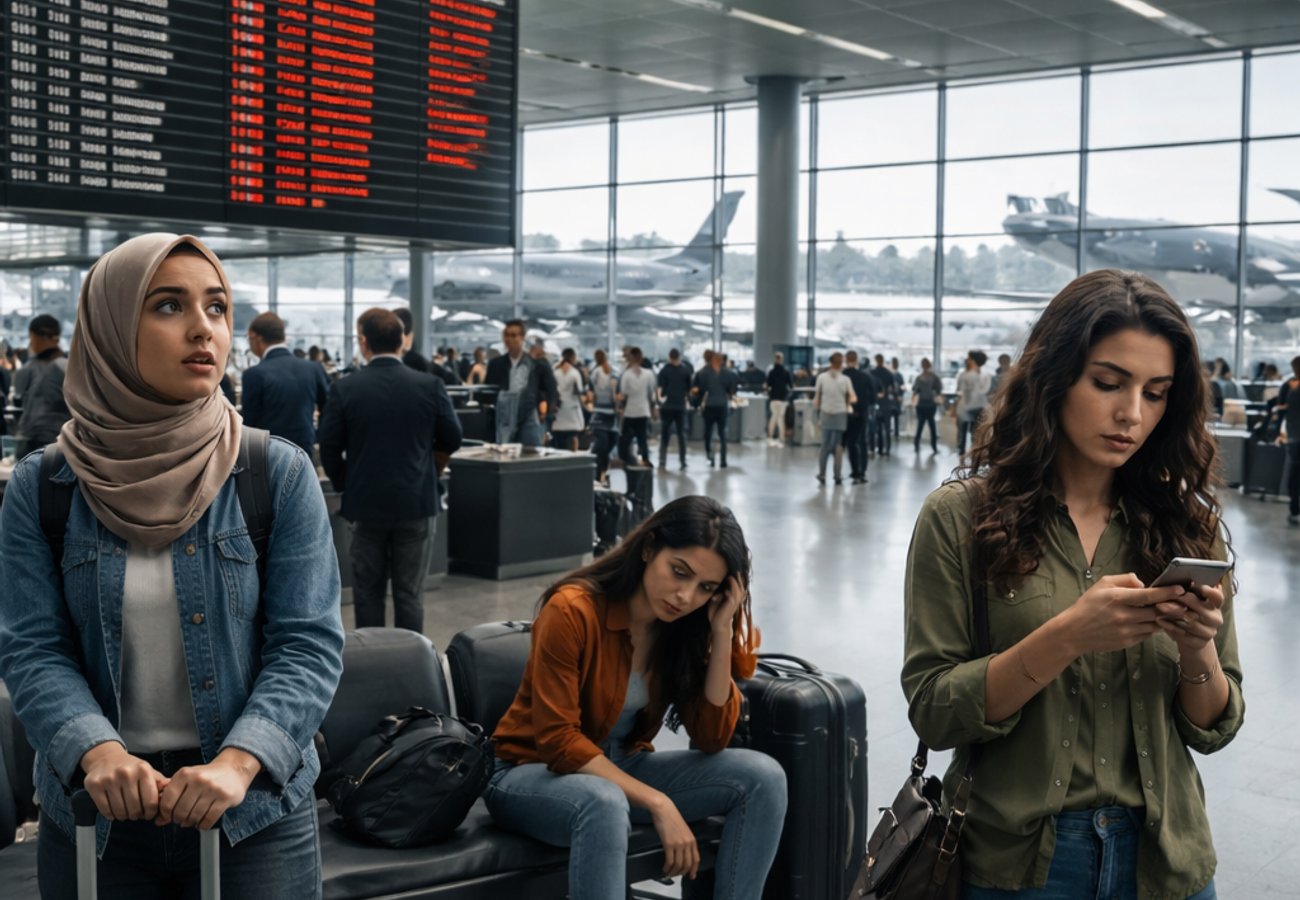
Image generated by AI
A Shattered Ceasefire: The Escalation That Stopped the Region
The fragile peace that held the Middle East for two months just collapsed. On June 8, 2026, Iran launched a significant direct missile assault targeting Israel, shattering the ceasefire agreement brokered in April and triggering a cascading regional emergency that has paralyzed aviation across six nations.
What started as a surgical military response spiraled into something far more consequential: the immediate closure of commercial airspace, the grounding of hundreds of flights, and the cancellation of tourism bookings across one of the world's most strategically important travel corridors.
Reddit: "I was supposed to fly to Tel Aviv next week. Just got the cancellation notice from my airline. No rebooking until conditions stabilize." — r/travel
When Missiles Change Flight Paths: The Immediate Aviation Crisis
Iran's assault consisted of multiple ballistic missiles aimed at Israeli territory, triggering immediate air raid alerts across northern and central regions, including major cities like Haifa, Caesarea, and Hadera. Israeli air defense systems intercepted the incoming threats, but the damage to regional aviation was already underway.
Within hours, six nations implemented emergency airspace restrictions:
- Israel suspended incoming flights and activated maximum security protocols
- Lebanon closed Beirut-Rafic Hariri International Airport and restricted transit corridors
- Jordan imposed temporary airspace closures affecting Amman and Aqaba airports
- Syria implemented preventive airspace suspension
- Iraq suspended commercial aviation operations
- Iran temporarily closed Tehran's Imam Khomeini International Airport and western airspace
The domino effect was immediate and catastrophic for the aviation industry. According to current Middle East aviation tracking data, more than 400 commercial flights faced cancellation or rerouting within the first 24 hours.
Israel's Tourism Infrastructure on Emergency Lockdown
Israeli authorities confirmed that all incoming missiles were intercepted, with military officials warning of potential strong retaliation if escalation continued. But the real impact wasn't measured in military terms—it was measured in canceled hotel reservations and stranded tourists.
Emergency services activated shelter protocols across major tourist hubs. Popular attractions including archaeological sites, cultural institutions, and hospitality venues in Tel Aviv, Jerusalem, and the Dead Sea region were temporarily closed or restricted. Hotels upgraded security measures and began processing refund requests from international guests.
Tourism operators reported a sharp decline in forward bookings. The Israeli Ministry of Tourism issued advisories recommending travelers defer non-essential trips to northern and central regions until conditions stabilized.
Lebanon's Cultural Tourism in Crisis Mode
Beirut, one of the Middle East's most vibrant tourism destinations, faced heightened tension following missile strikes targeting southern suburbs. Tourism in Lebanon—historically dependent on cultural heritage, gastronomy, and historical sites—was hit hard.
Beirut-Rafic Hariri International Airport implemented reinforced security protocols and flight suspensions. Tour operators managing excursions to the Cedars of God, Baalbek ruins, and Tyre's archaeological sites issued travel deferrals to customers.
Hotels across Beirut and the southern regions updated emergency evacuation protocols. The short-term outlook for Lebanon's tourism sector—already fragile from prior regional tensions—deteriorated significantly.
Jordan's Gateway to Petra and Wadi Rum: Disrupted
Jordan, a major tourism draw for visitors seeking Petra, Wadi Rum, and Dead Sea experiences, implemented strict airspace restrictions through civil aviation authorities. Airports in Amman and Aqaba issued advisories causing schedule adjustments and operational delays across major carriers.
International tour operators managing multi-country itineraries faced cascading cancellations. Travelers with confirmed bookings to Jordan received notifications about rerouted flights, extended travel times, and potential schedule changes. The Jordanian tourism board advised visitors to remain informed and verify all flight arrangements before departure.
Syria and Iraq: Historic Sites Cut Off from International Travel
Syria and Iraq implemented preventive airspace closures affecting both commercial carriers and regional transit operations. This effectively severed travel routes to some of the world's most significant archaeological and cultural sites.
Tourism to Damascus, Aleppo, Baghdad, and Basra—key destinations for heritage and cultural travelers—faced immediate disruption. International tour operators managing Middle East itineraries scrambled to reroute guests or issue full cancellations.
Iran's Airspace Closure: A Regional Chokepoint
Iran suspended operations in western airspace and temporarily closed Tehran's Imam Khomeini International Airport, creating a critical bottleneck for transcontinental air traffic. This disrupted connecting flights for travelers bound for Europe, Asia, and North America.
The coordinated airspace closures across all six nations illustrated the vulnerability of international aviation to regional geopolitical events. Airlines operating major transcontinental routes through Middle Eastern hubs faced unprecedented operational challenges.
The Ripple Effect: What This Means for Travelers
Travel advisories were issued across multiple government agencies recommending postponement of non-essential trips to:
- Northern and central Israel
- Southern Lebanon and border regions
- Syria-Lebanon border areas
- Select regions in Iraq
Airlines including major carriers announced flexible rebooking policies for affected passengers. Insurance companies began adjusting coverage parameters for travel to the region, reflecting elevated risk assessments.
Reddit: "My travel insurance just updated their policy on Middle East coverage. Premiums went up, exclusions expanded. This is the real cost of these escalations." — r/digitalnomad
Industry Response: Hotels, Airlines, and Tour Operators Adapt
The travel and tourism industry responded with coordinated contingency measures:
Airlines revised scheduling, activated alternate routing protocols, and issued travel waivers allowing flexible rescheduling without penalties. Major carriers suspended bookings to affected regions pending normalization.
Hotels across the region enhanced security measures, implemented staff safety protocols, and processed cancellation requests. Occupancy rates in high-risk areas dropped sharply.
Tour operators managing multi-destination itineraries issued travel deferrals, offered alternative destination substitutions, and provided full refunds for customers unwilling to travel amid heightened uncertainty.
Aviation safety organizations coordinated with regional authorities to establish clear protocols for airspace reopening once security conditions improved.
Looking Ahead: The Fragility of Middle East Travel
This escalation underscores a harsh reality: tourism and commercial aviation in geopolitically sensitive regions remain acutely vulnerable to sudden security incidents. The closure of airspace across six nations within hours demonstrated how quickly regional tensions can reshape entire travel ecosystems.
For travelers planning Middle East itineraries, the message is clear: monitor official government advisories, purchase comprehensive travel insurance, maintain flexible booking arrangements, and prioritize safety over rigid schedules.
For the aviation and tourism industries, this incident reinforces the critical importance of crisis management protocols, coordinated regional communication, and rapid adaptation to changing security conditions.
The ceasefire shattered. The skies closed. The tourism stopped. And the region's fragile balance was reminded of its persistent vulnerability.
The Middle East's tourism recovery depends not just on military deescalation, but on the deliberate rebuilding of traveler confidence in a region defined by uncertainty.
Related Travel Guides
Disclaimer
This article is for informational and educational purposes only. It does not constitute legal, financial, or professional advice. While we strive to provide accurate and up-to-date information, travel policies, regulations, and conditions change rapidly. Always verify information with official sources before making travel decisions. Nomad Lawyer makes no representations about the accuracy, reliability, completeness, or suitability of the information provided. Readers should consult qualified professionals for advice specific to their circumstances. The views expressed in this article are those of the author and do not necessarily reflect the views of Nomad Lawyer.
Kunal K Choudhary
Co-Founder & Contributor
A passionate traveller and tech enthusiast. Kunal contributes to the vision and growth of Nomad Lawyer, bringing fresh perspectives and driving the community forward.
Learn more about our team →