
Inside Denver International Airport's Wildest Conspiracy Theories: Blucifer, Murals, and Secret Tunnels
From the cursed 'Blucifer' statue to apocalyptic murals and failed baggage systems, explore the urban legends and architectural mysteries of Denver International Airport (DEN).

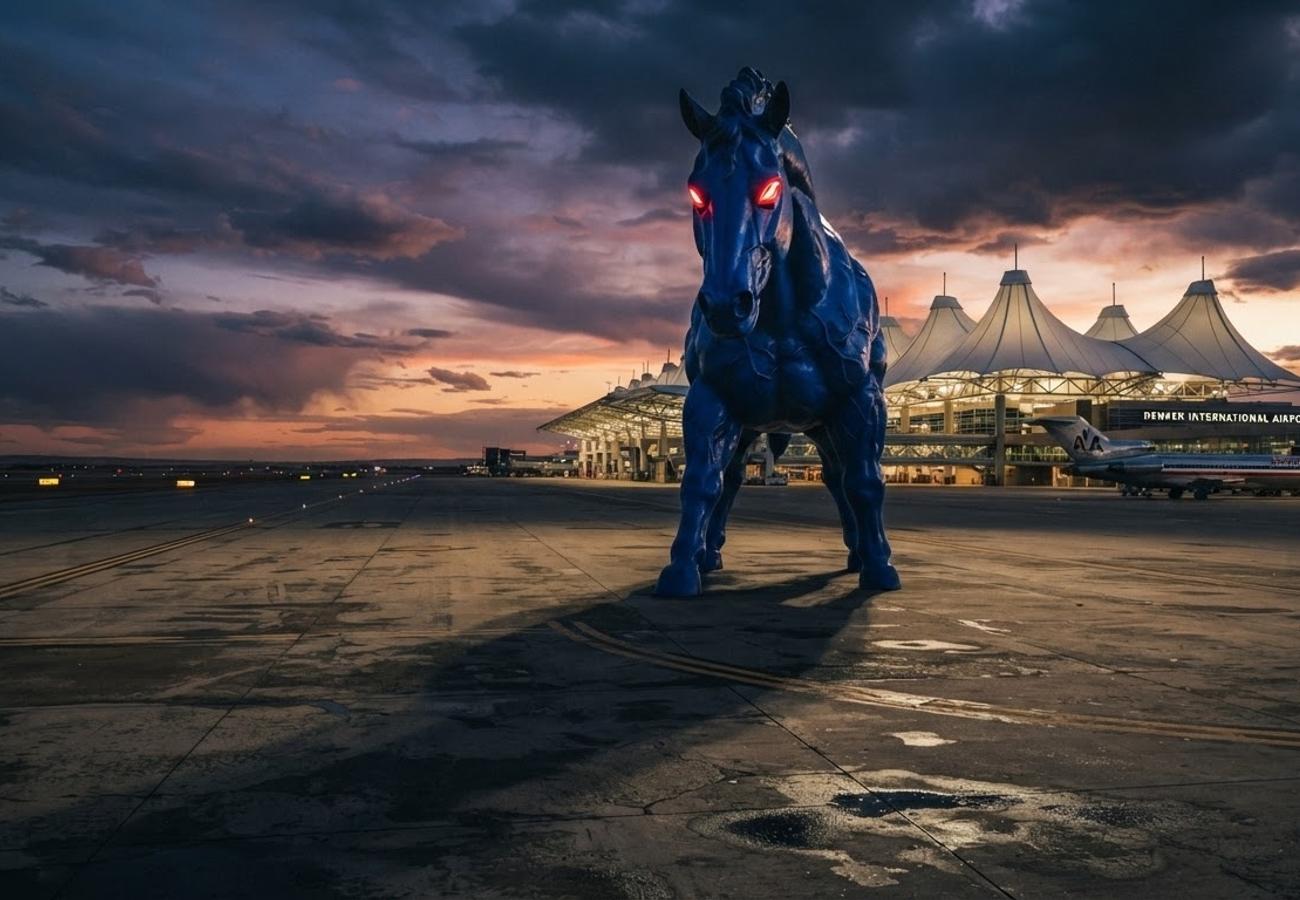
Image generated by AI
The world's most scrutinized airport isn't famous for its flight connections, but for its rumored ties to the Illuminati and secret underground bunkers. For millions of travelers passing through Denver International Airport (DEN), the journey begins long before the boarding gate with a series of unsettling architectural and artistic choices.
The Architecture of Suspicion
Denver International Airport opened in 1995 following a construction period defined by chaos. The project was plagued by significant budget overruns and missed deadlines, which immediately drew the attention of critics and skeptics across Colorado.
The transition from the suburban Stapleton Airport to a massive, white-tented terminal situated 25 miles from downtown Denver created an immediate sense of isolation. This remote location, combined with the sheer scale of the facility, provided the perfect vacuum for urban legends to grow.
Early suspicions were fueled by aerial photography of the runway layout, which some observers claimed resembled a crooked swastika. These visual cues, paired with the massive amount of earth moved during construction, led to persistent rumors that the airport was designed for something other than civilian aviation.
Deciphering the Apocalyptic Murals
The most debated features of the terminal are the murals created by Chicano artist Leo Tanguma. Specifically, "Children of the World Dream of Peace" and "In Peace and Harmony with Nature" have become focal points for digital theorists.
To the casual observer, the imagery is jarring. The panels depict:
- Soldiers wearing gas masks.
- Children weeping over deceased animals.
- A menacing figure armed with a sword and rifle.
- Cities engulfed in flames.
While internet forums interpret these as blueprints for global depopulation or a roadmap for a "New World Order," the official narrative is rooted in social realism. According to Denver’s public art program, the works are intended to show a progression from war and environmental collapse toward a future of global healing and peace. The narrative flow is designed to move from suffering to recovery, rather than from order to domination.
Blucifer: The Cursed Guardian of Peña Boulevard
Before passengers even enter the terminal, they are greeted by "Blue Mustang," a 32-foot cobalt fiberglass sculpture. Known locally as "Blucifer," the statue is famous for its bulging veins and glowing red neon eyes.
The sculpture carries a genuine macabre history. Its creator, Luis Jiménez, died in 2006 when a large piece of the sculpture broke loose and severed an artery in his leg. The piece was completed by his family and assistants before being installed at DEN in 2008.
This tragic origin story has cemented Blucifer's reputation as a "cursed" entity. While social media often frames the horse as a demonic guardian for a secret base, it serves a practical purpose for travelers as a primary visual landmark for rental car shuttles and hotel drop-off zones.
The Mystery of the Underground Tunnels
The core of DEN's mythology lies beneath the runways. While the airport officially utilizes underground spaces for its passenger train system, utility corridors, and service roads, theorists believe these are covers for something larger.
The suspicion is largely tied to the airport's disastrous automated baggage system. Launched with great ambition, the system was a technical failure; suitcases were famously launched off tracks, and golf clubs were crushed in jams.
The failure of this high-tech system left behind miles of unused tunnels and machinery. For conspiracy theorists, these "failed" areas are actually concealed bunkers designed to house political elites during a global catastrophe.
How DEN Embraced the Madness
Unlike many government entities that ignore rumors, Denver International Airport has leaned into its reputation. During recent terminal renovations, the airport installed posters that openly joke about lizard people and the Illuminati.
By turning conspiracy theories into a marketing tool, the airport has transformed a history of construction failure into a modern tourist attraction. For many passengers, hunting for "creepy" symbols has become a standard part of the DEN layover experience.
Summary of Denver Airport Legends
| Feature | Official Purpose | Conspiracy Theory |
|---|---|---|
| Blue Mustang | Public Art / Landmark | Cursed demon guardian |
| Leo Tanguma Murals | Plea for Global Peace | Blueprint for depopulation |
| Runway Layout | Aviation Efficiency | Occult/Political Symbolism |
| Underground Tunnels | Train & Utility Access | Secret bunkers for the elite |
| Baggage System | Automated Luggage Transport | Cover for hidden infrastructure |
Key Takeaways
- Construction Chaos: Budget overruns and delays in the early 90s laid the groundwork for distrust.
- Artistic Interpretation: Murals meant to promote peace are often viewed as apocalyptic prophecies due to their jarring imagery.
- Real-Life Tragedy: The death of artist Luis Jiménez added a layer of genuine tragedy to the "Blucifer" legend.
- Infrastructure Failures: The failed baggage system provided the physical evidence (unused tunnels) needed to sustain underground theories.
FAQ
Is there actually a secret base under Denver Airport? There is no verifiable evidence of a secret base. The underground areas are used for the airport's train system, baggage handling, and utilities.
Why is the horse statue called Blucifer? It is a portmanteau of "Blue" and "Lucifer," inspired by the statue's menacing appearance and glowing red eyes.
Are the murals still visible at the airport? Yes, though they have been moved or covered during various terminal renovation phases, they remain a central part of the airport's public art collection.
Whether a gateway to the Rockies or a hub for the occult, DEN remains one of the most unique transit hubs in the world.
Related Travel Guides
Disclaimer
This article is for informational and educational purposes only. It does not constitute legal, financial, or professional advice. While we strive to provide accurate and up-to-date information, travel policies, regulations, and conditions change rapidly. Always verify information with official sources before making travel decisions. Nomad Lawyer makes no representations about the accuracy, reliability, completeness, or suitability of the information provided. Readers should consult qualified professionals for advice specific to their circumstances. The views expressed in this article are those of the author and do not necessarily reflect the views of Nomad Lawyer.
Kunal K Choudhary
Co-Founder & Contributor
A passionate traveller and tech enthusiast. Kunal contributes to the vision and growth of Nomad Lawyer, bringing fresh perspectives and driving the community forward.
Learn more about our team →