
Indonesia, Thailand, Laos, and Malaysia Reshape Southeast Asian Micro-Tourism with High-Speed Rail and Flexible Cross-Border Travel in 2026
Southeast Asia's tourism model is undergoing a radical shift as high-speed rail, integrated customs, and digital payments enable seamless two-to-three-day cross-border weekend getaways across ASEAN nations.

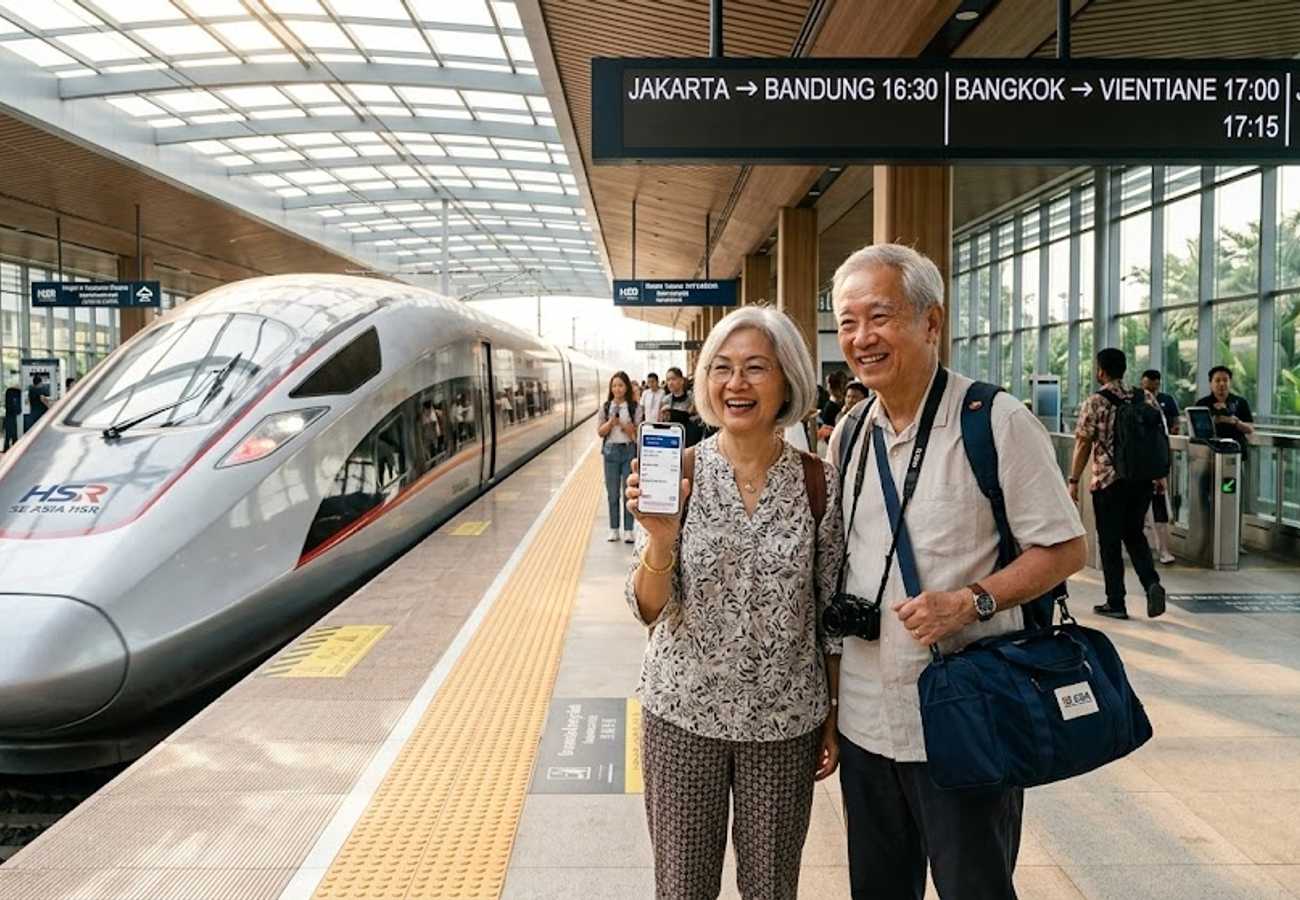
Image generated by AI
Southeast Asia is abandoning the backpacker circuit. A new wave of two-to-three-day cross-border weekend trips—powered by 350 km/h trains, co-located immigration, and interoperable e-wallets—is replacing the traditional long-haul holiday model across the region.
By late July 2026, the Southeast Asian tourism sector has fundamentally restructured itself. The prolonged, multi-week backpacking journeys once dominated by intercontinental travelers are giving way to a high-frequency, intra-regional phenomenon called micro-tourism. This model centers on condensed, two-to-three-day international weekend getaways with minimal logistical friction.
The driving force is not just consumer preference but a synchronized infrastructure leap. High-speed rail networks, cross-border train extensions, integrated customs operations, and interoperable digital payment systems have collectively removed the traditional barriers that once made short international trips impractical. Crossing a sovereign border for a weekend culinary excursion now feels as routine as a domestic commute.
Why Micro-Tourism Replaced the Long-Haul Model
Historically, international travel within the Association of Southeast Asian Nations (ASEAN) demanded significant time and resources. Travelers dedicated entire days to navigating congested airports, managing immigration queues, and handling currency exchanges. That friction rendered spontaneous 48-hour international trips economically inefficient and logistically unappealing.
By 2026, the regional tourist profile has shifted. A growing middle class across Indonesia, Thailand, Malaysia, and Vietnam now prioritizes frequency over duration. They seek immersive, condensed experiences rather than extended holidays.
This behavioral pivot rests on two structural pillars: ground-level rapid transit and digital-first flexibility. A modern regional traveler expects to book a train ticket on Friday morning, board a high-speed carriage that afternoon, cross an international border without a secondary immigration checkpoint, and pay for street food through a domestic e-wallet. Transport ministries and tourism boards across the region have reoriented their strategies to facilitate these micro-vacations, recognizing that the cumulative economic yield of frequent weekend travelers rivals that of traditional long-haul tourists.
Indonesia's Whoosh: The Blueprint for Rapid Transit Tourism
Indonesia's Jakarta-Bandung high-speed rail line, commercially branded as "Whoosh," represents the foundational model for how rapid transit can redefine regional travel. Overseen by the Indonesian Ministry of Transportation and the joint venture Kereta Cepat Indonesia China, the service reaches operational speeds of 350 kilometers per hour. The 142-kilometer railway collapsed travel time between Jakarta and Bandung from a congested three-hour drive to a 40-minute journey.
By late 2025, Whoosh had transported over 12 million passengers, cementing Bandung's status as the premier micro-tourism destination for Jakartans and international visitors. Tourists now use flexible digital ticketing applications to secure last-minute weekend getaways, fundamentally altering West Java's hospitality dynamics.
However, this infrastructural achievement carries significant financial weight. The rail project experienced substantial cost overruns, accumulating massive debt that triggered Indonesian parliamentary debates. Government officials and transport executives have publicly acknowledged the severe deficits burdening the state-owned railway operator, prompting top-level directives to restructure the debt portfolio while keeping passenger operations running. To offset these fiscal pressures, Indonesia has leaned heavily into promoting Whoosh-enabled micro-tourism, driving continuous passenger volume to generate ancillary revenue in the Bandung economy.
Thailand and Laos: The Northern Cross-Border Corridor
While Indonesia built the domestic high-speed blueprint, mainland Southeast Asia pursued cross-border railway integration. The most significant development in the northern corridor is the direct rail linkage between Thailand and the Lao People's Democratic Republic, formally launched by the Thai government in mid-2024 and reaching full operational maturity by 2026.
Operating from Bangkok's Krung Thep Aphiwat Central Terminal, the passenger train connects directly to Vientiane. Transport authorities designed the route to pick up passengers from key regional hubs such as Udon Thani Airport, enabling a direct transfer to the Laotian capital without changing trains. Thai public relations departments have promoted this route as a cornerstone for elevating Thailand into a primary global tourism and logistics hub, emphasizing the affordability of its tiered seating classes.
Malaysia's ETS Network: Optimizing the Southern Corridor
The southern rail corridor connecting Thailand to Malaysia has undergone aggressive optimization. The Malaysian government's Keretapi Tanah Negera Melayu (KTM) Electric Train Service (ETS) operates along the West Coast Line from Padang Besar at the Thai border down to Johor Bahru near Singapore.
Following the completion of the Gemas-Johor Bahru Electrified Double Track Project, KTM transitioned to opening ticket sales in strategic, multi-month blocks. A comprehensive timetable update implemented in August 2026 drastically reduced transit times, allowing travelers to dynamically plan cross-border weekend excursions well in advance or modify them through integrated digital platforms.
This railway renaissance is augmented by multimodal transport strategies. Emerging carriers from India have strategically aligned flight schedules with Southeast Asian rail hubs, introducing daily morning and evening direct flights to destinations like Phuket. This scheduling deliberately accommodates the modern traveler's demand for flexibility, enabling seamless transitions from international flights to regional rail networks for extended micro-tourism experiences.
Singapore-Malaysia RTS Link: Redefining Border Crossing
The most eagerly anticipated infrastructure project of 2026 is the Johor Bahru–Singapore Rapid Transit System (RTS) Link. Targeted for passenger service commencement in late 2026 or early 2027, this four-kilometer cross-border mass rapid transit line is engineered to resolve one of the world's most congested land border crossings.
Connecting Woodlands North in Singapore directly to Bukit Chagar in Malaysia, the RTS Link will convert a notoriously unpredictable causeway commute into a five-minute automated journey.
The defining innovation is its approach to immigration clearance. Singaporean and Malaysian transport and immigration ministries have collaborated to establish a co-located Customs, Immigration, and Quarantine (CIQ) facility at the departure stations. Travelers will clear both nations' border protocols simultaneously before boarding, eliminating the need for a secondary queue upon arrival. Supported by hundreds of AI-powered electronic automated gates, the system is designed to process up to 10,000 passengers per hour in each direction.
Key Infrastructure and Ridership Data
| Project | Route | Distance/Speed | Key Metric | Status |
|---|---|---|---|---|
| Whoosh HSR | Jakarta–Bandung | 142 km / 350 km/h | 12M+ passengers by late 2025 | Operational |
| Thailand-Laos Rail | Bangkok (Krung Thep Aphiwat)–Vientiane | Cross-border | Launched mid-2024 | Full maturity 2026 |
| KTM ETS | Padang Besar–Johor Bahru | West Coast Line | August 2026 timetable update | Operational |
| RTS Link | Woodlands North (SG)–Bukit Chagar (MY) | 4 km | 10,000 pax/hour per direction | Late 2026/early 2027 |
Key Takeaways
- Southeast Asia's tourism model has shifted from prolonged backpacking circuits to high-frequency, two-to-three-day cross-border micro-trips.
- Indonesia's Whoosh high-speed rail covers 142 kilometers at 350 km/h, reducing Jakarta-Bandung travel to 40 minutes and carrying over 12 million passengers by late 2025.
- Thailand's direct rail link to Vientiane, launched mid-2024, reached full operational maturity in 2026 with seamless transfers from Udon Thani Airport.
- Malaysia's KTM ETS network implemented a comprehensive timetable update in August 2026 following the Gemas-Johor Bahru Electrified Double Track Project completion.
- The Singapore-Malaysia RTS Link, targeted for late 2026 or early 2027, will process up to 10,000 passengers per hour per direction using co-located CIQ facilities.
- Indian carriers have aligned daily flights to Phuket with regional rail schedules to support multimodal micro-tourism.
FAQ
What is micro-tourism in Southeast Asia? Micro-tourism refers to localized, high-frequency, two-to-three-day weekend getaways across international borders within ASEAN, enabled by high-speed rail, integrated customs, and digital payment systems.
How fast is Indonesia's Whoosh train? The Jakarta-Bandung Whoosh high-speed rail reaches operational speeds of 350 kilometers per hour, covering 142 kilometers in approximately 40 minutes.
When does the Singapore-Malaysia RTS Link open? The RTS Link is targeted for passenger service commencement in late 2026 or early 2027, connecting Woodlands North in Singapore to Bukit Chagar in Malaysia.
Can you travel from Bangkok to Vientiane by train? Yes. The direct rail linkage launched in mid-2024 operates from Bangkok's Krung Thep Aphiwat Central Terminal to Vientiane, with pickup points including Udon Thani Airport.
Southeast Asia is writing a new travel playbook—one weekend at a time.
Related Travel Guides
Disclaimer
This article is for informational and educational purposes only. It does not constitute legal, financial, or professional advice. While we strive to provide accurate and up-to-date information, travel policies, regulations, and conditions change rapidly. Always verify information with official sources before making travel decisions. Nomad Lawyer makes no representations about the accuracy, reliability, completeness, or suitability of the information provided. Readers should consult qualified professionals for advice specific to their circumstances. The views expressed in this article are those of the author and do not necessarily reflect the views of Nomad Lawyer.
Raushan Kumar
Founder & Lead Developer
Full-stack developer with 11+ years of experience and a passionate traveller. Raushan built Nomad Lawyer from the ground up with a vision to create the best travel and law experience on the web.
Learn more about our team →