
Breaking Airline News: Severe Travel Chaos Hits Asia-Pacific as IndiGo Executes Massive Six-Route Capacity Collapse
Breaking airline news: A catastrophic travel shockwave has violently struck the Asia-Pacific as IndiGo abruptly cancels six critical international routes, plunging travelers into severe regional travel chaos.

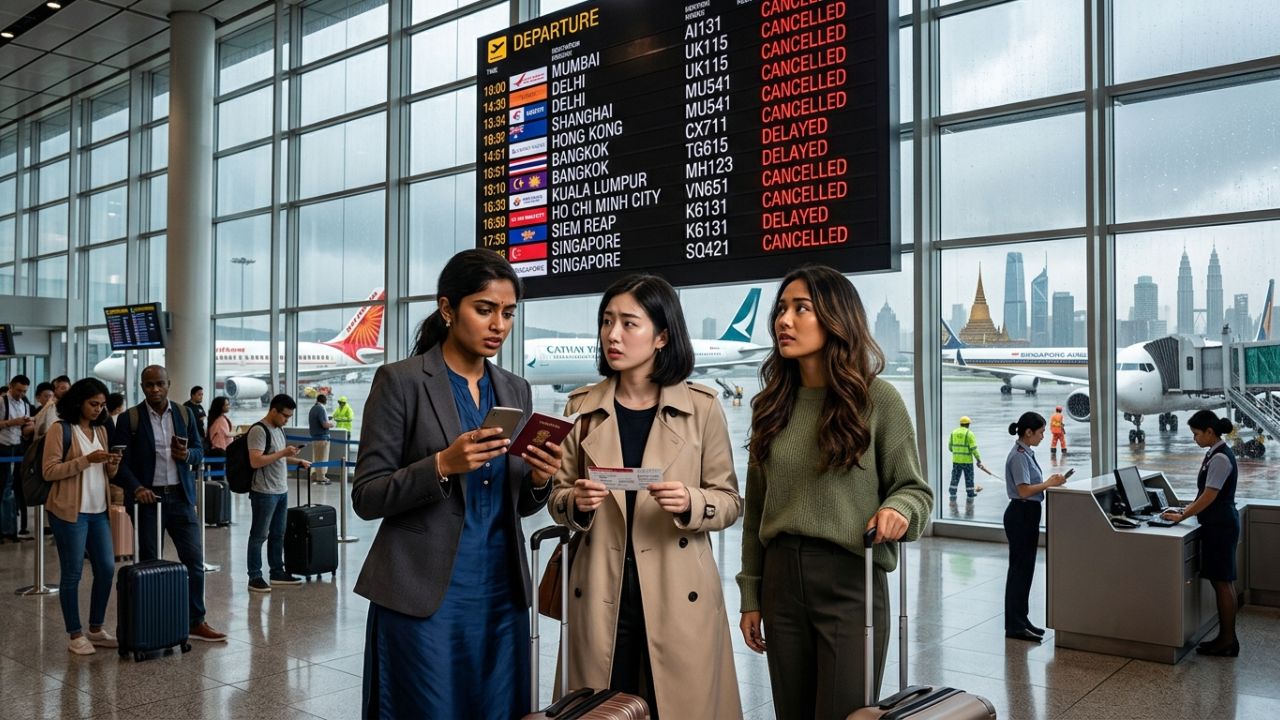
Image representing the intense strategic operational meltdown as severe travel chaos paralyzes major Asia-Pacific transit corridors, following IndiGo's aggressive suspension of six critical international routes across China, Thailand, Malaysia, and beyond.
Breaking Airline News: Severe Travel Chaos Hits Asia-Pacific as IndiGo Executes Massive Six-Route Capacity Collapse
A catastrophic travel shockwave is violently tearing through the Asia-Pacific transit grid, entirely paralyzing massive international corridors across China, Malaysia, Thailand, India, Hong Kong, Vietnam, and Cambodia. In a brutal demonstration of global network fragility, India’s largest low-cost carrier, IndiGo, has executed a massive, sudden capacity collapse. Driven by skyrocketing operational costs, crumbling seasonal demand, and a ruthless strategic realignment, the airline is temporarily but aggressively severing six critical international routes linking India with major East and Southeast Asian hubs. Scheduled to detonate between July and September 2026, this massive wave of flight cancellations will violently destroy direct regional connectivity. The sudden removal of these highly critical low-cost escape corridors is plunging thousands of travelers into a grueling logistical nightmare, forcing them into brutal, multi-leg itineraries through highly congested, failing mega-hubs across the region.
When a dominant low-cost carrier executes a multi-route capacity withdrawal of this magnitude, the cascading damage to the regional travel grid is immediate and extreme. The sheer volume of canceled direct capacity virtually guarantees that surrounding connecting hubs will buckle under the weight of stranded passengers attempting to reroute. The massive capacity collapse aggressively exposes the extreme vulnerability of relying on budget point-to-point connections during the volatile monsoon season. As IndiGo ruthlessly pulls its aircraft back from Asia to redeploy them into the highly lucrative Gulf and domestic markets, desperate passengers are left fighting for scarce seats on full-service carriers, proving that surviving the modern era of commercial aviation requires intense tactical planning and immediate rebooking strategies to escape localized meltdowns.
Expanded Overview: The Anatomy of an Asia-Pacific Meltdown
The terrifying reality of overwhelming passenger stress currently testing these massive international gateways brutally exposes the extreme consequences of dense, highly constrained airline schedules. Because primary Asian networks are deeply interconnected, the sudden loss of stability across six different critical destinations forces broader regional infrastructures into crisis management protocols. To fully comprehend the massive logistical failures dominating the skies today, aviation analysts and stranded flyers must rigorously review exactly how this explosive capacity collapse is destroying the travel grid.
Section-Wise Breakdown: Decoding the Disrupted Corridors
Hong Kong and Shanghai: The East Asian Gridlock To understand the absolute severity of this catastrophe, one must look at the exact operational telemetry coming out of East Asia. Hong Kong, one of Asia’s most critical financial fortresses, is being violently severed from direct low-cost Indian connectivity. Simultaneously, China is suffering a massive blow as the India-Shanghai route is abruptly halted. These two routes are vital corporate and logistics arteries. The aggressive suspension forces premium business travelers and long-haul transit passengers into a terrifying logistical bottleneck. Travelers must now desperately reroute through highly congested choke points like Singapore, Bangkok, or Kuala Lumpur, massively increasing transit times and exposing themselves to further severe airport disruptions.
Thailand and Vietnam: The Leisure Collapse The chaos aggressively expands southward into the core of the Southeast Asian tourism machine. Thailand is massively exposed as IndiGo violently pauses all flights to Krabi, a critical entry point for beach tourism and budget holiday packages. Similarly, Vietnam’s commercial engine, Ho Chi Minh City, has been completely severed. The loss of direct connectivity into these leisure hotspots during the July-September window is devastating. Backpackers and mid-tier tourists who rely on these vital escape corridors are now trapped, forced to endure complex island-hopping circuits and indirect routings that destroy itineraries and skyrocket out-of-pocket costs.
Malaysia and Cambodia: Island and Cultural Disruption Simultaneously, a massive operational failure has struck vital niche markets. Malaysia is heavily impacted through the aggressive suspension of flights to Langkawi, cutting off a primary island honeymoon destination. Cambodia is suffering an equal blow as the route to Siem Reap—the gateway to Angkor Wat—is entirely suspended. Because these secondary markets rely heavily on direct, point-to-point access to survive, the removal of these flights acts as a devastating blow to regional tourism. Passengers must now endure the grueling physical toll of transiting through massive, overcrowded capital-city hubs just to reach their final destinations.
Strategic Capacity Collapse Matrix
To guarantee that travelers can aggressively track the specific intelligence regarding this massive operational failure, the following matrix details the exact, verified data confirming the scale of this travel chaos.
| Strategic Operational Metric | Verified Capacity Disruption Data |
|---|---|
| Operating Carrier | IndiGo |
| Disruption Timeline | Temporary suspension from July – September 2026 |
| Severed East Asian Hubs | Hong Kong; Shanghai (China) |
| Severed Southeast Asian Leisure Corridors | Krabi (Thailand); Ho Chi Minh City (Vietnam) |
| Severed Regional Tourism Gateways | Langkawi (Malaysia); Siem Reap (Cambodia) |
| Total Impacted Aviation Markets | India, China, Hong Kong, Thailand, Vietnam, Malaysia, Cambodia |
Data reflects the massive multi-route operational breakdown driving severe airport disruptions globally.
Passenger Impact and Industry Analysis
For the thousands of passengers caught in this multi-continental gridlock, the effect of this massive capacity loss is devastating. A massive flight cancellation wave violently destroys certainty; travel plans are instantly shredded. Passengers expecting reliable, direct transfers to Krabi or Shanghai are facing terrifying realities: navigating complex reroutings, fighting for scarce seats on rival carriers, and suffering massive out-of-pocket expenses to secure alternative transport through secondary hubs.
Aviation industry analysts confirm that multi-route capacity withdrawals of this magnitude are typically triggered by a catastrophic mix of external pressures. Skyrocketing jet fuel costs, extremely tight yield margins, and the traditional demand drop associated with the Asian monsoon season have created a highly destructive financial environment. IndiGo is ruthlessly executing a tactical shift, pulling aircraft away from these vulnerable Southeast and East Asian routes and aggressively redeploying them into higher-yielding domestic sectors and highly protected Gulf corridors. This ruthless efficiency proves that airlines will instantly abandon unprofitable regions, leaving unprotected travelers to battle through the resulting travel chaos.
Conclusion: Surviving the Chaos
As the extremely critical Asia-Pacific transit network braces for further instability, this massive six-route capacity collapse represents a terrifying reality for modern travelers. Passengers desperate to avoid sudden flight cancellations and the severe logistical nightmare of being stranded mid-journey must immediately execute aggressive survival strategies. Travelers must fiercely prioritize booking through established, multi-hub network carriers that offer redundant capacity to bypass the massive terminal gridlock plaguing vulnerable point-to-point routes. This intelligence proves that surviving the modern era of commercial aviation relies entirely on anticipating sudden capacity collapses and reacting instantly to secure alternative routing before the masses.
Key Takeaways
- Massive Network Failure: IndiGo is executing a massive travel shockwave, abruptly suspending six critical international routes across the Asia-Pacific.
- The Disruption Timeline: The massive flight cancellations will impact the regional transit grid from July through September 2026.
- East Asian Severance: Direct flights to Hong Kong and Shanghai (China) have been completely halted, forcing business travelers into congested secondary hubs.
- Southeast Asian Leisure Collapse: Crucial tourism corridors to Krabi (Thailand), Ho Chi Minh City (Vietnam), Langkawi (Malaysia), and Siem Reap (Cambodia) have been violently severed.
- Passenger Survival: Stranded travelers must utilize alternative, multi-hub network carriers to guarantee onward connectivity across the region, entirely avoiding the catastrophic travel chaos associated with relying on single-carrier, low-cost point-to-point links.
Related Travel Guides
Disclaimer
This article is for informational and educational purposes only. It does not constitute legal, financial, or professional advice. While we strive to provide accurate and up-to-date information, travel policies, regulations, and conditions change rapidly. Always verify information with official sources before making travel decisions. Nomad Lawyer makes no representations about the accuracy, reliability, completeness, or suitability of the information provided. Readers should consult qualified professionals for advice specific to their circumstances. The views expressed in this article are those of the author and do not necessarily reflect the views of Nomad Lawyer.
Kunal K Choudhary
Co-Founder & Contributor
A passionate traveller and tech enthusiast. Kunal contributes to the vision and growth of Nomad Lawyer, bringing fresh perspectives and driving the community forward.
Learn more about our team →