
IndiGo Overhauls Domestic Ancillary Tariffs: Infant, Baggage, and Priority Fees Rise Across India

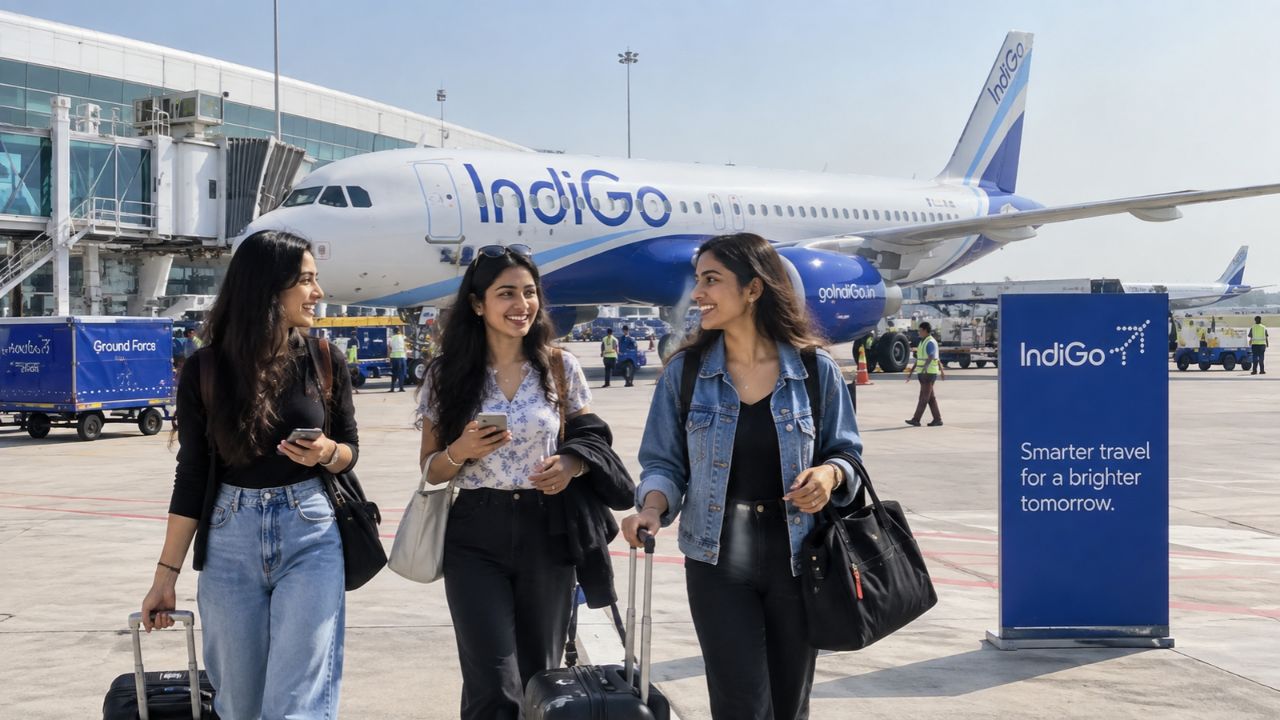
Image generated by AI
A 50 percent hike in domestic infant travel fees from Rs 2,000 to Rs 3,000, paired with excess baggage charges climbing to Rs 800 per kilogram, marks a decisive expansion of auxiliary fee unbundling by IndiGo across India's domestic route network. The tariff adjustments, implemented alongside fee increases for unaccompanied minors, airport priority services, and official administrative certificates, signal how low-cost carriers are aggressively transferring ground handling inflation and operational overhead away from base airfares and directly onto specialized traveler services.
Low-Cost Carrier Unit Economics: Unbundling as a Margin Firewall
The commercial airline business model in India operates within razor-thin operating margins governed by volatile aviation turbine fuel (ATF) prices, elevated airport user development fees, and currency exchange pressures on dollar-denominated aircraft leases. Because price comparison engines and online travel agencies rank flights almost exclusively by entry-level base fares, carriers face severe competitive penalties if they attempt to increase headline ticket prices.
To protect net yields while keeping published fares artificially low on search portals, IndiGo relies on ancillary unbundling. This pricing architecture decouples the primary seat from every auxiliary component of the flight experience. Under policy guidelines monitored by the Directorate General of Civil Aviation (DGCA) and the Ministry of Civil Aviation (MoCA), domestic scheduled operators retain commercial discretion to price non-core services according to market realities and escalating ground servicing costs.
By lifting ancillary price thresholds across high-volume domestic corridors, the airline offsets escalating apron labor costs, airport concession fees, and terminal security compliance expenses. Rather than spreading these operational expenses uniformly across all passenger tickets, the revised structure places the financial burden directly onto travelers requiring specialized handling, expedited processing, or supplemental baggage weight.
Line-Item Tariff Breakdown: Quantifying the New Auxiliary Price Structure
The latest schedule revision touches several high-frequency touchpoints encountered by domestic passengers, representing cumulative cost additions that can substantially alter overall journey budgets.
The most significant percentage adjustment applies to infant travel. Parents flying with children under two years of age without a dedicated seat must now pay Rs 3,000 per sector, up from the established Rs 2,000 rate. To qualify, infants must be between three days and two years old, with airlines strictly enforcing documentation checks requiring valid birth certificates, hospital discharge summaries, official vaccination records, or valid passports prior to boarding.
Families utilizing unaccompanied minor assistance face revised tariffs set at Rs 5,999, reflecting the dedicated supervision and airport escort personnel assigned to young travelers navigating security, waiting lounges, and boarding gates.
Luggage allowances represent another immediate cost pinch point. Standard economy tickets on domestic routes include 15 kilograms of checked baggage. Passengers exceeding this limit now face an excess baggage penalty of Rs 800 per kilogram at the airport, reflecting a Rs 100 per kilogram increase over the former Rs 700 rate. Travelers purchasing additional weight online in advance secure lower bundled slabs, whereas walk-up counter collections apply the full punitive rate.
Convenience services have undergone synchronized price adjustments. Priority check-in and expedited priority boarding services have been raised to Rs 650, moving up from the historical Rs 450 benchmark. Administrative requests, including the issuance of certified travel verification certificates required for corporate reimbursement or tax reporting, now incur a fee of Rs 300, up from Rs 200.
| Ancillary Service Category | Previous Domestic Fee | Revised 2026 Domestic Tariff | Absolute Increase | Primary Operational Driver |
|---|---|---|---|---|
| Infant Passenger Fee (Under 2 Years) | Rs 2,000 | Rs 3,000 | +Rs 1,000 (+50.0%) | Specialized infant seatbelt kits, administrative manifest checks, and cabin logistics |
| Unaccompanied Minor Service (UMNR) | Variable / Rs 5,000 | Rs 5,999 | Adjusted upward | Dedicated airline ground escort, custodial transfer, and gate supervision |
| Excess Checked Baggage (Per Kilogram) | Rs 700 / kg | Rs 800 / kg | +Rs 100 / kg (+14.3%) | Rising aircraft payload fuel burn, ground handling handling equipment, and ramp labor |
| Priority Check-in & Boarding (Fast Forward) | Rs 450 | Rs 650 | +Rs 200 (+44.4%) | Dedicated check-in desk allocation, priority baggage tagging, and gate queue bypass |
| Official Travel Certificate Issuance | Rs 200 | Rs 300 | +Rs 100 (+50.0%) | Manual passenger data retrieval, verification, and administrative processing overhead |
Expert Analysis: The Family Penalty, Discretionary Squeezes, and Airport Counter Pitfalls
From an aviation revenue management standpoint, these tariff revisions represent a calculated demographic extraction strategy.
The pricing pressure this creates means leisure groups and young families experience a disproportionate cost inflation compared to corporate commuters. Business travelers typically fly light with standard carry-on bags and hold corporate agreements that absorb ancillary fees. Conversely, a family flying with an infant and carrying strollers, formula, and additional checked luggage suddenly faces thousands of rupees in unbundled add-ons that did not exist when they booked their baseline tickets.
For travelers booking this route, the direct consequence is that the perceived savings of a budget airfare can evaporate instantly at the departure terminal. Arriving at the check-in desk with five kilograms of excess luggage combined with an unreserved infant ticket now triggers an immediate Rs 7,000 surcharge. In many short-haul sectors between tier-two cities, this ancillary total easily matches or exceeds the cost of a full adult passenger fare.
Operational data highlights that airport counter collection remains the most expensive method for handling auxiliary requirements. Passengers who pre-purchase prepaid excess baggage slabs through digital airline portals pay substantially discounted rates compared to the flat Rs 800 per kilogram penalty imposed at the airport counter.
Airlines are leveraging automated kiosk check-ins and digital self-service baggage drops to streamline terminal throughput. By placing premium price tags on manual, labor-intensive counter interactions—such as infant document verification, physical excess baggage weighing, and unaccompanied minor handoffs—carriers are driving traveler behavior toward automated digital channels while monetizing the operational friction of high-touch passenger groups.
Key Takeaways
- Sharp Infant Fare Hike: Domestic infant fees jump by 50 percent, rising from Rs 2,000 to Rs 3,000 per sector for infants traveling without a separate seat.
- Escalating Baggage Penalties: Excess checked luggage fees at the airport increase to Rs 800 per kilogram, adding a Rs 100 per kilogram surcharge above standard allowances.
- Unaccompanied Minor Adjustments: Dedicated escort and supervision services for minors flying alone are now fixed at Rs 5,999.
- Higher Priority Charges: Fast-track services encompassing priority check-in and boarding increase to Rs 650, while travel certificate processing reaches Rs 300.
- Mandatory Infant Documentation: Parents must present official proof of age—such as birth certificates, hospital discharge slips, vaccination cards, or passports—for children aged 3 days to 2 years.
FAQ: IndiGo Domestic Ancillary Tariffs 2026
What is the updated infant fee for IndiGo domestic flights?
IndiGo now charges Rs 3,000 per sector for infants aged between three days and two years traveling on an adult's lap, representing an increase from the previous Rs 2,000 fee.
How much does IndiGo charge for excess baggage at the airport?
IndiGo charges Rs 800 per kilogram for checked baggage exceeding the standard 15-kilogram domestic allowance when paid at airport check-in counters, up from Rs 700 per kilogram.
What documents are accepted to verify an infant's age on domestic flights?
Airlines require valid documentation proving the child is under two years old, including a government-issued birth certificate, hospital discharge summary, official vaccination card, or passport.
How much does unaccompanied minor assistance cost on IndiGo?
IndiGo charges Rs 5,999 for unaccompanied minor assistance, providing dedicated airline staff supervision through check-in, security screening, boarding, and destination arrival handoff.
In the high-stakes game of modern budget aviation, the cheapest ticket is rarely the one that lands on your credit card statement after all the baggage tags are printed.
Related Travel Guides
Kolkata Airport Winter Schedule 2026: Airlines Surge Flights Across India and Global Hubs
US Airports Operating Fee Hikes & Autumn Travel Logistics Guide
Hundreds of Travelers Impacted as 3,744 Delays Hit Asian Aviation Hubs
Disclaimer
This article is for informational and educational purposes only. It does not constitute legal, financial, or professional advice. While we strive to provide accurate and up-to-date information, travel policies, regulations, and conditions change rapidly. Always verify information with official sources before making travel decisions. Nomad Lawyer makes no representations about the accuracy, reliability, completeness, or suitability of the information provided. Readers should consult qualified professionals for advice specific to their circumstances. The views expressed in this article are those of the author and do not necessarily reflect the views of Nomad Lawyer.
Naina Thakur
Contributor & Travel Specialist
Travel enthusiast and legal writer covering visa regulations, responsible tourism, and cultural journeys across global destinations.
Learn more about our team →