
Indian Railways Boosts Katra-Banihal Rail Speed to 100 kmph to Transform Jammu and Kashmir Travel in 2026
Indian Railways has officially increased the speed limit to 100 kmph on the 111-km Katra-Banihal rail corridor, significantly slashing travel times for pilgrims and tourists in Jammu and Kashmir.

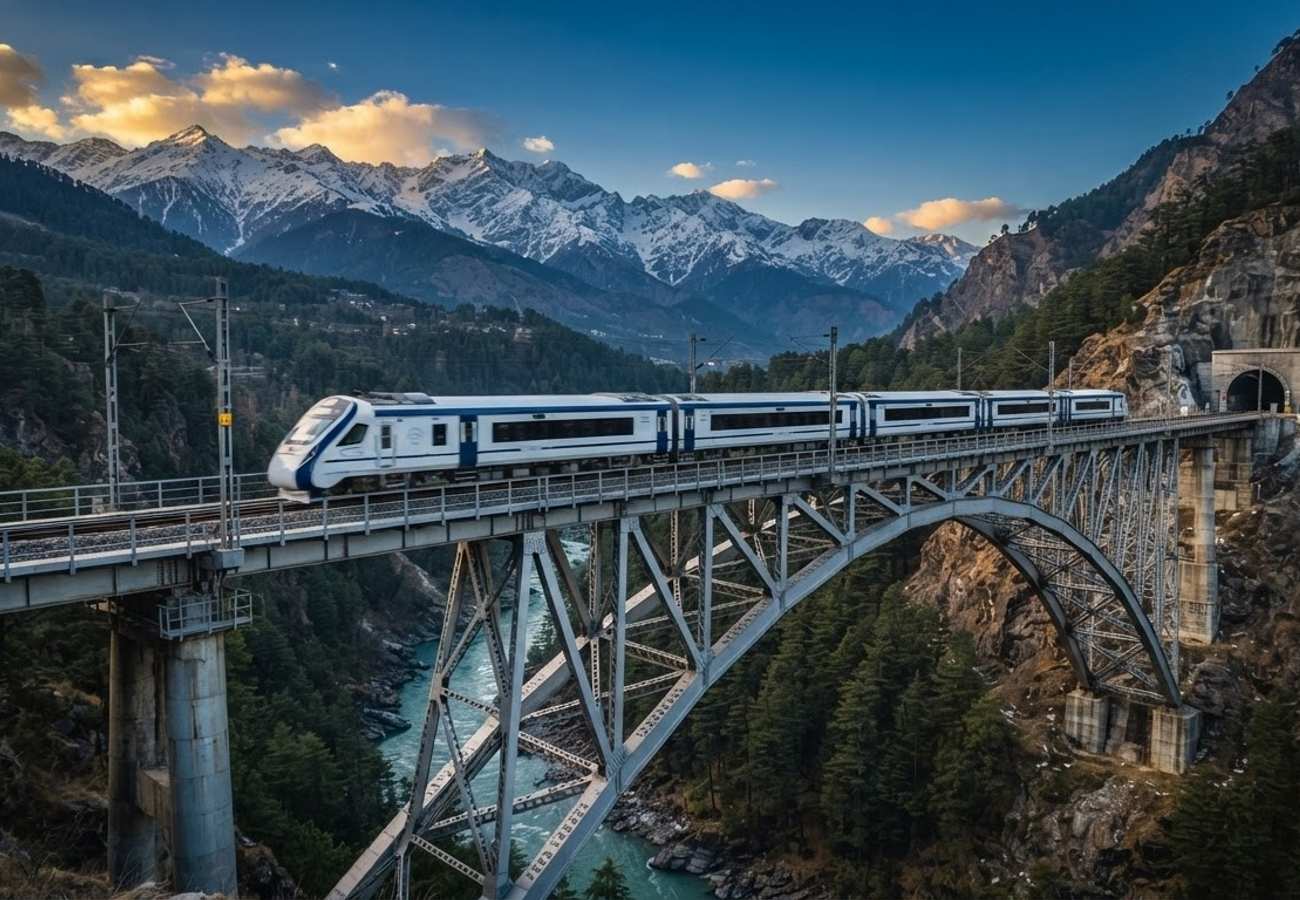
Image generated by AI
Travel times across the rugged terrain of Jammu and Kashmir are dropping as Indian Railways authorizes a speed increase to 100 kmph on the vital Katra-Banihal corridor. This operational shift removes previous bottlenecks, streamlining access to one of India's most significant pilgrimage and tourism hubs.
The 111-kilometre broad gauge corridor is a critical artery for the region, providing a high-capacity alternative to the often-unpredictable mountain roads. By standardizing higher speeds across the route, the railway is effectively integrating remote communities and enhancing the movement of millions of annual visitors.
The transition to a 100 kmph limit follows rigorous technical audits and mandatory safety evaluations. These checks ensured that the track geometry, signaling systems, and structural integrity of the Himalayan bridges and tunnels could sustain higher velocities without compromising passenger safety.
Overcoming Himalayan Engineering Hurdles
Operating a railway in the Himalayan region presents extreme geographical challenges. The Katra-Banihal section requires constant monitoring due to the unstable nature of the terrain and the complexity of the tunnel networks.
The recent speed approval is not merely a regulatory change but a validation of the advanced engineering and maintenance protocols implemented by Indian Railways. By optimizing the speed of the Sangaldan and Banihal sections, the network can now handle higher passenger volumes and reduce the overall transit window.
Quantifying the Speed Improvements
The upgrade replaces a fragmented speed regime where different sections of the track were limited based on older safety benchmarks. The shift to a uniform 100 kmph limit creates a more predictable and efficient timetable.
The following data outlines the specific changes in operating speeds across the corridor:
| Rail Section | Previous Speed Limit | New Approved Speed Limit |
|---|---|---|
| Shri Mata Vaishno Devi Katra to Sangaldan | 85 kmph | 100 kmph |
| Sangaldan to Banihal | 75 kmph | 100 kmph |
| Total Corridor Length | 111 Kilometres | 100 kmph (Uniform) |
Implications for Regional Tourism and Economy
The acceleration of rail services is expected to have a direct positive impact on the local economy and the tourism sector. Jammu and Kashmir is a primary destination for both domestic and international tourists drawn to its scenic vistas and cultural heritage.
- Pilgrimage Efficiency: Faster transit to Shri Mata Vaishno Devi Katra allows pilgrims to plan their journeys with greater precision.
- Tourism Expansion: Reduced travel times encourage visitors to explore multiple destinations within the region in a single trip.
- Trade and Commerce: Local traders and businesses benefit from the faster movement of goods and personnel between urban centers and rural districts.
Modernization of Northern Rail Infrastructure
This update is part of a broader strategy by Indian Railways to modernize the national network. The focus has shifted toward increasing average speeds and improving safety standards to meet the rising demand for sustainable and efficient transport.
By upgrading existing corridors like the Katra-Banihal line, the government is reducing the reliance on road transport, which is often susceptible to weather-related closures and landslides. This rail-first approach ensures that the region remains connected regardless of seasonal challenges.
The upgrade marks a pivotal moment in the connectivity of northern India, turning a challenging mountain transit into a streamlined travel experience.
Key Takeaways
- Speed Increase: The Katra-Banihal rail section now supports a maximum speed of 100 kmph.
- Route Impact: The 111-km corridor sees a significant jump from previous limits of 75 kmph and 85 kmph.
- Safety First: The upgrade was only implemented after comprehensive technical and safety evaluations of the infrastructure.
- Economic Driver: Faster rail links are expected to boost tourism and local trade in Jammu and Kashmir.
FAQ
Which sections of the Katra-Banihal route saw speed increases? The speed limits were increased for both the Shri Mata Vaishno Devi Katra to Sangaldan section and the Sangaldan to Banihal section.
What was the previous speed limit on this route? Previously, trains were limited to 85 kmph between Katra and Sangaldan, and 75 kmph between Sangaldan and Banihal.
How does this affect travelers? Passengers will experience shorter journey times and a more efficient travel schedule between Katra and Banihal.
Related Travel Guides
Disclaimer
This article is for informational and educational purposes only. It does not constitute legal, financial, or professional advice. While we strive to provide accurate and up-to-date information, travel policies, regulations, and conditions change rapidly. Always verify information with official sources before making travel decisions. Nomad Lawyer makes no representations about the accuracy, reliability, completeness, or suitability of the information provided. Readers should consult qualified professionals for advice specific to their circumstances. The views expressed in this article are those of the author and do not necessarily reflect the views of Nomad Lawyer.
Raushan Kumar
Founder & Lead Developer
Full-stack developer with 11+ years of experience and a passionate traveller. Raushan built Nomad Lawyer from the ground up with a vision to create the best travel and law experience on the web.
Learn more about our team →