
India Discontinues Physical Boarding Pass Stamping Nationwide for Outbound International Flights Effective September 1, 2026
India's Bureau of Immigration officially stops physical boarding pass stamping for outbound international passengers starting September 1, 2026.

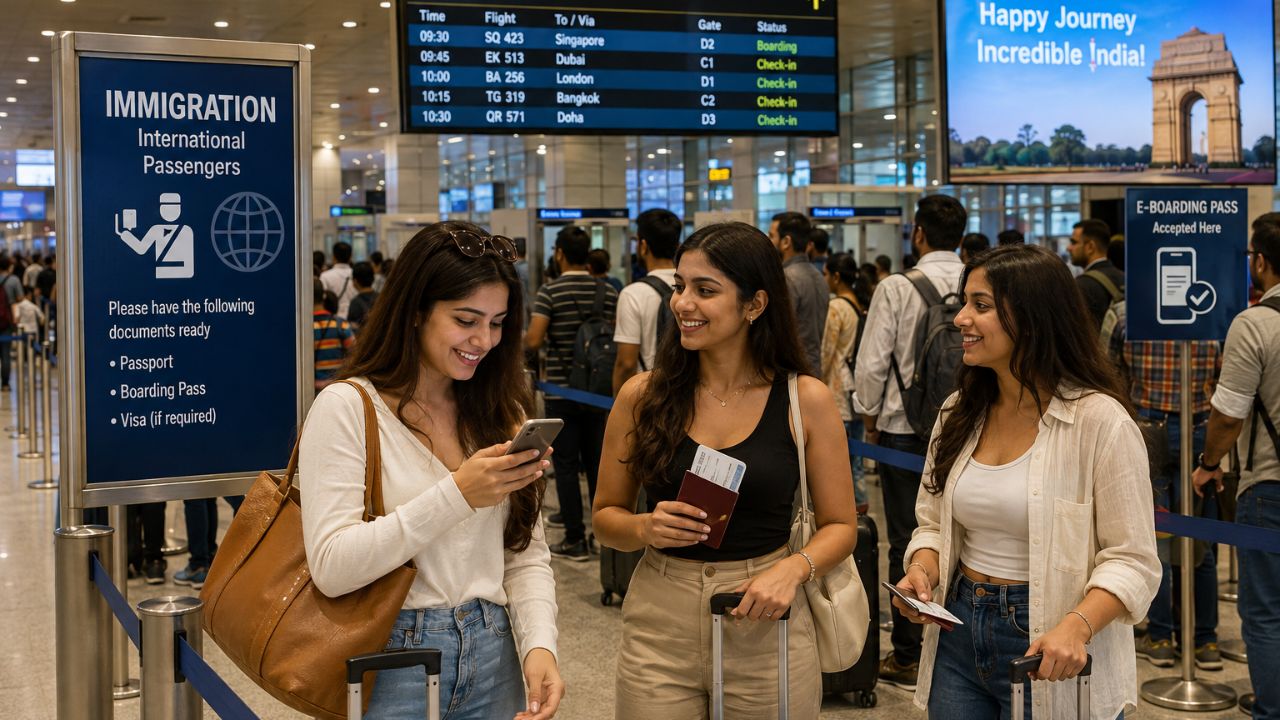
Image generated by AI
India's Bureau of Immigration (BoI), operating under the Ministry of Home Affairs, has officially discontinued the practice of physical ink stamping on boarding passes for outbound international passengers. Effective September 1, 2026, the nationwide travel reform applies across all Indian airports conducting international flights, permitting passengers to present electronic boarding passes directly on their smartphones during immigration clearance.
[NEW DELHI, India, Sept. 3, 2026] — Outbound international air travel from India underwent a major operational simplification on September 1, 2026, as federal immigration authorities formally ended physical boarding pass stamping. Official directives issued by the Bureau of Immigration (BoI) under the Ministry of Home Affairs confirm that immigration officers across all international departure terminals will no longer apply physical ink stamps to paper or digital boarding passes.
The decision allows international flyers to use mobile electronic boarding passes (e-boarding passes) displayed on smartphones at immigration counters, eliminating the requirement to print paper documents solely to receive a physical border stamp. For passengers who prefer carrying printed paper boarding passes, physical documents remain fully valid and accepted, though they will no longer receive an ink stamp.
Bureau of Immigration Ends Physical Stamping Across All International Gateways
The policy reform applies uniformly to all airports in India handling international departure operations, including major hubs such as Indira Gandhi International Airport (DEL) in Delhi, Chhatrapati Shivaji Maharaj International Airport (BOM) in Mumbai, Kempegowda International Airport (BLR) in Bengaluru, and Rajiv Gandhi International Airport (HYD) in Hyderabad.
Historically, departing international passengers passed through a multi-step sequence requiring physical ink stamps from immigration officers to confirm border clearance prior to boarding. Over time, passenger feedback and airport audits revealed that physical stamping frequently caused unnecessary queuing delays and occasionally obscured machine-readable passenger details on paper passes.
By transitioning to electronic verification tied directly to passport data and airline manifests, the Ministry of Home Affairs has streamlined departure processing while maintaining complete border security oversight.
Policy Parameters: September 1, 2026 Boarding Pass Reform
| Policy Component | Operational Specification | Traveler Impact & Workflow |
|---|---|---|
| Effective Enforcement Date | September 1, 2026 | Nationwide implementation across all international airports |
| Governing Authority | Bureau of Immigration (BoI) / Ministry of Home Affairs | Official administrative directive communicated to all airports |
| Electronic Boarding Pass Status | Formally accepted on smartphones at immigration | Eliminates need to print paper passes for ink stamping |
| Physical Paper Pass Status | Accepted without physical ink stamp | Optional for passengers preferring paper documentation |
| Mandatory Formalities Remaining | Passport, visa & identity checks fully enforced | Border clearance process remains fully active and mandatory |
Key Distinctions: Immigration vs CISF Security and FTI-TTP vs Digi Yatra
To avoid confusion during airport transit, travelers should understand how the new immigration policy interacts with separate security agencies and digital airport programs in India:
Bureau of Immigration vs CISF Security Procedures
- Bureau of Immigration (BoI): Manages international border exit processing. The September 1, 2026 reform applies specifically to BoI counters for outbound international flights.
- Central Industrial Security Force (CISF): Manages physical airport security screening. CISF discontinued routine physical boarding pass stamping at domestic security checkpoints several years ago.
Digi Yatra vs FTI-TTP (Fast Track Immigration)
- Digi Yatra: A facial-recognition-based passenger processing initiative designed for domestic airport touchpoints (terminal entry, security access, and domestic boarding gates).
- FTI-TTP (Fast Track Immigration – Trusted Traveller Programme): A specialized biometric program managed by the Ministry of Home Affairs to accelerate international immigration clearance through automated e-gates. Enrolling in Digi Yatra does not automatically enroll a traveler in FTI-TTP; international passengers wishing to use automated biometric e-gates must apply separately for FTI-TTP registration.
Indian Airport Digital Travel Programs Comparison
| Program Name | Operating Authority | Intended Travel Scope | Key Functional Feature |
|---|---|---|---|
| BoI E-Boarding Pass | Bureau of Immigration (MHA) | All Outbound International Flights | Smartphone e-pass accepted; ink stamping eliminated |
| Digi Yatra | Digi Yatra Foundation / MoCA | Domestic Airport Terminals & Security | Facial recognition paperless terminal & gate access |
| FTI-TTP | Bureau of Immigration (MHA) | Registered International Travelers | Biometric e-gate automated international immigration |
Industry Endorsement and Alignment with IATA One ID Framework
The International Air Transport Association (IATA), representing global airlines, formally welcomed India's decision to end boarding pass stamping. IATA had advocated for the removal of physical paper stamps in India since 2019, noting that mandatory paper stamping hindered the full adoption of mobile check-in and digital passenger processing.
The reform aligns Indian airport operations with IATA's global "One ID" vision, which aims to transition international aviation toward paperless, biometric, and contactless passenger travel. Between April and July of the 2026-27 financial year alone, Indian airports handled over 24 million international passengers. At this operational volume, removing manual paper stamping saves thousands of cumulative hours for passengers and border officers annually.
Traveler Logistics & Outbound Departure Navigation Guide (Information Gain)
For international travelers flying out of Indian airports under the updated September 2026 procedures, adhering to key logistics recommendations ensures a seamless departure:
Outbound International Departure Steps
- Airline Check-In & Visa Verification: Complete online check-in to receive a digital e-boarding pass. If flying to destinations requiring physical visa checks or document verification (such as the US, UK, or Schengen area), report to the airline check-in counter to obtain travel clearance.
- Mobile Device Preparation: Ensure your smartphone is fully charged and save your e-boarding pass to your digital wallet (Apple Wallet or Google Wallet) or download it as a PDF so it can be displayed offline at immigration without relying on airport Wi-Fi.
- Immigration Clearance: Present your valid passport and smartphone displaying your e-boarding pass (or paper pass) to the Bureau of Immigration officer. The officer will verify your details electronically on their screen without stamping your pass.
- Boarding Gate Access: Keep your e-boarding pass readily accessible, as airline gate agents will scan the barcode prior to boarding the aircraft.
Infrastructure Impact Assessment
Eliminating physical boarding pass stamping represents a major step in modernizing India's aviation infrastructure. Removing manual ink stamping reduces physical contact points, shortens immigration queue dwelling times, and eliminates paper waste for millions of international passengers.
Furthermore, integrating mobile e-boarding passes directly into Bureau of Immigration workflows creates a foundation for expanded biometric border processing, positioning major Indian gateways like Delhi, Mumbai, and Bengaluru alongside leading global digital airports in Europe, Asia, and North America.
Frequently Asked Questions
Has boarding pass stamping been stopped for all international flights from India?
Yes, effective September 1, 2026, the Bureau of Immigration has discontinued physical boarding pass stamping for outbound international passengers across all Indian international airports.
Can I show an electronic boarding pass on my phone at immigration?
Yes, departing international passengers can present a valid e-boarding pass on their smartphone at immigration counters.
Can I still use a printed paper boarding pass if I prefer?
Yes, printed paper boarding passes remain fully valid and accepted at immigration, though officers will no longer place an ink stamp on them.
Does Digi Yatra registration allow me to use automated international immigration e-gates?
No, Digi Yatra is designed for domestic airport processing. To use automated international biometric e-gates, eligible travelers must enroll separately in the Fast Track Immigration–Trusted Traveller Programme (FTI-TTP).
Related Travel Guides
Disclaimer
This article is for informational and educational purposes only. It does not constitute legal, financial, or professional advice. While we strive to provide accurate and up-to-date information, travel policies, regulations, and conditions change rapidly. Always verify information with official sources before making travel decisions. Nomad Lawyer makes no representations about the accuracy, reliability, completeness, or suitability of the information provided. Readers should consult qualified professionals for advice specific to their circumstances. The views expressed in this article are those of the author and do not necessarily reflect the views of Nomad Lawyer.
Raushan Kumar
Founder & Lead Developer
Full-stack developer with 11+ years of experience and a passionate traveller. Raushan built Nomad Lawyer from the ground up with a vision to create the best travel and law experience on the web.
Learn more about our team →