
Iceland's Vaðalda Wind Turbines Obstacle NOTAM Redraws Scenic-Flight Planning
Isavia ANS has issued NOTAM A0630/26 warning pilots of 492-foot wind turbines under construction at Vaðalda, impacting southern Iceland VFR flight paths.

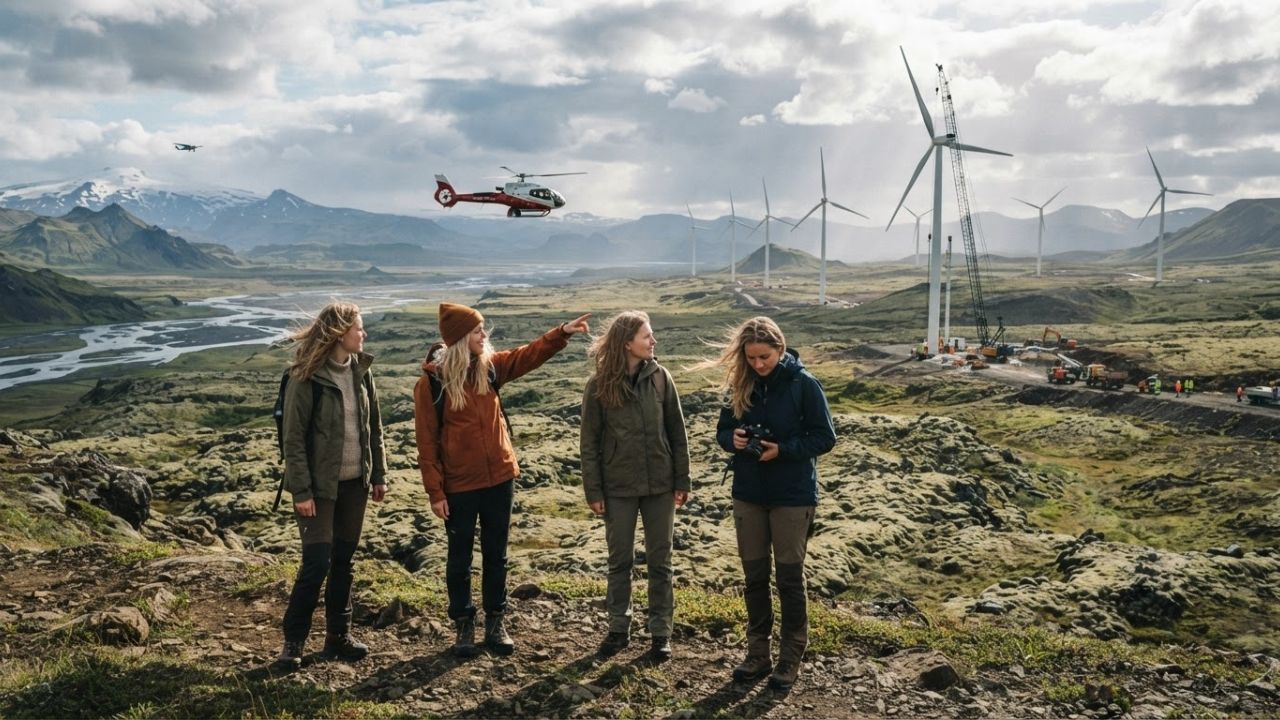
Image generated by AI
Isavia ANS has issued a critical NOTAM warning sightseeing flight operators that a cluster of 492-foot wind turbines under construction at Vaðalda is redrawing southern Iceland's low-level aviation corridor. Helicopter charters and fixed-wing aerial tours must modify flight paths and altitude profiles to maintain safe clearance from the expanding turbine array.
The Disruption Details
A new low-altitude obstacle environment has altered flight planning rules across the southern Icelandic highlands. According to an active aeronautical notice (NOTAM A0630/26) published by Isavia ANS, the national air navigation service provider, construction is underway on a 28-turbine wind farm at Vaðalda in Rangárþing ytra. The current NOTAM, effective through August 31, 2026, warns pilots that the blade tips of the newly erected ENERCON E-138 EP3 turbines reach 492.13 feet (149.6 metres) above ground level (AGL), with a highest elevation of 1,481 feet above mean sea level (AMSL).
The construction project, managed by Iceland's national power company Landsvirkjun, is scheduled in two phases. The first phase targets 14 turbines in 2026 (eight are physically erected, two are under construction, and six are scheduled to start assembly), with the remaining 14 turbines scheduled for summer 2027. This expanding wind farm creates a dynamic low-level hazard for visual-flight-rules (VFR) operations, which are common for tourist sightseeing flights, helicopter charters, and aerial photography missions departing from Reykjavík and Skaftafell.
Flight & Airport Impact Breakdown
The wind farm construction affects local flight corridors and regional road networks:
- Low-Level VFR Obstacle Risk: The 492-foot turbine height stands close to Iceland's VFR minimum safe altitude of 500 feet, necessitating route and clearance adjustments for light aircraft.
- Dynamic Visual Hazards: Under European Union Aviation Safety Agency (EASA) guidelines, the rotating blades and downwind wake turbulence of the E-138 EP3 turbines represent a complex hazard for light helicopters.
- South Iceland Tour Routing: Key sightseeing flight corridors over the southern highlands, glaciers, and volcanic areas must be adjusted to bypass the 17-square-kilometre wind farm site.
- Heavy-Haul Road Logistics: Mainland convoys transporting turbine components from Þorlákshöfn along Roads 427, 38, 33, and the Ring Road to Route 26 can extend to 250 metres, creating localized traffic delays.
Vaðalda Wind Farm Construction NOTAM Timeline (2026)
The following data details the construction milestones and scheduled expansion of the wind project:
| Construction Phase / Milestone | Status as of August 4, 2026 | Scheduled Completion |
|---|---|---|
| NOTAM A0630/26 (Reykjavík FIR) | Active (Effective from July 15) | August 31, 2026 |
| Erected Turbines (Phase 1) | 8 Units Complete | Autumn 2026 |
| Under-Construction Turbines | 2 Units Active | Autumn 2026 |
| Planned 2026 Turbines | 6 Units Scheduled | Autumn 2026 |
| Phase 2 Expansion | 14 Units Scheduled | Summer 2027 |
| Total Project Size | 28 Turbines (120 MW Capacity) | End of 2027 |
Iceland South Regional Infrastructure Indicators (2026)
The volume of regional travel and heavy transport logistics shows the scale of project activity:
| Metric / Infrastructure Item | Value / Description | Travel Industry Significance |
|---|---|---|
| Maximum Turbine Height | 492.13 feet (149.6m) AGL | Nears VFR minimum 500-foot altitude limit |
| Highest Hub Elevation | 1,481 feet AMSL | Key planning data for highland flight crews |
| Foreign Departures (June 2026) | 223,000 international visitors | Drives peak demand for South Iceland air tours |
| Heavy-Haul Logistical Convoys | 350 individual transports (convoys up to 250m) | Creates road delays along South Iceland transit routes |
| Hella Operations Centre | 440-square-metre facility | Serves as the long-term Landsvirkjun/ENERCON base |
Passenger Rights & Advisory (Information Gain & Experience)
For travelers booking sightseeing flights, helicopter charters, or private transfers in southern Iceland, understanding these airspace changes is key to managing itinerary safety.
Our analysis of the policy suggests the following rules:
- Route Modifications and Passenger Rights: Sightseeing flights are sold based on duration, aircraft type, and general experience rather than a guaranteed, fixed flight track. If your pilot alters the flight path to bypass the Vaðalda turbine coordinates, this is considered a standard safety rerouting. Under Icelandic civil aviation guidelines, passengers are not entitled to refunds or compensation if the primary experience and flight duration are fulfilled.
- Weather and Visibility Cancellations: If low clouds or poor visibility near the 1,481-foot elevation coordinates force the operator to cancel the flight, this represents a safety cancellation. Under standard carrier rules, you are entitled to be rebooked on the next available flight or receive a full refund of your booking voucher.
- Booking Conditions and Voucher Audits: Travelers should verify that their tour booking terms allow for operational flexibility. Tour operators should proactively advise customers that scenic routes can vary depending on real-time NOTAM updates and highland weather.
- NOTAM and Flight Path Audits: Pilots and private operators must check the active Isavia ANS NOTAM briefings before every departure. Live flight paths, altitudes, and tail logs can be monitored using the FlightAware flight database.
Industry Analyst View
The Vaðalda wind farm project highlights the intersection of renewable energy expansion and adventure tourism in Iceland. Landsvirkjun’s €140 million (ISK 20 billion) partnership with ENERCON to construct 28 turbines across 17 square kilometres marks a significant clean-energy milestone. However, erecting 492-foot structures in high-demand scenic flight areas requires tour operators to adapt.
Sightseeing flights are a core component of South Iceland’s tourist economy, which caters to many of the 223,000 international visitors departing monthly. EASA research identifies low-altitude VFR flights as the primary risk category near wind farms due to rotor movement and downwind wake turbulence. To mitigate this, destination management companies must emphasize transparent passenger communications, ensuring travelers understand that safety-first route modifications are standard operational procedures, not a compromise of their travel experience.
Related Travel Guides
Disclaimer
This article is for informational and educational purposes only. It does not constitute legal, financial, or professional advice. While we strive to provide accurate and up-to-date information, travel policies, regulations, and conditions change rapidly. Always verify information with official sources before making travel decisions. Nomad Lawyer makes no representations about the accuracy, reliability, completeness, or suitability of the information provided. Readers should consult qualified professionals for advice specific to their circumstances. The views expressed in this article are those of the author and do not necessarily reflect the views of Nomad Lawyer.
Kunal K Choudhary
Co-Founder & Contributor
A passionate traveller and tech enthusiast. Kunal contributes to the vision and growth of Nomad Lawyer, bringing fresh perspectives and driving the community forward.
Learn more about our team →