
ICAO Moves to Curb Inflight Power Bank Risks: New 2-Device Limit
ICAO enforces new 2-device power bank limit per passenger in 2026, banning inflight recharging on commercial flights globally amid rising lithium battery fire concerns.

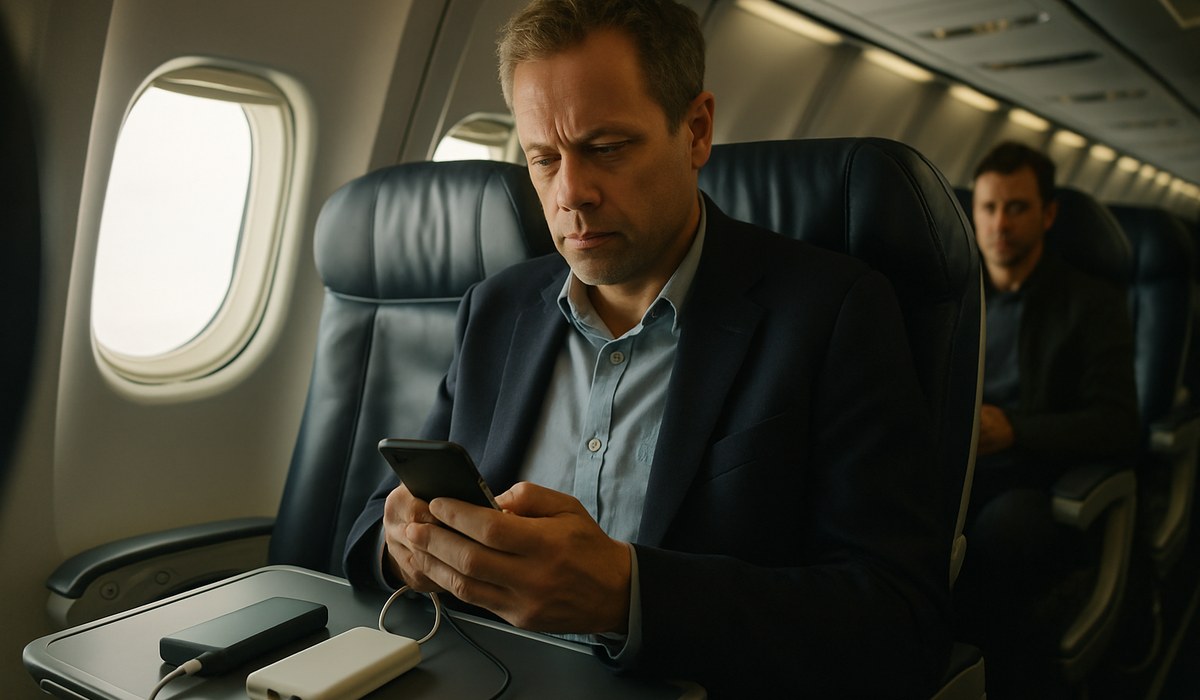
Image generated by AI
The International Civil Aviation Organization (ICAO) has issued sweeping new guidance restricting portable power banks on commercial flights worldwide, limiting passengers to two devices each and banning inflight recharging effective March 2026. The move addresses escalating lithium battery fire risks in passenger cabins, following documented incidents across multiple carriers in Asia, the Middle East, and Australia.
ICAO Dangerous Goods Panel Sets Two-Device Threshold
The ICAO Dangerous Goods Panel reached consensus after months of technical review examining how spare lithium batteries and power banks are carried and used aboard commercial aircraft. Panel documentation available through ICAO's public records confirms experts analyzed operational needs against fire hazards when multiple batteries and charging cables operate simultaneously at 35,000 feet. The two-device cap replaces inconsistent national and airline-level rules, creating an enforceable international standard. Passengers carrying three or more power banks now face confiscation at security checkpoints or boarding gates across member states adopting the guidance into binding regulations.
Complete Ban on Inflight Power Bank Recharging Takes Effect
ICAO's new provision explicitly prohibits using spare batteries and power banks to recharge personal electronic devices during any flight phase, from boarding through landing. This inflight usage ban distinguishes passenger devices from airline operational equipment, allowing crew members to charge tablets and cockpit electronics under controlled protocols. The International Air Transport Association (IATA) has circulated parallel passenger advisories confirming that recharging power banks on board is no longer permitted, even when seat power outlets remain available. Airlines in Singapore, Dubai, and Melbourne have already implemented cabin checks requiring passengers to keep power banks switched off and stowed throughout the journey.
Watt-Hour Capacity Rules Remain Unchanged at 100Wh Standard
The updated guidance maintains existing lithium-ion power bank capacity thresholds, capping standard devices at 100 watt-hours without requiring airline approval. Power banks rated between 101 and 160 watt-hours continue to need explicit carrier authorization and remain tightly controlled across most jurisdictions. Travelers must carry all spare batteries exclusively in cabin baggage—checked luggage remains strictly prohibited for any lithium battery not installed in a device. Security staff at major hubs including Singapore Changi (SIN), Dubai International (DXB), and Sydney Kingsford Smith (SYD) now routinely inspect power bank labels for watt-hour ratings during pre-boarding screening.
Airlines in Asia and Middle East Lead Early Enforcement
Carriers across Asia-Pacific and Gulf regions have moved ahead of formal ICAO implementation timelines, restricting power bank use following cabin smoke and fire events attributed to lithium batteries in 2025. Singapore Airlines, Emirates, Etihad Airways, and Qantas now mandate that power banks remain switched off throughout flights and prohibit their storage in overhead bins. Public airline advisories reviewed by nomadlawyer.org specify that passengers must keep power banks on their person or under the seat in front, allowing immediate crew access during thermal incidents. Australia's Civil Aviation Safety Authority has already transposed the two-device limit into national regulations binding on all carriers operating in Australian airspace, with similar moves expected from regulators in the European Union and United States by Q2 2026.
Terminal Protection and Recalled Device Policies Tighten
ICAO's framework reinforces long-standing requirements that power bank terminals be protected against short circuits using cases, electrical tape, or manufacturer caps. Damaged, swollen, or recalled power banks are now subject to outright travel bans under the updated guidance, with gate agents empowered to confiscate suspect devices. Passengers traveling through major international hubs report increased scrutiny of power bank condition during boarding, with [US Department of Transportation (DOT)](https://www.transportation.gov/airconsumer) consumer protection officers documenting multiple confiscation incidents at US airports in March 2026. Airlines are updating passenger service systems to flag travelers booking connecting itineraries across regions with varying enforcement timelines, reducing risk of mid-journey disruptions.
Key Enforcement Data for Travelers
| Regulation Element | ICAO Standard | Effective Date | Enforcement Region |
|---|---|---|---|
| Maximum devices per passenger | 2 power banks | March 2026 | Global (member states) |
| Capacity limit (no approval) | 100 watt-hours | Existing rule | All ICAO jurisdictions |
| Capacity limit (with approval) | 101-160 watt-hours | Existing rule | Carrier-specific |
| Inflight recharging allowed | No | March 2026 | All commercial flights |
| Checked baggage permitted | No | Existing rule | Universal prohibition |
| Terminal protection required | Yes | Existing rule | All jurisdictions |
| Damaged/recalled devices allowed | No | March 2026 | Global enforcement |
What This Means for Travelers
-
Audit your carry-on before departure: Count all power banks, removing extras before reaching security to avoid confiscation and potential rebooking delays.
-
Calculate watt-hour ratings: Most power banks display capacity in milliamp-hours (mAh)—divide by 1,000, then multiply by voltage (typically 3.7V) to determine watt-hours for compliance verification.
-
Protect all battery terminals: Wrap exposed contacts with electrical tape or use original cases to prevent short circuits that can trigger thermal events during flight.
-
Keep power banks accessible: Store devices under the seat in front or in personal item bags, not overhead bins, allowing immediate crew response to overheating incidents.
-
Charge devices before boarding: With inflight recharging banned, fully charge phones, tablets, and laptops at gate areas equipped with charging stations before entering the aircraft.
-
Verify airline-specific rules: Check carrier policies for your exact route, as some airlines enforce stricter limits (one device maximum) on certain regional services.
FAQ
How many power banks can I bring on international flights in 2026? ICAO guidance limits passengers to two power banks rated at 100 watt-hours or below per person, carried exclusively in cabin baggage. Power banks between 101-160 watt-hours require airline approval and count toward the two-device maximum. This standard applies across all member states adopting the March 2026 framework into national aviation regulations.
Can I use my power bank to charge my phone during the flight? No. ICAO's new provision prohibits using spare batteries and power banks to recharge any personal electronic devices during any phase of commercial flight, from boarding through landing. This inflight recharging ban aims to reduce lithium battery fire risks in passenger cabins, even when aircraft seat power outlets remain available for direct device charging.
What happens if my power bank exceeds the 100 watt-hour limit? Power banks rated 101-160 watt-hours require advance airline approval and remain subject to the two-device passenger limit under ICAO moves to curb inflight power bank risks. Devices exceeding 160 watt-hours are prohibited on all commercial flights globally. Security personnel at international airports will confiscate non-compliant batteries, potentially requiring you to check in again after removing prohibited items.
Which airlines are already enforcing the two-device power bank limit? Singapore Airlines, Emirates, Etihad Airways, Qantas, and multiple Asia-Pacific carriers implemented the two-device cap and inflight usage ban in March 2026, ahead of broader regulatory adoption. Australia's Civil Aviation Safety Authority has incorporated both restrictions into binding national rules. Travelers should verify specific enforcement timelines with carriers serving North American and European routes, where formal implementation continues through Q2 2026.
Related Travel Guides
Essential Guide to Lithium Battery Rules for Air Travel 2026
How to Calculate Power Bank Watt-Hours for Flight Compliance
Airport Security Checkpoint Changes for Tech Devices in 2026
Disclaimer
This article is for informational and educational purposes only. It does not constitute legal, financial, or professional advice. While we strive to provide accurate and up-to-date information, travel policies, regulations, and conditions change rapidly. Always verify information with official sources before making travel decisions. Nomad Lawyer makes no representations about the accuracy, reliability, completeness, or suitability of the information provided. Readers should consult qualified professionals for advice specific to their circumstances. The views expressed in this article are those of the author and do not necessarily reflect the views of Nomad Lawyer.
Kunal K Choudhary
Co-Founder & Contributor
A passionate traveller and tech enthusiast. Kunal contributes to the vision and growth of Nomad Lawyer, bringing fresh perspectives and driving the community forward.
Learn more about our team →