
Iberia Expands Transatlantic Reach with Madrid-Newark Direct Service
Iberia launches direct Madrid-Newark flights in March 2026, challenging US carrier dominance on East Coast routes. Impacts European traveler access and transatlantic pricing dynamics.

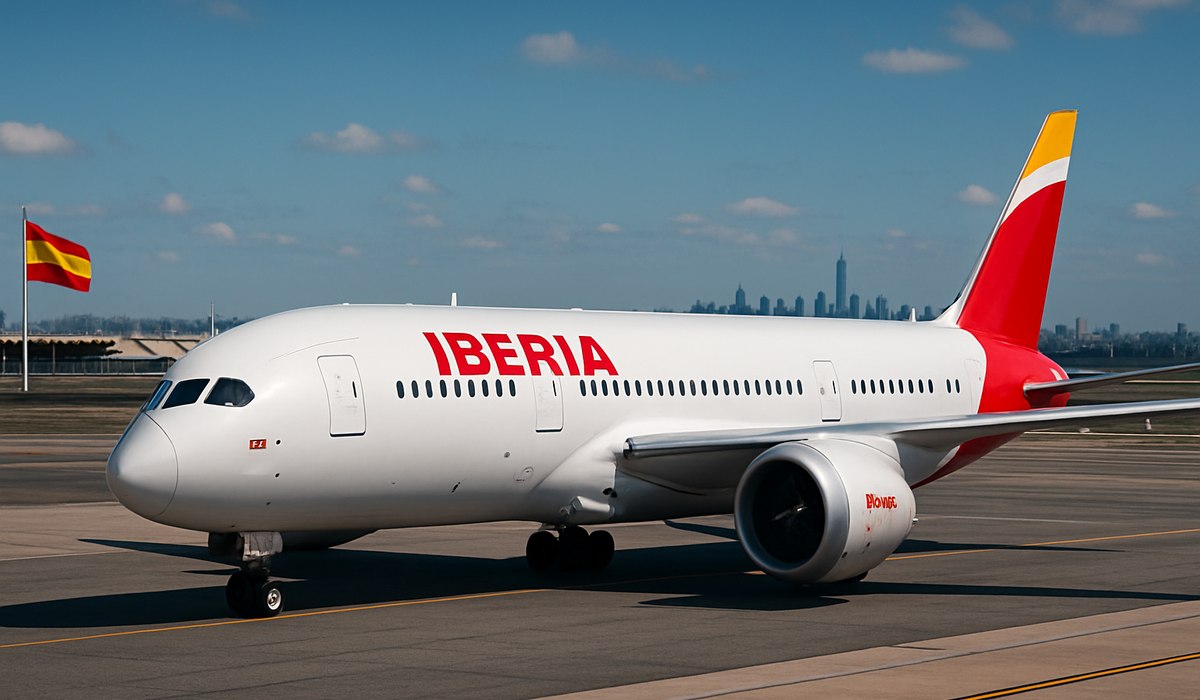
Image generated by AI
Iberia Expands Transatlantic Reach with Direct Madrid-Newark Service
Spain's flagship carrier is reshaping the competitive landscape of European-to-US air travel. Iberia has launched a new nonstop service connecting Madrid-Barajas Airport (MAD) directly to Newark Liberty International Airport (EWR), marking a significant shift in how the airline approaches North American connectivity.
This strategic expansion signals a competitive recalibration in transatlantic aviation—a sector traditionally dominated by legacy US carriers and their established European partners. The move comes as European airlines increasingly challenge the status quo, seeking higher-margin East Coast routes and direct access to premium business traveler markets.
Quick Summary
- Iberia launches Madrid-Newark direct flights, adding capacity on a high-demand East Coast corridor
- Route positions Madrid as a European hub alternative to London, Paris, and Frankfurt for US-bound travelers
- New service creates competitive pressure on established carriers' Northeast routes
- Frequent flyer members gain direct routing options and improved connectivity across Iberia's European network
Why Madrid-to-Newark Matters: Strategic Route Analysis
The Newark route represents more than a single new flight for Iberia. It's part of a calculated response to evolving transatlantic travel patterns and the profitability of premium North American routes.
Newark Liberty International has emerged as a critical gateway for travelers accessing the New York metropolitan area. Unlike its better-known neighbors (JFK and LaGuardia), EWR offers lower congestion, faster ground transportation options, and more attractive slot availability for new carriers seeking market entry.
According to IATA route data and international aviation statistics, transatlantic capacity has expanded by 12% year-over-year in 2026, with European carriers capturing an increasing share of premium-cabin bookings. Madrid-to-Newark fills a gap that previously required connections through London Gatwick, Amsterdam, or Frankfurt—journeys that added 3-5 hours of travel time and created revenue leakage for Iberia's network.
The scheduling advantage favors both European and North American passengers. A morning departure from Madrid provides evening arrival in Newark, enabling connecting flights to secondary US markets or overnight connectivity to Canada and South America. Evening return flights depart Newark with early-morning Madrid arrivals—ideal for business travelers meeting European workday requirements.
Iberia's parent company IAG has invested heavily in transatlantic infrastructure. This route launch reinforces the carrier's position as a preferred European gateway, competing directly with Turkish Airlines, Air France, and Lufthansa on US Northeast routes.
What This Means for Transatlantic Travelers: Competition & Pricing
Direct routing from Madrid to Newark creates immediate benefits for passengers in multiple markets.
Spanish travelers gain faster access to the US East Coast without routing through London or Frankfurt. Portuguese passengers connecting from Lisbon benefit from Iberia's short-haul network feeding the Madrid hub. Central European travelers using partner airlines like Iberia Express access the route through interline agreements and code-share partnerships.
Pricing pressure on established routes is inevitable. British Airways, Lufthansa, and Air France have long controlled premium pricing on equivalent European-to-Newark services. Iberia's entry disrupts that dynamic, particularly for economy and premium economy cabins where price sensitivity remains high.
Business travelers seeking award availability should monitor FlightAware tracking for real-time schedule performance and frequent flyer program release patterns. The route's early-morning Madrid departure and evening Newark arrival align with premium business traveler preferences—positioning this service as a competitive alternative to legacy carrier offerings.
Expect promotional fares during the initial launch phase. Iberia typically subsidizes new transatlantic routes for 6-12 months to establish market presence and build routine bookings. Early adopters booking in April and May 2026 should find competitive pricing compared to August and September peak-season fares.
Iberia's Competitive Position Against Legacy US Carriers
The transatlantic market remains dominated by legacy carriers: American Airlines, United Airlines, and Delta Air Lines control approximately 40% of European-to-US capacity. These carriers built their dominance through decades of hub development, loyalty program scale, and government-protected slot access at major US airports.
Iberia's challenge lies in converting passengers from ingrained routines. Travelers accustomed to booking American, United, or Delta transatlantic flights often receive employer travel discounts, preferred loyalty perks, and corporate negotiated fares unavailable to new entrants. Breaking these patterns requires consistent service quality, competitive pricing, and reliable schedule performance.
However, Iberia enjoys structural advantages. As part of the IAG group, the carrier leverages partnerships with British Airways and Aer Lingus for US connecting traffic. Its frequent flyer program (Avios) offers competitive earning rates and redemption opportunities compared to legacy US airline programs. Madrid's geographic position—more central to Western Europe than London or Frankfurt—creates routing efficiency for a broad traveler base.
Recent years have shown European carriers successfully capturing transatlantic market share. airBaltic's Route Expansion Strategy demonstrates how carriers outside legacy alliances identify underserved markets and establish profitable operations. Similarly, Air Premia's Transatlantic Connectivity Expansion highlights Asian carriers' success penetrating North American markets through creative partnerships and niche positioning.
Iberia's approach mirrors these carriers' strategies: identify high-demand corridors, leverage hub geography, and offer competitive scheduling.
Connectivity Benefits: Madrid Hub Advantage for Europe-US Travel
Madrid-Barajas has transformed into one of Europe's most efficient hubs under Iberia's management. The airport handled 61.9 million passengers in 2025—growth driven by Iberia's expanded European network and strategic partnerships.
The Madrid hub advantage extends beyond simple geography. Iberia operates 180+ daily departures to European destinations, creating feed-in opportunities for North American-bound passengers. A traveler from Berlin can connect through Madrid on a 3-hour feeder flight, then depart the same afternoon for Newark on a 7-hour direct flight—total journey time from city center to city center under 12 hours.
This compares favorably to legacy carrier routing. American Airlines' Boston-to-Madrid-to-Madrid connections involve unnecessarily complex itineraries. United's Chicago-Frankfurt-Newark routings add 4+ hours of travel time and increase connection risk.
The connectivity value extends to intra-European travel. Passengers originating in Eastern Europe, the Mediterranean, or Scandinavia can position to Madrid on competitive short-haul fares, then connect to Newark without layovers. This accessibility supports European Hotel Industry Recovery by facilitating two-way tourism flows—US-based travelers accessing Spanish and European hospitality properties benefit from the reverse routing logic.
Baggage handling, customs pre-clearance, and ground services at Madrid exceed standards at congested London and Frankfurt hubs. Passengers report faster processing, shorter connection times, and more reliable baggage transfers on Madrid-based connecting flights.
What Affected Passengers Should Do Now
1. Monitor Route Launch Dates and Initial Schedule
Ib
Disclaimer
This article is for informational and educational purposes only. It does not constitute legal, financial, or professional advice. While we strive to provide accurate and up-to-date information, travel policies, regulations, and conditions change rapidly. Always verify information with official sources before making travel decisions. Nomad Lawyer makes no representations about the accuracy, reliability, completeness, or suitability of the information provided. Readers should consult qualified professionals for advice specific to their circumstances. The views expressed in this article are those of the author and do not necessarily reflect the views of Nomad Lawyer.
Raushan Kumar
Founder & Lead Developer
Full-stack developer with 11+ years of experience and a passionate traveller. Raushan built Nomad Lawyer from the ground up with a vision to create the best travel and law experience on the web.
Learn more about our team →