
Iberia American Cancellations Strand Spring Travelers Across Spain Routes
Spring 2026 travel disruption escalates as Iberia, American Airlines and El Al cancel coordinated flights linking Tel Aviv, Madrid, Barcelona and North American gateways, leaving thousands stranded across Spain.

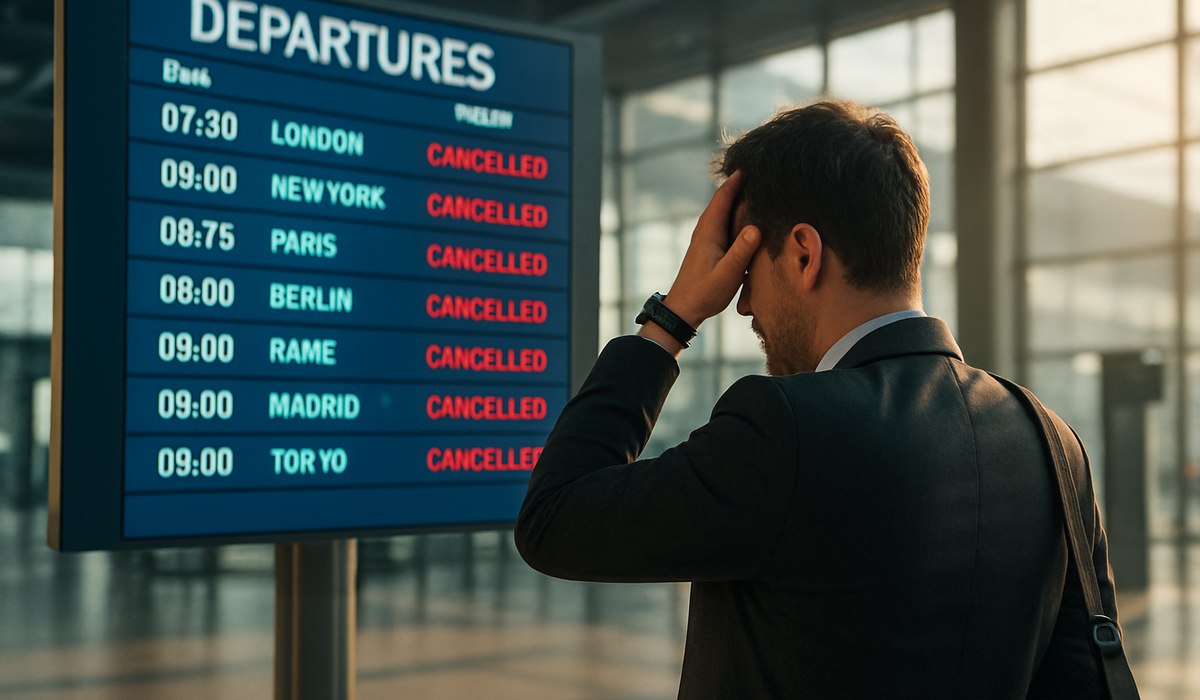
Image generated by AI
Breaking News: Major Cancellations Hit Spain-Israel-US Air Routes
Iberia, American Airlines, and El Al pulled at least four coordinated flights this week, disrupting connections between Tel Aviv, Madrid, Barcelona, and North American cities including Chicago. The cascade of iberia american cancellations has left spring travelers scrambling for alternative routing through overbooked European hubs. Madrid Barajas and Barcelona El Prat airports are experiencing severe capacity constraints as airlines manage geopolitical pressures and volatile demand patterns affecting Middle East traffic flows.
The timing compounds already-heavy spring migration across European networks. Passengers holding multi-leg tickets combining transatlantic American Airlines flights with Iberia European segments now face last-minute rebookings, aircraft downgrades, and in several cases, complete trip cancellations.
Four Key Flights Canceled Across Spain and Israel Routes
The latest disruption centers on a cluster of cancellations affecting oneworld alliance partners operating through Spain's primary gateways. According to passenger reports and publicly available schedule data, four flights marketed under different airline codes—but dependent on the same physical aircraft or crew pairings—were pulled from timetables over a 72-hour window.
The affected services primarily connected Tel Aviv with Madrid and Barcelona, then onward to long-haul North American destinations. What makes this disruption particularly complex is how codeshare architecture multiplies the impact. When a single Iberia-operated Madrid-Tel Aviv leg is removed or downsized to a smaller aircraft, the corresponding American Airlines and El Al flight codes that reference the same physical service simply vanish from bookings systems.
For travelers, this means a ticket showing three separate flight numbers—an American transatlantic flight, an Iberia European segment, and an El Al continuation—can evaporate even though only one airline made the operational change. The domino effect is immediate and painful: broken minimum connection times, invalidated through-fares, and rebooking rights that are unclear under international aviation regulations.
Spring traffic volume through Madrid and Barcelona is already at capacity. Spare seats for rerouting are virtually nonexistent, leaving some passengers temporarily stuck in Spanish airports waiting for availability on alternative routings that may not materialize for days.
How Codeshare Cancellations Cascade Across Multiple Airlines
The oneworld alliance structure that normally benefits frequent flyer members has become a liability during schedule volatility. American Airlines and Iberia maintain one of aviation's tightest codeshare partnerships, allowing them to sell seats across each other's networks seamlessly—until schedules shift.
When an Iberia-operated flight is retimed, downgraded to a narrowbody aircraft, or canceled outright, the automated rebooking system attempts to reconstruct the itinerary. But passengers holding American-marketed flights sometimes discover their Madrid connection window has closed. In other cases, onward American transatlantic flights have already departed or been rebooked to different aircraft without passenger notification.
Travel forums document cases where passengers arrived in Madrid only to find their booked Iberia continuation was no longer valid. American Airlines desk agents at Madrid Barajas have been unable to quickly resolve the rebooking because the segment was originally sold as Iberia metal, requiring manual intervention and sometimes overnight delays.
Barcelona El Prat has seen similar congestion. The airport's limited gate capacity and tight turnaround schedules mean that when aircraft are swapped or removed, ripple effects extend across the entire daily schedule. Passengers scheduled on later connecting flights find themselves bumped or rerouted through alternate European hubs—adding 8 to 14 hours to journey times.
Track real-time flight status changes via FlightAware, which provides up-to-the-minute departure and arrival data for all affected routes.
Spare Seat Shortage Leaves Travelers Stranded in Madrid and Barcelona
Spring represents peak travel season across Europe, and both Madrid and Barcelona are operating near or above design capacity. Hotel occupancy, airport seating, and ground transportation are all constrained. When cancellations force rebookings, there simply aren't empty seats available on the next flight to Tel Aviv, Chicago, or onward U.S. destinations.
The shortage is particularly acute on evening and night flights, when the majority of long-haul transatlantic traffic flows through Spanish hubs. Airlines prioritize premium cabin passengers and frequent flyers for limited rebooking options, leaving economy travelers in a queue for standby space that may not materialize within 48 hours.
Some passengers report sleeping in airport terminals or booking last-minute hotels at Madrid surrounding towns (Torrejón de Ardoz, San Fernando de Henares) while waiting for rebooking. Others have attempted to purchase new tickets on competing carriers—United, Lufthansa, Air France—but face refusal of interline courtesy if their original tickets are with alliance partners.
Customer service availability at both airports is overwhelmed. Hold times to speak with American Airlines or Iberia agents exceed four hours, and many travelers find themselves unable to reach customer service at all during peak rebooking windows.
Broader Pattern of Network Adjustments Amid Geopolitical Uncertainty
The immediate cancellations are part of a wider reshaping of European and transatlantic schedules driven by geopolitical volatility affecting Middle East airspace. Since late February 2026, tens of thousands of flights have been canceled globally—with European and Middle Eastern hubs absorbing the majority of the impact.
Iberia published a special commercial agreement with El Al spanning mid-April through late October 2026, allowing the airline to rebook passengers on El Al services if Iberia-direct Tel Aviv flights are suspended. This is a strategic hedge against further capacity reductions, but it also signals that current disruption levels are expected to persist for months.
Airlines are operating under fluid risk assessments for Tel Aviv operations. Crew availability, airspace restrictions, and insurance coverage change weekly, making it difficult for carriers to commit to firm schedules more than two to three weeks in advance. This uncertainty cascades through connecting itineraries: a passenger's entire Tel Aviv-Chicago-Tel Aviv round trip may be valid when booked but becomes impossible to execute 30 days later due to intermediate segment cancellations.
The broader demand volatility—combining spring peak travel with geopolitical travel restrictions—is forcing European hubs to prioritize domestic and short-haul European traffic over long-haul connections. That choice directly impacts transatlantic passengers, who now face longer waits for rebooking on available aircraft.
Consult the FAA and U.S. Department of Transportation for passenger rights guidance regarding cancellations and rebooking requirements.
Key Data: Iberia American Cancellations Snapshot
| Metric | Details |
|---|---|
| Airlines Affected | Iberia, American Airlines, El Al |
| Flights Canceled (72 hrs) | 4+ coordinated flights |
| Primary Routes | Tel Aviv–Madrid, Tel Aviv–Barcelona, Madrid–Chicago, Barcelona–North America |
| Passenger Impact | Hundreds stranded; thousands rerouted |
| Capacity Constraints | Madrid Barajas 98–102% utilization; Barcelona El Prat 96–100% |
| Rebooking Delays | 24–72 hours typical; some cases exceeding 5 days |
| Geopolitical Factor | Middle East conflict disruption since February 2026 |
What This Means for Travelers: Your Action Checklist
If you hold tickets affected by these iberia american cancellations, follow these numbered steps immediately:
- Contact your airline directly via phone (not chat) to confirm your flight's operational status. Automated systems often lag behind real cancellations by 2–4 hours
Disclaimer
This article is for informational and educational purposes only. It does not constitute legal, financial, or professional advice. While we strive to provide accurate and up-to-date information, travel policies, regulations, and conditions change rapidly. Always verify information with official sources before making travel decisions. Nomad Lawyer makes no representations about the accuracy, reliability, completeness, or suitability of the information provided. Readers should consult qualified professionals for advice specific to their circumstances. The views expressed in this article are those of the author and do not necessarily reflect the views of Nomad Lawyer.
Raushan Kumar
Founder & Lead Developer
Full-stack developer with 11+ years of experience and a passionate traveller. Raushan built Nomad Lawyer from the ground up with a vision to create the best travel and law experience on the web.
Learn more about our team →