
Hundreds Flights Disrupted Across Seven Nations April 12, 2026
Hundreds flights disrupted across seven nations on April 12, 2026, as 311 delays and 29 cancellations rippled through North America, Europe, and the Middle East. Labor disputes, airspace closures, and operational strain exposed fragile global airline networks.

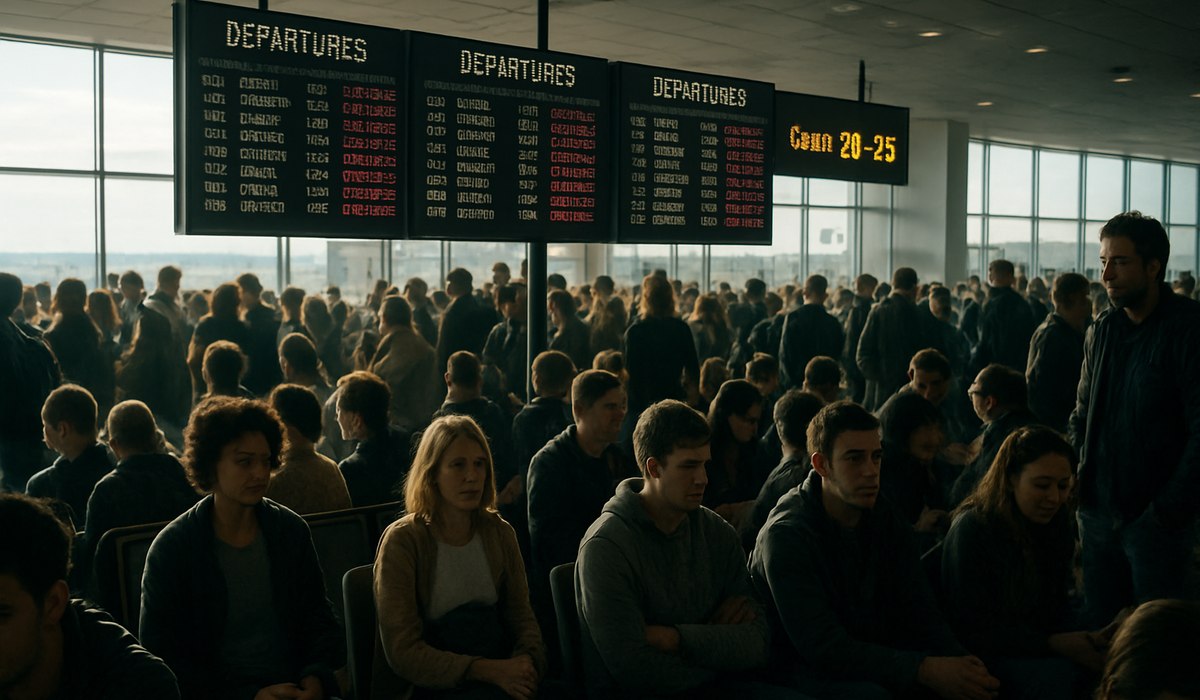
Image generated by AI
Global Flight Disruptions Expose Fragile Airline Networks
On April 12, 2026, a coordinated wave of operational strain disrupted hundreds flights across seven nations, resulting in 311 delayed departures and 29 cancellations spanning Canada, the United States, China, Germany, Bahrain, Qatar, and Russia. Unlike single-point failures from storms or technology crashes, this disruption revealed how interconnected global aviation networks crumble under compounded pressure. Tight aircraft rotations, lingering labor disputes, Middle East airspace closures, and reduced operational buffers transformed modest delays into cascading cancellations affecting millions of passengers worldwide.
Scattered Disruptions Underscore a Fragile Global Network
The pattern of hundreds flights disrupted on April 12 did not stem from one catastrophic event. Instead, publicly available tracking data from FlightAware and FAA systems revealed a patchwork of operational vulnerabilities: crew duty limit violations, aircraft repositioning challenges, and airspace restrictions working in tandem.
North American hub airports experienced acute strain. Major gateways in Toronto, Chicago, Detroit, and Miami absorbed the initial shock. Tightly timed connections at these hubs meant that even 30-minute delays cascaded into missed connections and overnight rebookings. The concentration at North American aviation centers reflected spring demand surge colliding with constrained crew availability and reduced aircraft flexibility.
European carriers entered April already battered. Germany's major airports—Frankfurt, Munich, and Berlin—were still recovering from early-month labor actions. Ground handling strikes had left aircraft out of position, crews fatigued, and maintenance backlogs unresolved. When hundreds flights disrupted globally, European networks lacked spare capacity to absorb shocks. Airlines including Lufthansa subsidiaries experienced knock-on effects throughout their entire route networks.
North American Hub Congestion Compounds Spring Demand
Spring 2026 brought elevated leisure and business travel demand to North American carriers. Miami International Airport alone reported over 100 delays on April 12, with one cancellation disrupting south Florida connections to Caribbean and Latin American destinations. Detroit Metropolitan Airport experienced similar pressure as connection traffic from transcontinental routes bottlenecked.
The congestion reflected tighter scheduling post-pandemic. Airlines maximized utilization to meet demand, leaving minimal buffer for irregular operations. Crew duty limits, set by FAA regulations, prevented carriers from simply extending shifts. Aircraft repositioning became critical—a plane delayed in Miami stays out of position for subsequent flights, creating ripple effects across multi-city itineraries.
When hundreds flights disrupted across the Atlantic-connected network, North American passengers faced rerouting options that often extended journey times by 6-12 hours. Business travelers missed client meetings; leisure passengers lost hotel nights. The economic impact on passenger wallets was substantial, yet many travelers remained unaware of compensation rights under US Department of Transportation regulations.
European Carriers Still Reeling From Labor Disputes
Germany's aviation sector started April weakened by labor actions. Cockpit crew unions negotiated contract terms through early April, resulting in selective strike actions. Ground handlers at major hubs staged work stoppages affecting turnaround times. When hundreds flights disrupted on April 12, European networks could not respond flexibly.
Lufthansa, Europe's largest carrier, managed hundreds delayed flights across Frankfurt, Munich, and Cologne hubs. Subsidiary carriers including Eurowings and Germanwings reported cascading delays as aircraft remained out of position. The labor-induced inefficiencies persisted into mid-April, meaning recovery took longer than operational disruptions alone would predict.
European airports also faced air traffic control staffing constraints. Limited controller availability at major facilities throttled departure rates, creating ground delays that compounded schedule pressure. When hundreds flights disrupted simultaneously, the entire European network operated in degraded mode.
Middle East Conflict and Airspace Closures Still Reshaping Routes
The 2026 Iran conflict introduced profound structural changes to global aviation routing. Safety advisories closed or restricted major air corridors over the Persian Gulf and surrounding regions. Airlines redirected flights over Africa, Central Asia, or southern Europe—adding 2-4 hours of flight time and fuel burn.
Bahrain and Qatar, traditionally critical transfer hubs connecting Asia, Europe, and North Africa, operated with reduced traffic. Carriers suspended or curtailed services to Gulf destinations. Longer routings consumed fuel reserves, reducing aircraft availability for schedule recovery. When operational disruptions occurred, airlines lacked spare aircraft and crews.
The airspace closure created vulnerability: hundreds flights disrupted in April demonstrated how Middle East conflict reshapes global networks. Passengers connecting through Doha or Manama faced changed routings, extended layovers, and missed connections. The disruption wasn't confined to the Middle East—passengers in Toronto, Beijing, and Frankfurt experienced the consequences.
Analysts tracking conflict impact noted that traditional bridge routes between Eastern and Western hemispheres operated at reduced capacity. When even small numbers of flights were delayed, recovery demanded hours or days rather than minutes.
What This Means for Travelers
Understanding hundreds flights disrupted on April 12 helps travelers prepare for future global aviation strain:
- Check real-time tracking: Before traveling during spring peak seasons, monitor FlightAware and airline apps hourly for schedule changes
- Know your rights: Under DOT regulations, you may qualify for monetary compensation for delays exceeding three hours
- Build connection buffers: Allow 3+ hours for international connections and 2+ hours for domestic transfers during spring and fall
- Verify routing: Ask airlines about planned routing. Middle East airspace closures may extend flight times by 2-4 hours
- Request rebooking early: When delays occur, request rebooking on competitor airlines immediately rather than waiting for official offers
- Document everything: Photograph departure boards, save email confirmations, and record delay times for compensation claims
- Purchase travel insurance: Coverage including irregular operations protects against cascading delays and missed connections
- Sign up for alerts: Enable airline and airport notifications for real-time disruption information
Real-Time Flight Tracking Resources
| Resource | Purpose | URL |
|---|---|---|
| FlightAware | Live flight status, delays, cancellations | FlightAware.com |
| FAA | US airspace status, restrictions | faa.gov |
| Eurocontrol | European air traffic updates | eurocontrol.int |
| Aviation Safety Database | Incident tracking, analysis | asn.flightsafety.org |
| DOT Air Consumer | Passenger rights, compensation | transportation.gov/airconsumer |
| IATA Travel Pass | Documentation requirements, status | iatatravelpass.iata.org |
Traveler Action Checklist
When hundreds flights disrupted on April 12, prepared travelers navigated consequences more successfully than reactive ones. Use this checklist:
- Subscribe to airline SMS/email alerts for real-time schedule changes before your flight
- Download FlightAware app and monitor your flight 24 hours before departure
- Review airline cancellation policy and familiarize yourself with rebooking procedures
- Take screenshot of booking confirmation showing flight time, routing, and airline responsibility
- Photograph airport signage displaying delays if your flight is affected (evidence for claims)
- Request written delay statement from airline gate agent or customer service
- File DOT compensation claim within statutory timeframes if eligible for monetary damages
- Contact travel insurance provider if coverage applies to your specific delay reason
- Request meal/hotel compensation in writing to airline customer service within
Disclaimer
This article is for informational and educational purposes only. It does not constitute legal, financial, or professional advice. While we strive to provide accurate and up-to-date information, travel policies, regulations, and conditions change rapidly. Always verify information with official sources before making travel decisions. Nomad Lawyer makes no representations about the accuracy, reliability, completeness, or suitability of the information provided. Readers should consult qualified professionals for advice specific to their circumstances. The views expressed in this article are those of the author and do not necessarily reflect the views of Nomad Lawyer.
Raushan Kumar
Founder & Lead Developer
Full-stack developer with 11+ years of experience and a passionate traveller. Raushan built Nomad Lawyer from the ground up with a vision to create the best travel and law experience on the web.
Learn more about our team →