
Military Drone Technology: How the MQ-9 Reaper Achieves Unprecedented 40-Hour Flight Endurance Through Advanced Avionics Systems
Breaking airline news and aviation industry updates for 2026.

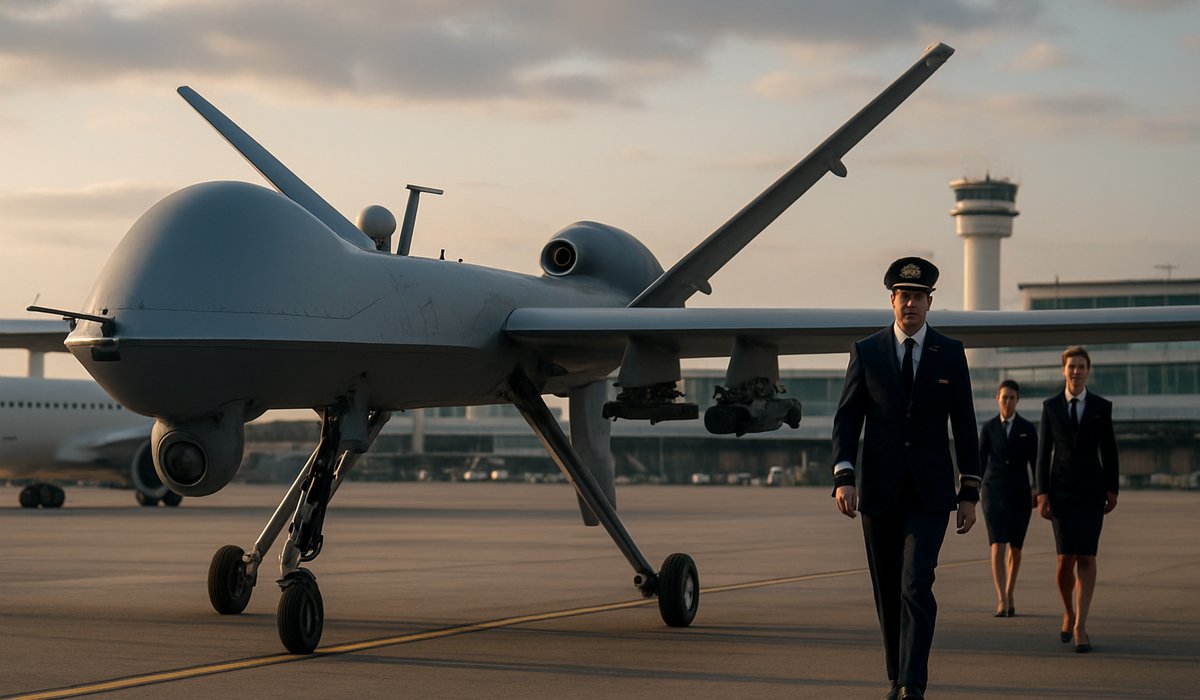
Image generated by AI
Military Drone Technology: How the MQ-9 Reaper Achieves Unprecedented 40-Hour Flight Endurance Through Advanced Avionics Systems
Advanced redundancy engineering and sophisticated control systems enable extended operational capabilities for next-generation unmanned aircraft
The Evolution of Extended-Range Drone Capabilities
The General Dynamics MQ-9 Reaper represents a significant technological leap from its predecessor, the MQ-1 Predator, establishing new benchmarks for unmanned aerial vehicle (UAV) performance in modern military operations. The platform's Extended Range (ER) variant has garnered considerable attention in defense circles for achieving flight durations exceeding 40 hours—a capability that fundamentally reshapes operational planning for military and intelligence agencies worldwide.
However, the headline figures surrounding endurance performance require careful examination, as actual operational capacity depends on numerous interconnected variables that operators must meticulously calibrate for each mission.
Redundancy Architecture: The Foundation of Extended Operations
The extended endurance capabilities of the MQ-9 Reaper rest fundamentally upon its triple-redundant avionics architecture. This engineering approach ensures continuous system functionality even when individual components experience failure, a critical requirement for aircraft operating remotely across vast distances without the possibility of manual intervention.
The redundant systems architecture monitors multiple flight-critical parameters simultaneously, automatically compensating for degradation in primary systems by seamlessly transitioning to backup pathways. This design philosophy significantly reduces the risk of catastrophic system failure during extended missions, enabling operators to maintain control and situational awareness throughout marathon-duration flights.
Operational Variables That Define Real-World Endurance
The frequently cited 40-plus hour endurance figures merit important contextual clarification. Actual flight duration varies considerably based on mission-specific configurations, including:
- Payload configuration: Armed variants carrying missiles and surveillance equipment consume additional fuel compared to reconnaissance-only configurations
- Operational altitude: Higher altitude operations typically extend range and endurance due to reduced atmospheric density and engine efficiency improvements
- Weather conditions: Headwinds, crosswinds, and atmospheric instability directly impact fuel consumption and operational duration
- Sensor systems: Active sensor employment generates additional power demands that reduce overall mission length
Military operators acknowledge that real-world deployments rarely achieve theoretical maximum endurance figures, as field conditions, intelligence requirements, and tactical considerations typically necessitate reserve fuel margins and adjusted mission profiles.
Strategic Implications for Modern Warfare
The MQ-9 Reaper's extended operational range has transformed how military planners approach persistent surveillance and strike operations across expansive geographic regions. The capability to maintain continuous observation stations for periods approaching two full days without recovery cycles represents a significant tactical advantage in counterterrorism and regional security operations.
As unmanned systems continue advancing, the integration of redundant avionics and autonomous flight management systems increasingly enables sustained operations that would prove logistically impossible with traditional manned aircraft platforms.
Frequently Asked Questions
Q: What is the actual maximum flight duration of the MQ-9 Reaper? A: The Extended Range variant can exceed 40 hours under optimal conditions, though typical operational missions achieve 25-30 hours depending on payload and environmental factors.
Q: How does triple redundancy improve drone reliability? A: Triple-redundant systems automatically switch to backup avionics when primary systems degrade, ensuring continuous flight control without pilot intervention—essential for remote operations.
Q: What factors reduce real-world endurance compared to specifications? A: Payload weight, weather conditions, operational altitude, and sensor activation all increase fuel consumption, reducing maximum achievable flight duration.
Q: Why does the MQ-9 Reaper require extended endurance capabilities? A: Extended flight duration enables persistent surveillance across wide areas and reduces recovery/turnaround time between missions, improving operational efficiency and cost-effectiveness.
Q: How does the MQ-9 Reaper compare to other military drones in terms of endurance? A: The MQ-9 ER represents the leading edge of extended-endurance UAV technology, significantly outperforming earlier generation systems and competing unmanned platforms.
Related Travel Guides
Flight Delay Compensation Guide 2026
Understanding Airline Route Changes
Airport Security Process Updated (2026)
External Resources
Disclaimer
This article is for informational and educational purposes only. It does not constitute legal, financial, or professional advice. While we strive to provide accurate and up-to-date information, travel policies, regulations, and conditions change rapidly. Always verify information with official sources before making travel decisions. Nomad Lawyer makes no representations about the accuracy, reliability, completeness, or suitability of the information provided. Readers should consult qualified professionals for advice specific to their circumstances. The views expressed in this article are those of the author and do not necessarily reflect the views of Nomad Lawyer.
Kunal K Choudhary
Co-Founder & Contributor
A passionate traveller and tech enthusiast. Kunal contributes to the vision and growth of Nomad Lawyer, bringing fresh perspectives and driving the community forward.
Learn more about our team →