
F-22 Raptor's Advanced Cockpit Design Revolutionizes Stealth Fighter Pilot Awareness and Mission Control
Breaking airline news and aviation industry updates for 2026.

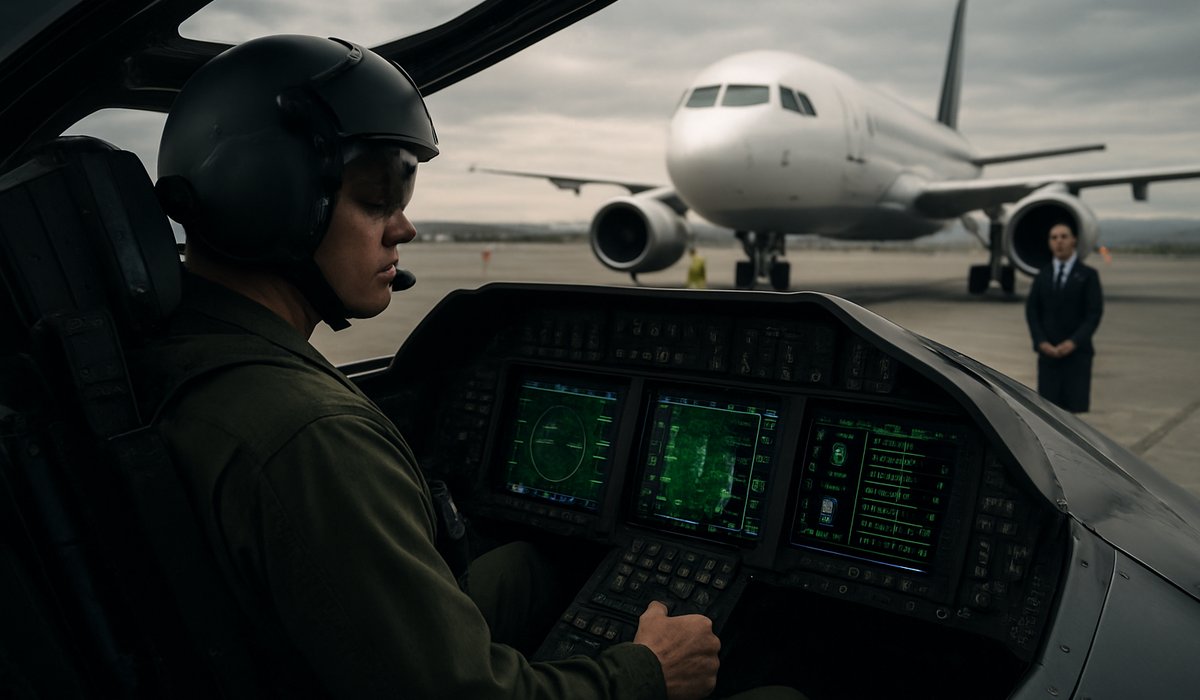
Image generated by AI
F-22 Raptor's Advanced Cockpit Design Revolutionizes Stealth Fighter Pilot Awareness and Mission Control
How Lockheed Martin's cutting-edge avionics integration transforms modern air superiority tactics
The Evolution of Dominance in the Cockpit
The Lockheed Martin F-22 Raptor has undergone a dramatic transformation since its inception as a Cold War-era interceptor, evolving into a sophisticated, information-driven command platform that fundamentally reshapes how modern air superiority is achieved. This shift represents decades of iterative design refinement, with the aircraft's cockpit architecture now serving as the critical operational nerve center that enables pilots to fully exploit the jet's unparalleled stealth and combat capabilities.
Cockpit Design Built for Stealth Integration
The F-22's cockpit layout represents a paradigm shift in fighter aircraft ergonomics. Rather than prioritizing conventional instrumentation, the system integrates comprehensive sensor fusion and real-time data visualization, allowing pilots to maintain complete situational awareness while operating under stealth protocols. The cockpit's arrangement enables pilots to process overwhelming amounts of tactical information—from radar data to threat detection—without compromising the aircraft's low-observable signature that defines its operational advantage.
Advanced display systems present multi-layered intelligence feeds across intuitive interfaces, transforming the pilot from a traditional stick-and-rudder operator into a modern air warfare quarterback. This democratization of information within the cockpit allows for rapid decision-making at supersonic speeds, where split-second tactical choices determine mission success.
Maximizing Fifth-Generation Capabilities
The cockpit's user-centric design philosophy ensures that pilots can leverage the Raptor's full spectrum of capabilities—including its advanced sensors, supercruise speed, and networked data sharing—without cognitive overload. The streamlined interface reduces the pilot's workload during high-stress engagements, freeing mental resources for strategic thinking rather than instrument management.
This human-machine integration represents the current gold standard in military aviation, setting the benchmark for future fighter development globally. The cockpit doesn't simply display information; it synthesizes, prioritizes, and contextualizes data to support optimal decision-making in contested air environments.
Maintaining Air Superiority Through Design
As peer-competitor nations develop advanced fighters, the F-22's cockpit ergonomics and sensor integration remain defining factors in maintaining operational dominance. The jet's ability to absorb and present complex battlefield data enables pilots to control multiple simultaneous engagements—a capability rooted in decades of cockpit evolution and refinement.
Frequently Asked Questions
What makes the F-22 Raptor's cockpit different from previous fighter jet designs? The F-22's cockpit integrates advanced sensor fusion and data-centric displays rather than relying on traditional instrumentation, enabling pilots to process real-time tactical information while maintaining stealth operations.
How does the cockpit layout enhance stealth mission effectiveness? The streamlined interface design allows pilots to manage complex operations without compromising the aircraft's low-observable signature, presenting information in ways that don't require external radar or communications that would reveal position.
What role does the pilot play in the modern F-22 operational environment? Pilots function as tactical commanders or "quarterbacks," synthesizing multiple data streams to make rapid strategic decisions during air engagements rather than focusing purely on aircraft control.
How does the F-22's cockpit compare to current and emerging fighter aircraft worldwide? The F-22 established the benchmark for fifth-generation cockpit design, with its human-machine integration and sensor fusion architecture remaining the standard against which newer platforms are measured.
Will future fighter aircraft adopt similar cockpit philosophies? Yes—the data-centric, pilot-as-commander approach pioneered by the F-22 is now the foundational design principle for next-generation fighter development globally.
Related Travel Guides
Flight Delay Compensation Guide 2026
Understanding Airline Route Changes
Airport Security Process Updated (2026)
External Resources
Disclaimer
This article is for informational and educational purposes only. It does not constitute legal, financial, or professional advice. While we strive to provide accurate and up-to-date information, travel policies, regulations, and conditions change rapidly. Always verify information with official sources before making travel decisions. Nomad Lawyer makes no representations about the accuracy, reliability, completeness, or suitability of the information provided. Readers should consult qualified professionals for advice specific to their circumstances. The views expressed in this article are those of the author and do not necessarily reflect the views of Nomad Lawyer.
Raushan Kumar
Founder & Lead Developer
Full-stack developer with 11+ years of experience and a passionate traveller. Raushan built Nomad Lawyer from the ground up with a vision to create the best travel and law experience on the web.
Learn more about our team →