
Military Aviation Innovation: How the C-17 Globemaster III Executes Dramatic Combat Descents Using Reverse Thrust Technology
Breaking airline news and aviation industry updates for 2026.

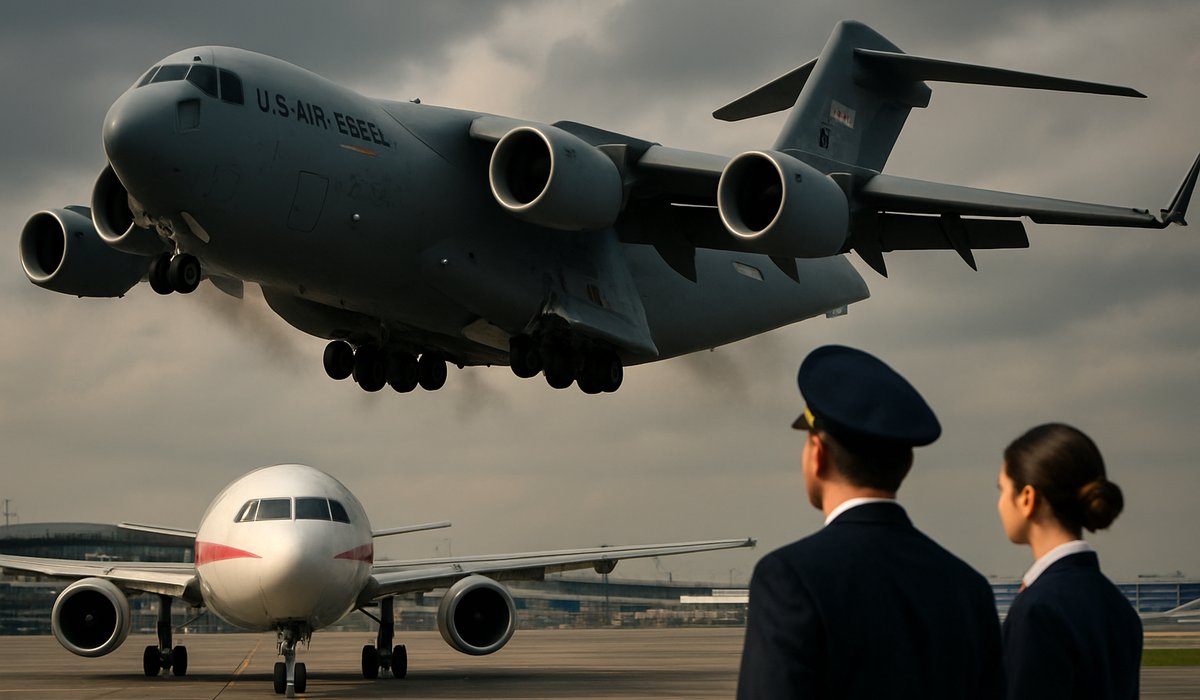
Image generated by AI
Military Aviation Innovation: How the C-17 Globemaster III Executes Dramatic Combat Descents Using Reverse Thrust Technology
The U.S. Air Force's tactical cargo aircraft deploys a rare flight capability to evade ground-based threats during combat operations
Revolutionary Descent Capability Redefines Military Airlift Strategy
The Boeing C-17 Globemaster III, a cornerstone of United States Air Force operations, possesses a distinctive technological capability that sets it apart in modern military aviation: the ability to execute an extraordinarily rapid descent from cruising altitude using simultaneous reverse thrust across all four engines. This specialized maneuver enables the massive four-engine aircraft to lose approximately 25,000 feet of altitude in just two minutes—a tactical advantage that fundamentally changes how military planners approach supply missions to forward-operating locations.
The Tactical Advantage of High-Altitude Safety
The operational logic behind this capability reflects the evolving nature of modern warfare. By maintaining cruise altitude during approach phases, the C-17 remains beyond the effective range of many conventional air-defense systems that pose threats in active conflict zones. Only when necessary for final delivery does the aircraft execute its dramatic descent, minimizing the time spent in the vulnerable lower airspace where shoulder-fired missiles and anti-aircraft artillery present significant hazards.
"This allows the aircraft to stay at high altitude, where it is safe from many anti-aircraft threats until the very last moment, and then pass through the hazardous low-level environment as quickly as possible," according to operational parameters for the aircraft.
Engineering the Impossible: Pratt & Whitney Turbofan Integration
The technical foundation for this capability rests with the C-17's Pratt & Whitney turbofan engines, which feature reverse-thrust configurations that permit full directional control during descent sequences. This modification represents a significant engineering achievement, as coordinating simultaneous reverse thrust across four massive engines requires sophisticated flight control systems and pilot training protocols.
Implications for Modern Military Operations
The C-17's reverse-thrust descent capability underscores how aviation technology continues to evolve in response to contemporary security challenges. As adversaries develop more sophisticated air-defense networks, the ability to minimize exposure time while maintaining rapid cargo delivery becomes increasingly critical for military logistics operations worldwide.
This innovation reflects broader trends in defense procurement, where traditional speed advantages are being supplemented by tactical maneuverability and threat-avoidance capabilities.
Frequently Asked Questions
What is reverse thrust and how does it work on military aircraft? Reverse thrust redirects engine exhaust forward, creating backward-directed force that slows the aircraft and increases descent rates. On the C-17, all four engines can execute this simultaneously for maximum effect.
Why is rapid descent important in combat zones? Minimizing time in low-altitude airspace reduces exposure to ground-based anti-aircraft threats, including missiles and artillery, which have limited effectiveness at higher altitudes.
Can commercial aircraft perform similar descents? While some commercial turbofans have reverse-thrust capability for landing, commercial aircraft lack the tactical need and pilot training for combat-zone descent procedures.
How does the C-17 compare to other military transport aircraft? The C-17's unique reverse-thrust capability distinguishes it from other large military cargo planes, providing superior tactical flexibility in hostile environments.
What training do C-17 pilots require for this maneuver? Pilots undergo specialized training in extreme descent procedures, engine management under reverse thrust, and threat-avoidance tactics specific to combat operations.
Related Travel Guides
External Resources
Disclaimer
This article is for informational and educational purposes only. It does not constitute legal, financial, or professional advice. While we strive to provide accurate and up-to-date information, travel policies, regulations, and conditions change rapidly. Always verify information with official sources before making travel decisions. Nomad Lawyer makes no representations about the accuracy, reliability, completeness, or suitability of the information provided. Readers should consult qualified professionals for advice specific to their circumstances. The views expressed in this article are those of the author and do not necessarily reflect the views of Nomad Lawyer.
Preeti Gunjan
Contributor & Community Manager
A passionate traveller and community builder. Preeti helps grow the Nomad Lawyer community, fostering engagement and bringing the reader experience to life.
Learn more about our team →