
Airbus A350 Emerges as Long-Haul Aviation's New Standard-Bearer as Boeing Struggles with 777X Delays into 2026
Breaking airline news and aviation industry updates for 2026.

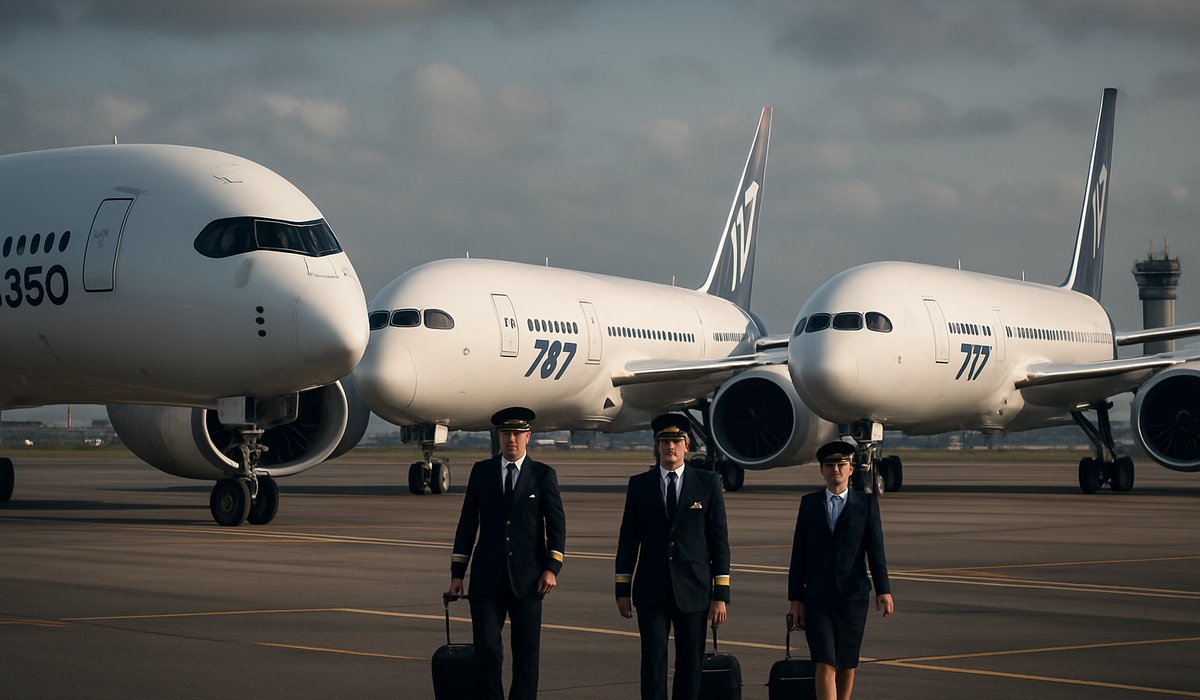
Image generated by AI
Airbus A350 Emerges as Long-Haul Aviation's New Standard-Bearer as Boeing Struggles with 777X Delays into 2026
As manufacturers compete for dominance in the widebody market, Airbus gains critical ground with advanced fuel efficiency and widespread airline adoption
A350 Solidifies Market Leadership Amid Boeing's Production Challenges
The widebody aircraft market is experiencing a decisive shift as 2026 approaches, with the Airbus A350 establishing itself as the category's most competitive offering while Boeing grapples with persistent manufacturing setbacks across its premium long-haul fleet.
The A350 has emerged as the clear efficiency frontrunner, delivering substantial operational advantages that are reshaping purchasing decisions among global carriers. The aircraft's combination of cutting-edge avionics, exceptional fuel economy, and extended range capabilities have positioned it as the benchmark for ultra-long-haul operations—a crown that competitors including Boeing's 787 Dreamliner, 777X, and legacy 777 models are struggling to reclaim.
"The balance of power in the widebody segment has fundamentally shifted," according to market analysts tracking aircraft procurement trends. Boeing's continued delays in ramping up 777X production, coupled with evolving strategic priorities, have handed Airbus an unprecedented competitive advantage in a sector where operational efficiency directly impacts airline profitability and environmental compliance.
Production Momentum and Airline Preference Favor Airbus
The A350's ascendancy reflects more than technical specifications—it represents a crucial supply-chain advantage at a time when airlines face mounting pressure to reduce jet fuel costs and meet stricter carbon emissions regulations. With fuel representing one of aviation's largest operational expenses, the A350's proven fuel efficiency translates directly into measurable savings that resonate with fleet-conscious carriers.
Airlines including Singapore Airlines, Japan Airlines, and numerous European carriers have prioritized A350 orders, signaling confidence in the aircraft's long-term operational value. This purchasing momentum creates additional competitive pressure on Boeing, which is already managing production constraints and quality control issues affecting its 787 and 777X programs.
The Broader Industry Context
The widebody competition occurs against a backdrop of volatile jet fuel prices and post-pandemic demand recovery. Airlines seeking to maximize profitability while maintaining modern fleets are increasingly gravitating toward proven fuel-efficient designs, giving the A350 a structural market advantage that may persist well beyond 2026.
Boeing's 787, while technically capable, faces competition from the A350's superior fuel economy and established supply chain reliability. The 777X, delayed repeatedly, remains years away from widespread fleet integration, leaving traditional 777 operators with aging platforms and limited upgrade paths—a vacuum the A350 continues to fill.
FAQ: Widebody Aircraft Competition and Aviation Market Trends
How much more fuel-efficient is the Airbus A350 compared to the Boeing 787? The A350 delivers approximately 20-25% better fuel efficiency than legacy widebody designs, though exact comparisons depend on configuration and route specifics. This translates to measurable reductions in jet fuel costs for operators.
Why are Boeing's 777X delays giving Airbus a competitive advantage? Extended 777X development timelines create a vacuum in the premium long-haul segment, allowing the A350 to capture market share and establish customer loyalty during the critical recovery period.
What role do jet fuel prices play in aircraft purchasing decisions? Volatile fuel costs make fuel efficiency a primary purchasing criterion. The A350's advanced engines and aerodynamics provide long-term operational savings that justify premium acquisition costs.
Which airlines are prioritizing the A350 over Boeing widebodies? Major carriers including Asian, European, and Middle Eastern airlines have shifted preferences toward the A350, reflecting confidence in its efficiency and reliability.
Will Boeing regain widebody market dominance after 777X enters service? Market analysts suggest the A350's established position and supply-chain reliability may sustain Airbus' lead unless Boeing demonstrates significant technological or operational advantages with its next-generation platform.
Related Travel Guides
Flight Delay Compensation Guide 2026
Understanding Airline Route Changes
Airport Security Process Updated (2026)
External Resources
Disclaimer
This article is for informational and educational purposes only. It does not constitute legal, financial, or professional advice. While we strive to provide accurate and up-to-date information, travel policies, regulations, and conditions change rapidly. Always verify information with official sources before making travel decisions. Nomad Lawyer makes no representations about the accuracy, reliability, completeness, or suitability of the information provided. Readers should consult qualified professionals for advice specific to their circumstances. The views expressed in this article are those of the author and do not necessarily reflect the views of Nomad Lawyer.
Kunal K Choudhary
Co-Founder & Contributor
A passionate traveller and tech enthusiast. Kunal contributes to the vision and growth of Nomad Lawyer, bringing fresh perspectives and driving the community forward.
Learn more about our team →