
How Qantas Mastered Wellington's Runway Constraints Using the Legendary Boeing 747SP
Breaking airline news and aviation industry updates for 2026.

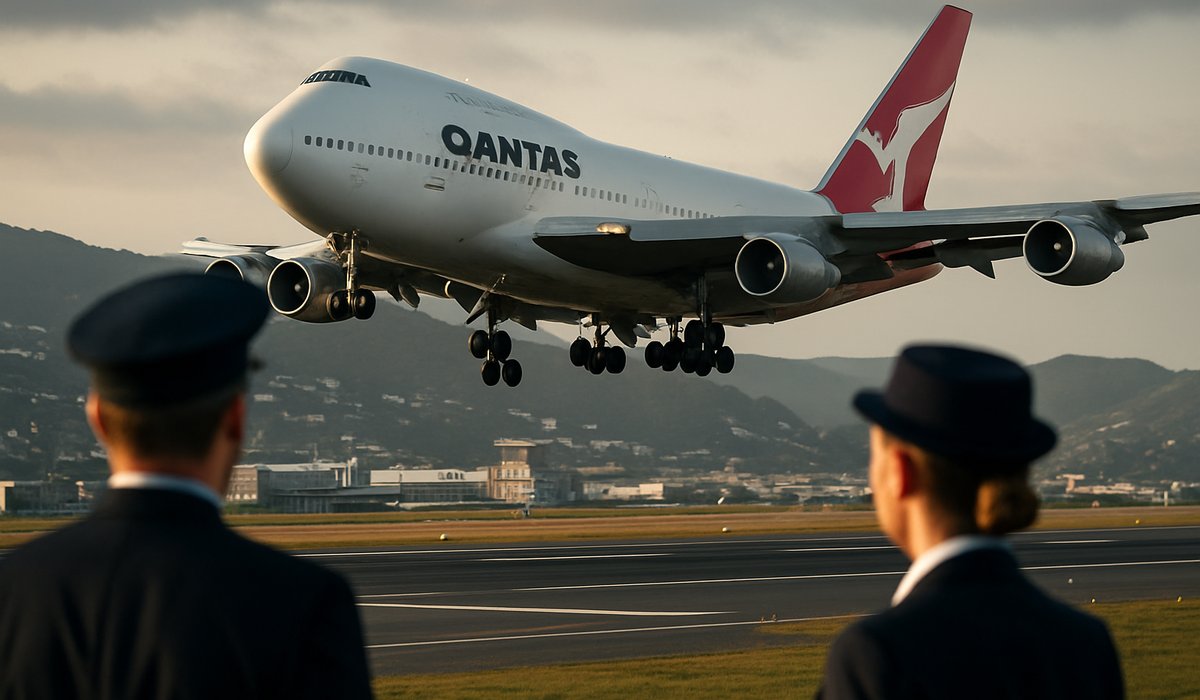
Image generated by AI
How Qantas Mastered Wellington's Runway Constraints Using the Legendary Boeing 747SP
The Australian carrier's innovative deployment of a modified jumbo jet solved a critical infrastructure problem decades before modern narrow-body long-range aircraft emerged
The Engineering Challenge of Ultra-Short Runways
Long before the aviation industry embraced modern solutions like the Airbus A321XLR, airlines faced a formidable operational puzzle: connecting premium city pairs across vast oceanic distances while working within severe runway length constraints. Wellington International Airport presented precisely this dilemma—a strategic market opportunity hampered by infrastructure limitations that conventional wide-body aircraft simply could not overcome.
Qantas confronted this challenge by deploying one of aviation's most unconventional solutions: the Boeing 747SP, a radically shortened variant of the iconic jumbo jet that rewrote the rulebook for long-range, high-capacity flight operations.
The 747SP: Breaking Widebody Conventions
The 747SP represented a bold departure from traditional aircraft design philosophy. Rather than stretching fuselages to maximize capacity—the dominant industry trend—Boeing compressed the legendary 747's frame by roughly 47 feet, creating a shorter, lighter airframe while retaining the jumbo's four-engine reliability and cabin pressurization capabilities. This architectural innovation delivered extraordinary fuel efficiency, extended range, and crucially, dramatically reduced takeoff and landing distances.
For Qantas, the 747SP's performance characteristics unlocked commercial viability on the Australia-New Zealand route that would have remained economically unviable using standard 747 equipment. The aircraft's shortened footprint aligned precisely with Wellington's runway limitations while preserving the premium seating capacity necessary to generate acceptable yield on this high-value corridor.
Operational Excellence in Constrained Environments
The 747SP's deployment to Wellington exemplified how engineering innovation solved real-world aviation constraints long before the current generation of purpose-built long-range twin-engine aircraft arrived. Qantas successfully operated these aircraft on the challenging route, demonstrating that creative fleet utilization could overcome apparent infrastructure barriers.
This approach presaged contemporary industry trends toward more flexible, purpose-built aircraft designed for diverse operational environments rather than one-size-fits-all solutions.
Legacy and Modern Parallels
While the 747SP has largely disappeared from active service, its historical significance endures. The aircraft proved that specialized engineering could address seemingly intractable airport constraints, a principle that contemporary manufacturers have revisited through designs like the A321XLR—modern narrow-body jets engineered specifically for ultra-long-range thin-route operations.
Qantas's deployment strategy illustrates how innovative fleet planning remains fundamental to competitive aviation strategy, regardless of technological generation.
FAQ: Boeing 747SP Operations and Runway Constraints
What was the Boeing 747SP and how did it differ from standard 747s? The 747SP was a shortened variant of the 747, featuring a fuselage reduced by approximately 47 feet. This modification decreased weight, improved fuel economy, extended range capability, and most critically for constrained airports, significantly reduced required takeoff and landing distances while maintaining four-engine reliability.
Why could the 747SP operate from Wellington when standard 747s couldn't? Wellington's runway length restrictions eliminated conventional wide-body aircraft options. The 747SP's abbreviated fuselage and optimized weight-to-thrust ratio enabled it to achieve takeoff and landing performance compatible with the airport's infrastructure while maintaining premium seating configurations.
How does the 747SP compare to modern long-range solutions like the A321XLR? Both aircraft address similar market needs—connecting distant city pairs with limited infrastructure—but employ different technological approaches. The 747SP used four-engine architecture and structural modification; the A321XLR leverages modern twin-engine efficiency and composite materials. The principle remains unchanged: specialized engineering for specialized challenges.
Is the Boeing 747SP still in commercial service? No. The 747SP is largely retired from commercial airline operations, having been superseded by more fuel-efficient modern aircraft. However, several airframes remain in government and specialized cargo service.
What changed in aviation strategy after the 747SP era? The industry increasingly moved toward purpose-built aircraft for specific route requirements rather than modifying existing platforms. This shift coincided with advances in engine efficiency, materials science, and avionics that enabled twin-engine aircraft to safely operate on extended oceanic routes previously requiring four engines.
Related Travel Guides
External Resources
Disclaimer
This article is for informational and educational purposes only. It does not constitute legal, financial, or professional advice. While we strive to provide accurate and up-to-date information, travel policies, regulations, and conditions change rapidly. Always verify information with official sources before making travel decisions. Nomad Lawyer makes no representations about the accuracy, reliability, completeness, or suitability of the information provided. Readers should consult qualified professionals for advice specific to their circumstances. The views expressed in this article are those of the author and do not necessarily reflect the views of Nomad Lawyer.
Kunal K Choudhary
Co-Founder & Contributor
A passionate traveller and tech enthusiast. Kunal contributes to the vision and growth of Nomad Lawyer, bringing fresh perspectives and driving the community forward.
Learn more about our team →