
F-22 Raptor's Fuel Efficiency in Supercruise: Why Military Aviation's Most Advanced Fighter Achieves Superior Range Without Afterburners
Breaking airline news and aviation industry updates for 2026.

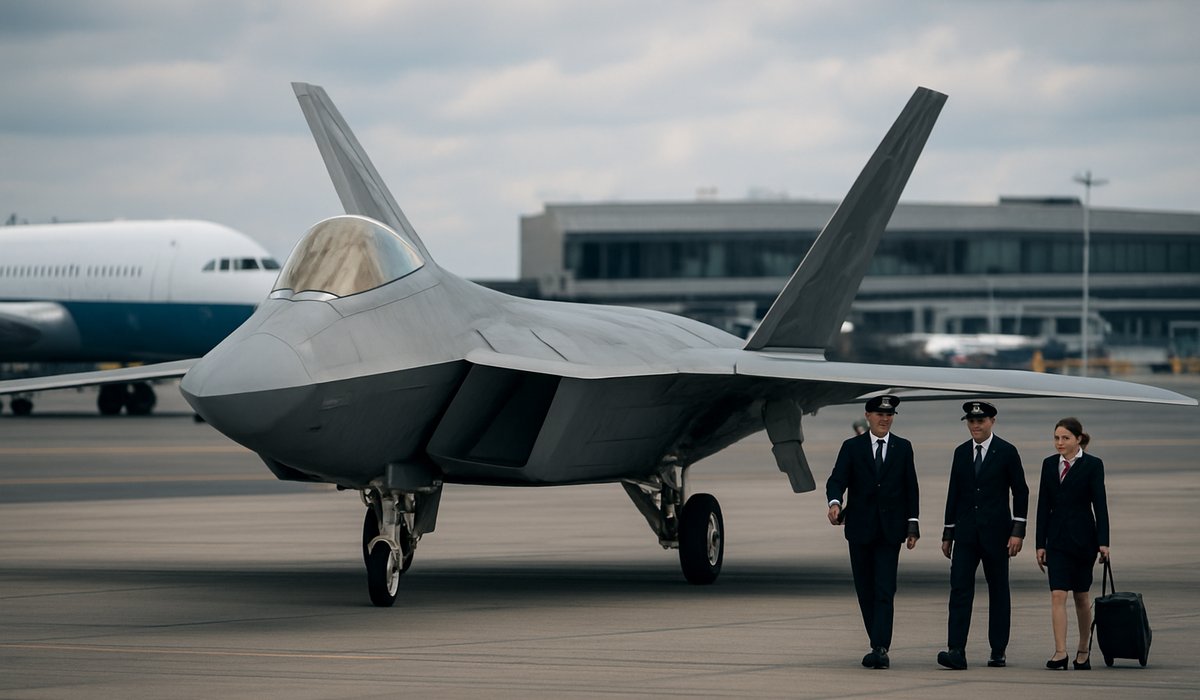
Image generated by AI
F-22 Raptor's Fuel Efficiency in Supercruise: Why Military Aviation's Most Advanced Fighter Achieves Superior Range Without Afterburners
Understanding the strategic advantage of the Lockheed Martin fighter jet's revolutionary propulsion system and what it means for modern air superiority
The Efficiency Paradox: Why 0.30 MPG Actually Represents Breakthrough Performance
The Lockheed Martin F-22 Raptor achieves approximately 0.30 to 0.37 miles per gallon during supercruise operations—a figure that initially appears underwhelming until compared against competing fighter aircraft. However, this metric fundamentally misrepresents the jet's operational superiority in one critical dimension: the F-22 sustains supersonic speeds without activating its afterburner system, a capability that fundamentally reshapes combat aviation doctrine.
By contrast, conventional fighter jets operating at identical velocity require afterburner engagement, consuming fuel at rates between 0.11 to 0.13 miles per gallon. The Raptor's supercruise capability—sustained supersonic flight without afterburner thrust—represents a generational leap in fuel efficiency for high-speed sustained operations, directly translating into extended mission ranges and tactical flexibility.
Technical Specifications Reveal Strategic Advantages
The F-22's fuel efficiency calculations derive from its confirmed internal fuel capacity of 18,000 pounds (8,165 kilograms), equivalent to approximately 2,687 US gallons. Military engineers estimate fuel burn rates between 0.045 to 0.055 miles per pound of fuel while maintaining velocities near Mach 1.5—roughly 990 miles per hour (1,593 kilometers per hour).
This performance emerges from the aircraft's twin Pratt & Whitney F119 turbofan engines, engineered specifically to maximize thrust without reliance on afterburner augmentation during sustained high-speed flight. The distinction proves operationally decisive: pilots can maintain supersonic patrol speeds, intercept distant threats, and complete extended reconnaissance missions while consuming dramatically less fuel than traditional fighter platforms.
Implications for Modern Air Superiority Operations
The supercruise advantage extends far beyond fuel consumption metrics. Extended range capabilities enable longer combat air patrols, reduce dependency on forward-deployed aerial refueling assets, and provide commanders greater strategic flexibility across contested airspace. For military planners evaluating force projection capabilities and operational sustainability, the F-22's efficiency profile represents a fundamental advantage in maintaining air dominance across expansive geographic theaters.
Subsequent fifth-generation fighter development programs, including international variants, have increasingly incorporated supercruise principles, validating the technological foundation pioneered by the Raptor platform.
Frequently Asked Questions
What is supercruise, and why does it matter for fighter aircraft? Supercruise refers to sustained supersonic flight without afterburner activation, reducing fuel consumption while maintaining high-speed tactical advantages. This capability extends operational range and reduces logistical requirements compared to conventional afterburner-dependent flight.
How does the F-22's fuel efficiency compare to older fighter platforms? The F-22 achieves superior fuel economy at supersonic speeds compared to legacy fighters like the F-15 and F-16, which require afterburner engagement to reach comparable velocities, consuming significantly more fuel during sustained operations.
What engines power the F-22 Raptor's supercruise capability? Twin Pratt & Whitney F119 turbofan engines specifically engineered for efficient high-speed flight enable supercruise operations without afterburner dependency.
Does fuel efficiency impact the F-22's combat effectiveness? Yes—extended range capabilities allow longer patrol missions, reduced refueling requirements, and greater tactical flexibility in contested airspace, enhancing overall operational effectiveness.
Which other military aircraft incorporate supercruise technology? The F-35 Lightning II and various international fifth-generation platforms incorporate supercruise principles, reflecting industry-wide validation of the technology pioneered by the F-22 platform.
Related Travel Guides
-
Aviation Industry Overhauls Cabin Crew Training to Combat Dual Passenger Crisis Emerging in 2026
-
Global Fuel Crisis: 2 Million Seats Canceled as Shortage Hits Major Hubs
External Resources
Disclaimer
This article is for informational and educational purposes only. It does not constitute legal, financial, or professional advice. While we strive to provide accurate and up-to-date information, travel policies, regulations, and conditions change rapidly. Always verify information with official sources before making travel decisions. Nomad Lawyer makes no representations about the accuracy, reliability, completeness, or suitability of the information provided. Readers should consult qualified professionals for advice specific to their circumstances. The views expressed in this article are those of the author and do not necessarily reflect the views of Nomad Lawyer.
Raushan Kumar
Founder & Lead Developer
Full-stack developer with 11+ years of experience and a passionate traveller. Raushan built Nomad Lawyer from the ground up with a vision to create the best travel and law experience on the web.
Learn more about our team →