
F-35 Lightning II Endurance Capabilities: What 6+ Hours of Internal Fuel Means for Modern Air Combat
Breaking airline news and aviation industry updates for 2026.

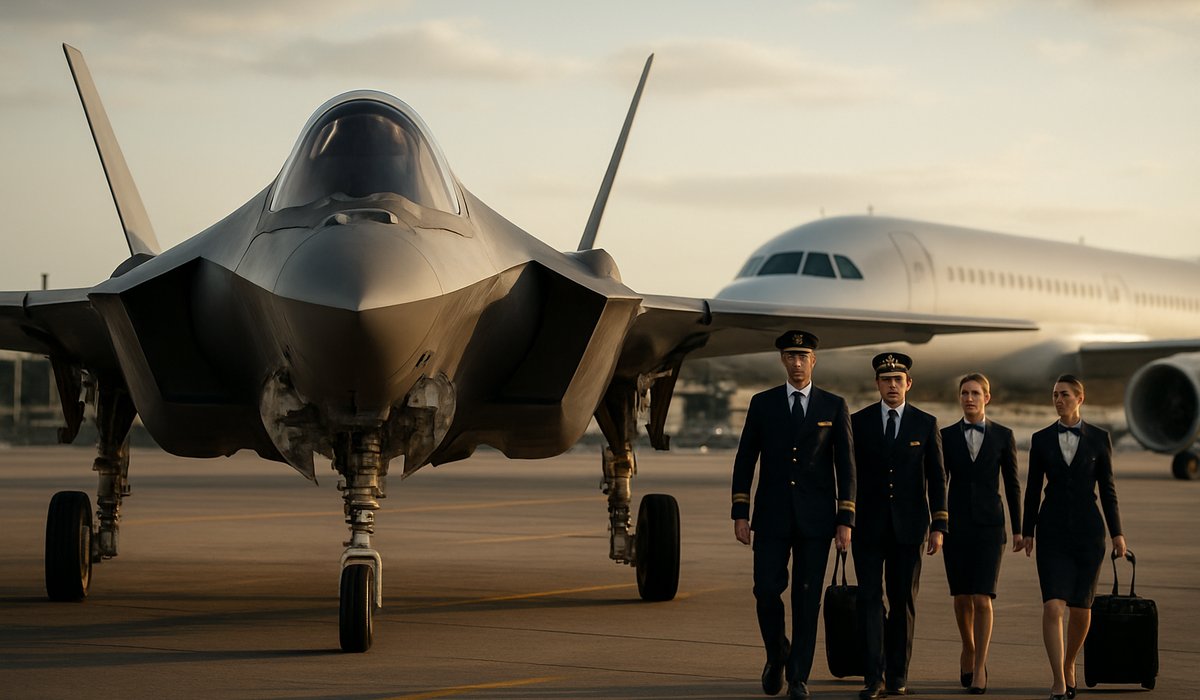
Image generated by AI
F-35 Lightning II Endurance Capabilities: What 6+ Hours of Internal Fuel Means for Modern Air Combat
Defense analysts examine the stealth fighter's operational range limitations and strategic implications for military aviation
The F-35's Fuel Capacity and Flight Duration
The Lockheed Martin F-35 Lightning II can sustain approximately 6 to 6.5 hours of flight time when operating exclusively on internal fuel reserves, a critical specification that defines the aircraft's operational envelope in modern military aviation. This endurance metric represents a fundamental constraint for mission planners across the United States Air Force, Navy, and allied defense forces worldwide.
This fuel capacity reflects a deliberate design compromise inherent to the F-35 program. Unlike its predecessor, the F-16 Fighting Falcon, which prioritizes sustained air superiority, the fifth-generation stealth fighter sacrifices some endurance capabilities in exchange for advanced sensor integration, stealth characteristics, and multi-role versatility that define contemporary combat requirements.
Design Philosophy: Stealth Over Extended Range
The F-35's development by Lockheed Martin's Skunk Works division prioritized stealth technology and sensor fusion over maximum fuel capacity. While the F-22 Raptor maintains superior air-to-air performance, the F-35 establishes itself as a multi-role platform capable of executing diverse mission sets—from close air support to electronic warfare—across a single airframe.
Internal fuel limitations necessitate careful operational planning. Extended missions rely heavily on external fuel tanks, which compromise the aircraft's stealth profile and aerodynamic efficiency. This reality shapes deployment strategies and theater logistics for allied air forces depending on F-35 capabilities.
Strategic Implications for Global Air Forces
The 6.5-hour endurance window carries significant implications for air operations. Extended patrol durations, deep penetration sorties, and forward-deployed scenarios must account for this constraint through refueling infrastructure, mission architecture adjustments, and resource allocation.
Multiple allied nations—including the United Kingdom, Japan, South Korea, and Poland—have committed to F-35 procurement, making the aircraft's performance characteristics central to regional security strategies. The fuel limitations influence decisions regarding air base locations, support logistics, and coalition interoperability requirements.
The Balance Between Innovation and Capability
Lockheed Martin engineers accepted reduced endurance as a tradeoff for the F-35's game-changing attributes: integrated avionics systems, advanced radar capabilities, and fifth-generation stealth technology. This architectural choice reflects military aviation's evolution toward sensor-dominant platforms over purely fuel-endurance focused designs.
As global air forces modernize their fleets, understanding the F-35's operational parameters—including its internal fuel constraints—remains essential for defense planners optimizing deployment strategies and procurement decisions.
Frequently Asked Questions
How does the F-35's fuel endurance compare to the F-16 Fighting Falcon? The F-16 can achieve approximately 3+ hours of combat endurance, while the F-35 extends this to 6+ hours internally, representing significant improvement despite stealth compromises.
Why doesn't the F-35 carry more internal fuel? Stealth design requirements and weight optimization for multi-role capabilities limit internal fuel capacity; external tanks compromise stealth characteristics necessary for mission success.
Can extended missions be achieved with auxiliary fuel tanks? Yes, external fuel pods extend operational range significantly, though they reduce stealth effectiveness and require strategic deployment considerations.
Which allied nations rely on F-35 fuel specifications in operational planning? The United States, United Kingdom, Japan, South Korea, Australia, and numerous NATO members structure air operations around F-35 endurance parameters.
How does fuel endurance affect F-35 logistics and basing requirements? Limited internal fuel necessitates forward air base infrastructure, refueling support systems, and coalition coordination to sustain sustained operations.
Related Travel Guides
- LOT Polish Airlines Expands Krakow Routes to Rome, Barcelona, and Madrid
- Which Airlines Offer the World's Most Spacious Business Class Seats? A Comprehensive Guide to Premium Long-Haul Travel
- Alaska Airlines Launches Daily Seattle to Reykjavik 737-MAX Flights, Shielding Transatlantic Passengers from East Coast Travel Chaos: Latest Airline News
Disclaimer
This article is for informational and educational purposes only. It does not constitute legal, financial, or professional advice. While we strive to provide accurate and up-to-date information, travel policies, regulations, and conditions change rapidly. Always verify information with official sources before making travel decisions. Nomad Lawyer makes no representations about the accuracy, reliability, completeness, or suitability of the information provided. Readers should consult qualified professionals for advice specific to their circumstances. The views expressed in this article are those of the author and do not necessarily reflect the views of Nomad Lawyer.
Raushan Kumar
Founder & Lead Developer
Full-stack developer with 11+ years of experience and a passionate traveller. Raushan built Nomad Lawyer from the ground up with a vision to create the best travel and law experience on the web.
Learn more about our team →