
Collins Aerospace Reimagines Economy's Most Dreaded Seat With Privacy-First Cabin Innovation
Breaking airline news and aviation industry updates for 2026.

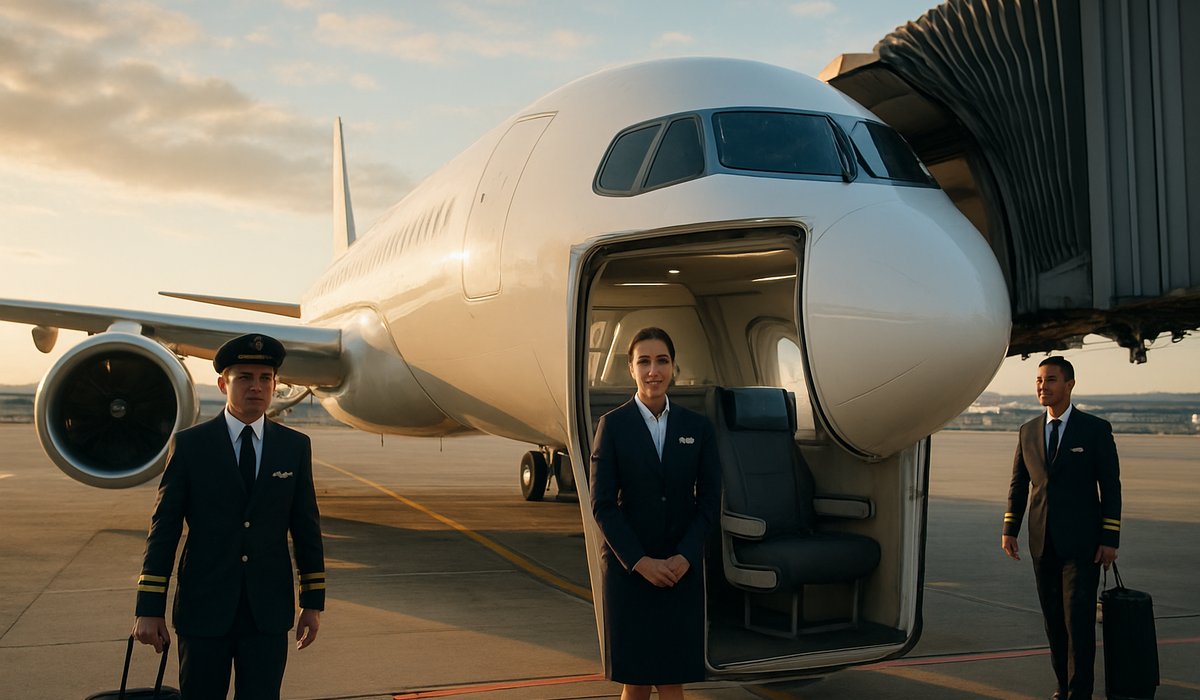
Image generated by AI
Collins Aerospace Reimagines Economy's Most Dreaded Seat With Privacy-First Cabin Innovation
Aerospace supplier unveils luxury retrofit concept for rear economy seating at major industry expo, signaling shift toward premium ancillary revenue strategies
The Problem With Back-Row Flying
The final row of economy class has long represented aviation's unwanted real estate—a claustrophobic purgatory where passengers endure proximity to lavatories, galley operations, and constant foot traffic while boarding last and deplaning first. For airlines seeking to maximize revenue from premium seating configurations, this structural disadvantage has persisted as an intractable challenge. Yet at the 2026 Aircraft Interiors Expo, Collins Aerospace, the aviation division of defense contractor RTX Corporation, unveiled a transformative solution designed to convert the airline industry's perennial liability into a sought-after premium experience.
Collins Aerospace's High-Tech Sanctuary Concept
The retrofit innovation reframes rear economy positioning through advanced partitioning systems and modular cabin design, effectively creating a semi-private seating enclave within the traditional economy zone. By incorporating noise-dampening materials, adjustable privacy dividers, and optimized lighting controls, Collins Aerospace addresses the three primary passenger complaints associated with tail-section seating: environmental disruption, social discomfort, and service delays.
Industry analysts view the development as a strategic response to intensifying competition in the premium economy segment, where airlines increasingly differentiate services to capture mid-tier revenue opportunities—a market segment experiencing 8-12% annual growth across international carriers.
Implications for Airline Revenue Models
The concept arrives amid broader industry trends toward granular cabin segmentation. As jet fuel prices stabilize and labor costs remain elevated, carriers seek innovative ancillary revenue strategies beyond traditional baggage charges and seat selection fees. This modular approach allows operators to implement tiered pricing within existing fuselage configurations, potentially commanding 15-25% premiums over standard economy fares without requiring costly aircraft redesigns.
Collins Aerospace's solution underscores how aerospace suppliers are collaborating with airlines to monetize previously underutilized cabin assets. Airlines including Lufthansa, Singapore Airlines, and Air Canada have already invested in cabin retrofit programs targeting revenue optimization, establishing precedent for accelerated adoption.
Looking Forward
The innovation reflects fundamental shifts in aviation economics, where legacy disadvantages become platforms for differentiated offerings. As carriers balance capacity pressures against margin enhancement, rear-row repositioning could represent a meaningful revenue contributor for widebody fleets operating long-haul international routes.
Collins Aerospace plans expanded demonstrations throughout 2026, with initial retrofit installations anticipated by 2027.
Frequently Asked Questions
What makes rear economy seats problematic for passengers? Back-row seating suffers from proximity to lavatories and galleys, creating noise, odor, and foot traffic disruptions. Passengers also experience delayed service and disembarkation times.
How does Collins Aerospace's solution increase airline revenue? The retrofit enables carriers to charge premium pricing for privacy-enhanced rear seats without aircraft modifications, creating a new ancillary revenue category within economy-class configurations.
Which airlines are adopting premium cabin retrofit strategies? Major carriers including Lufthansa, Singapore Airlines, and Air Canada have invested significantly in cabin segmentation and premium economy expansions in recent years.
What is the timeline for commercial implementation? Collins Aerospace anticipates initial retrofit installations beginning in 2027, following continued demonstrations throughout 2026.
How does this innovation relate to broader aviation industry trends? As jet fuel prices stabilize and labor costs remain fixed, airlines increasingly pursue ancillary revenue optimization through cabin innovation rather than capacity expansion.
Related Travel Guides
Flight Delay Compensation Guide 2026
Understanding Airline Route Changes
Airport Security Process Updated (2026)
External Resources
Disclaimer
This article is for informational and educational purposes only. It does not constitute legal, financial, or professional advice. While we strive to provide accurate and up-to-date information, travel policies, regulations, and conditions change rapidly. Always verify information with official sources before making travel decisions. Nomad Lawyer makes no representations about the accuracy, reliability, completeness, or suitability of the information provided. Readers should consult qualified professionals for advice specific to their circumstances. The views expressed in this article are those of the author and do not necessarily reflect the views of Nomad Lawyer.
Raushan Kumar
Founder & Lead Developer
Full-stack developer with 11+ years of experience and a passionate traveller. Raushan built Nomad Lawyer from the ground up with a vision to create the best travel and law experience on the web.
Learn more about our team →