
Houston Airport Meltdown Triggers Nationwide Travel Chaos as United and American Face Massive Flight Cancellations
Breaking airline news: A massive operational breakdown at George Bush Intercontinental Airport triggers severe travel chaos, forcing 199 flight delays and 6 absolute cancellations.

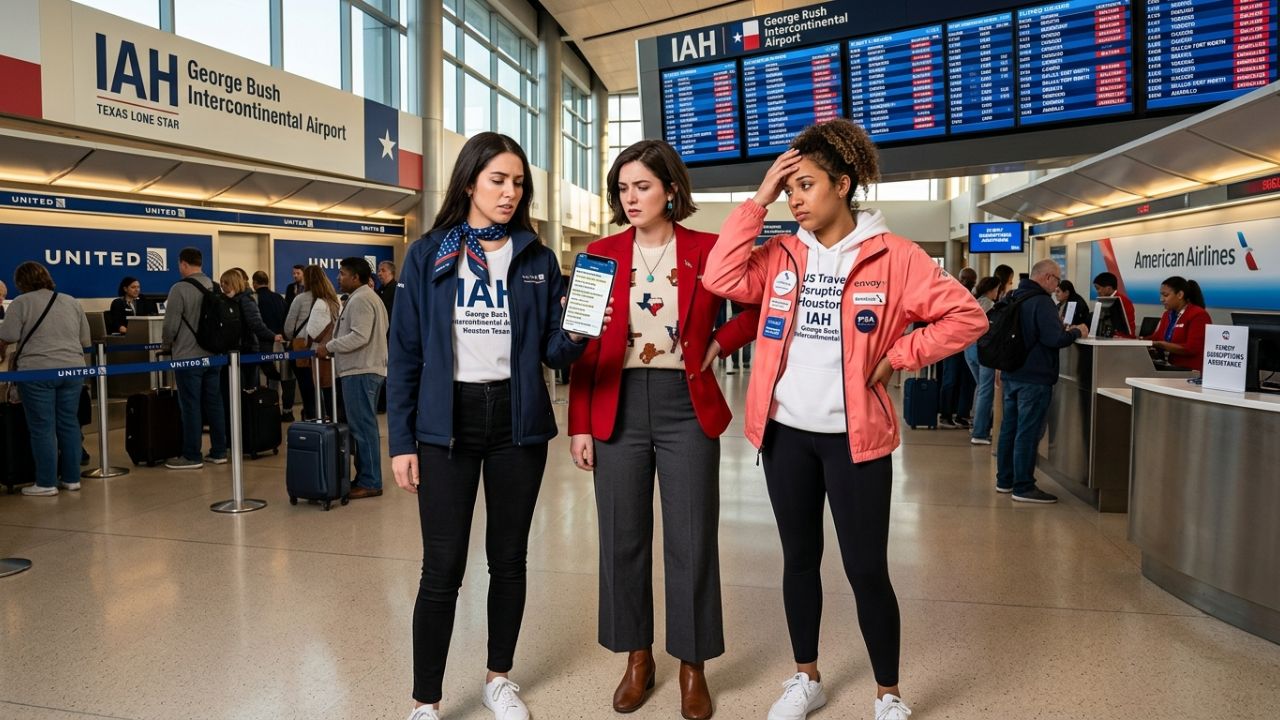
Image representing the severe travel chaos paralyzing George Bush Intercontinental Airport, where massive systemic congestion has triggered 6 flight cancellations and 199 delays, severely crippling connectivity to Chicago, Dallas, and Cancún. (Image Credit: Aviation Tracking)
Houston Airport Meltdown Triggers Nationwide Travel Chaos as United and American Face Massive Flight Cancellations
A Massive Capacity Failure Paralyzes Texas's Crucial Aviation Gateway
The extreme fragility of the highly interconnected United States commercial aviation network was brutally exposed today in Texas. According to the latest breaking airline news and real-time aviation tracking telemetry, operations at George Bush Intercontinental Airport have entirely collapsed into a state of severe travel chaos. On June 14, 2026, air travel activity through the critical southern gateway ground to an agonizing halt as major domestic carriers, international partners, and regional feeders were forced to suspend operations. Aviation data confirms that airlines were severely derailed, executing 6 absolute flight cancellations alongside an overwhelming 199 grinding delays in a single operational cycle. Because Houston operates as a massive focal point for both domestic US transit and Latin American routes, this localized terminal friction immediately mutated into a nationwide crisis, severely disrupting routes bound for major hubs like Dallas–Fort Worth, Chicago, Wichita, Toronto, and Cancún.
This sprawling logistical nightmare perfectly illustrates how rapidly an operational breakdown at a premier mega-hub can weaponize the transit network against the traveler. When primary operators like United Airlines, American Airlines, and Delta Air Lines suffer simultaneous schedule setbacks alongside critical regional feeders like Envoy Air and PSA Airlines, the resulting shockwaves actively destroy connectivity across the continent. Thousands of passengers found their meticulously planned corporate itineraries and international leisure holidays completely obliterated, stranded inside the terminals. As airline operational control centers scrambled to reallocate airframes and manage utterly degraded turnaround times, the rolling delays violently exacerbated the travel chaos for outbound passengers. The situation powerfully highlights the extreme vulnerability of hub-and-spoke scheduling during peak aircraft rotation cycles.
Section-Wise Breakdown: The Anatomy of the Houston Disruption
The operational collapse radiating from George Bush Intercontinental Airport reveals how quickly localized schedule friction paralyzes major carriers across the aviation spectrum:
The Houston Hub Logistics Failure According to real-time aviation updates, the sheer scale of the disruption indicates a massive operational slowdown affecting multiple arrival and departure banks throughout the entire day. The 199 severe delays point directly to critical congestion in aircraft rotation cycles, severely penalizing turnaround times and gate availability. As airlines desperately attempted to adjust schedules and triage the operational damage, delays rapidly accumulated. The 6 outright cancellations acted as a critical catalyst; in US aviation operations, even minor cancellations at a hub of this scale create immense scheduling uncertainty. Because Houston relies heavily on processing massive volumes of connecting traffic, these sudden removals generated a devastating cascading effect that destabilized the airport's entire outbound network toward major hubs and international destinations.
United and American Suffer Major Capacity Failures The data confirms that the major hub operators and their regional subsidiaries absorbed the absolute brunt of the systemic failure. United Airlines, leveraging its massive hub presence in Houston, recorded the highest overall number of delayed operations, absorbing an incredible 82 delays alongside 1 absolute flight cancellation. American Airlines was equally devastated on its connectivity routes, recording 20 severe delays and 1 cancellation. The regional feeder network completely collapsed under the pressure: Envoy Air recorded 2 cancellations and 1 delay, PSA Airlines logged 1 cancellation and 1 delay, CommuteAir (United Express) absorbed 19 delays, Mesa Airlines (United Express) registered 22 delays, and SkyWest recorded 13 delays. Even massive legacy carrier Delta Air Lines was caught in the gridlock, absorbing 23 severe delays. Low-cost operators JetBlue (7 delays) and Frontier (3 delays) also saw their point-to-point networks compromised.
Widespread Contagion Across Domestic and International Routes The disruption was completely indiscriminate, heavily impacting major transit corridors stretching across the United States and spilling into the global network. The absolute cancellations instantly severed vital connectivity to major centers including Dallas–Fort Worth, Wichita, and Chicago. However, the sprawling delay network painted a terrifying picture of total gridlock. Domestically, the airport disruptions destroyed schedules bound for Atlanta, Boston, Charlotte, Denver, Detroit, Las Vegas, Los Angeles, Miami, New York City, Philadelphia, San Diego, and Washington D.C., among dozens of others. Internationally, the cross-border and intercontinental travel systems suffered notable setbacks. The delays ravaged routes to Toronto, Calgary, Cancún, Mexico City, Puerto Vallarta, San Salvador, and San Pedro Sula. Proving the severity of the airspace saturation, massive international operators including British Airways, Lufthansa, KLM, Qatar Airways, and Emirates all recorded delays on their long-haul departures out of Houston.
Operational Infrastructure Details: The Houston Disruption Matrix
To provide exact, factual clarity on the immense scale of this systemic failure, aviation analysts have mapped the specific delay and cancellation metrics impacting every affected carrier at Houston. The following factual matrix details the precise breakdown of the June 14, 2026, disruption:
Factual Houston Airline Disruption Matrix
| Airline / Regional Operator | Cancelled Flights | Cancelled (%) | Delayed Flights | Delayed (%) |
|---|---|---|---|---|
| Envoy Air (AAL) | 2 | 28% | 1 | 14% |
| United Airlines | 1 | 0% | 82 | 13% |
| PSA Airlines (AAL) | 1 | 14% | 1 | 14% |
| American Airlines | 1 | 1% | 20 | 38% |
| Mesa Airlines (UAL) | 0 | 0% | 22 | 11% |
| British Airways | 0 | 0% | 1 | 25% |
| Delta Air Lines | 0 | 0% | 23 | 46% |
| Lufthansa | 0 | 0% | 1 | 25% |
| Frontier Airlines | 0 | 0% | 3 | 6% |
| JetBlue | 0 | 0% | 7 | 87% |
| KLM | 0 | 0% | 1 | 33% |
| Qatar Airways | 0 | 0% | 1 | 25% |
| Republic Airways | 0 | 0% | 1 | 25% |
| SkyWest Airlines | 0 | 0% | 13 | 12% |
| Emirates | 0 | 0% | 1 | 25% |
| CommuteAir (United Express) | 0 | 0% | 19 | 12% |
| WestJet | 0 | 0% | 1 | 25% |
| Air Canada | 0 | 0% | 1 | 12% |
Data recorded as of June 14, 2026. (Source: FlightAware)
Passenger Impact: Terminal Gridlock and Ruined Itineraries
For the thousands of passengers trapped inside George Bush Intercontinental Airport, this disruption represents a highly acute form of travel chaos. Enduring rolling delays creates intense psychological exhaustion, while sudden flight cancellations generate immense logistical and financial liability. The immediate impact is staggering: missed critical connecting flights at mega-hubs like Chicago and Dallas, extended terminal dwell times, and the agonizing reality of overwhelmed airline customer service desks. Passengers bound for high-volume international destinations like Toronto and Cancún were severely penalized, experiencing extended transit times that directly influenced their future routing preferences. Travelers attempting to execute multi-leg domestic journeys were abruptly grounded, severely damaging booking confidence for short-term travel plans in one of America's most heavily utilized corporate corridors.
Industry Analysis: Vulnerability of Interconnected Hubs
The global aviation sector is currently wrestling with the extreme physical limits of interconnected network dependency. The massive volume of airport disruptions radiating from Houston indicates how sensitive high-traffic aviation hubs are to minor scheduling friction. Because the hub-and-spoke model relies entirely on precision timing, the combined failure of United, American, and their regional subsidiaries reflects a total saturation of the airport system's scheduling buffers. A single aircraft delayed in Texas instantly cascades into a missed connection in Atlanta or London. Aviation analysts note that international carriers operating long-haul routes (like British Airways and Emirates) being caught in the domestic gridlock proves that Houston's ground operations require significant scheduling optimization to handle peak travel window congestion.
Conclusion: A Fractured Southern Transit Grid
The severe operational disruptions striking George Bush Intercontinental Airport on June 14, 2026, serve as a stark reminder of the absolute volatility of modern commercial flight. By suffering a combined wave of 6 outright flight cancellations and 199 severe delays in a single cycle, the Texas hub inadvertently plunged domestic and global aviation networks into deep travel chaos. The resulting delays crippled tightly choreographed itineraries connecting the US to major hubs like Chicago, Dallas, Toronto, and Cancún, deeply impacting United, American, Delta, and a massive array of international carriers. While airlines desperately scramble to execute phased automatic rebooking plans and re-accommodate stranded international and domestic passengers, the meltdown brutally highlights how rapidly a localized capacity failure can metastasize, transforming routine transit into a highly expensive logistical nightmare. (Source: FlightAware via Nomad Lawyer)
Key Takeaways
- Massive Systemic Breakdown: George Bush Intercontinental Airport suffered 6 flight cancellations and 199 delays on June 14, 2026.
- United Hub Collapse: United Airlines absorbed the highest absolute delay volume, recording 82 delayed flights alongside 1 cancellation.
- American Airlines Devastation: American Airlines recorded 20 delays and 1 cancellation, severely straining the US network.
- Regional Feeder Gridlock: Envoy Air, PSA Airlines, Mesa Airlines, and CommuteAir were severely crippled by the terminal congestion.
- Global Contagion: The travel chaos severed vital connectivity to major international hubs, delaying flights operated by British Airways, Emirates, Qatar Airways, and Lufthansa.
✈️ Frequently Asked Questions (Factual Aviation Data)
Which specific airport was the epicenter of this massive operational breakdown? The severe systemic delays and flight cancellations occurred at George Bush Intercontinental Airport in Houston.
Exactly how many flights were cancelled and delayed at Houston? Aviation tracking data recorded 6 absolute flight cancellations alongside a staggering 199 severe flight delays in a single operational cycle.
Which airline suffered the highest absolute volume of flight delays? United Airlines recorded the highest delay volume, experiencing 82 delayed flights and 1 cancellation.
What was the specific operational impact on American Airlines and its regional partners? American Airlines recorded 1 cancellation and 20 delays. Its regional partner, Envoy Air, recorded 2 cancellations and 1 delay, while PSA Airlines recorded 1 cancellation and 1 delay.
Which domestic cities were directly affected by the absolute flight cancellations? The absolute flight cancellations completely severed connectivity to Dallas–Fort Worth, Wichita, and Chicago.
Did major international operators experience flight delays due to this disruption? Yes, massive international operators including British Airways, Lufthansa, KLM, Qatar Airways, and Emirates all recorded delayed departures.
Which major international destinations were impacted by the cascading delays? The severe delays heavily affected routes connecting Houston to international hubs including Toronto, Cancún, Calgary, Mexico City, and London.
Where was this specific flight disruption data officially sourced from? All specific delay metrics and cancellation statistics regarding the Houston disruption were officially sourced directly from FlightAware.
🌍 Related Travel Guides & Flight Resources
- Navigate Airport Disruptions Like a Pro Master the art of surviving unexpected travel chaos with our expert strategies.
- Breaking Airline News & Evasion Routes Stay ahead of the delays with our real-time aviation updates and route intelligence.
- Global Flight Cancellation Defense Grid Essential legal rights and compensation tactics when your flight goes down.
⚖️ Disclaimer
The aviation safety statistics, flight tracking data, and airport delay reports provided in this report are for informational purposes only. Aircraft operational statuses, specific delay metrics regarding United Airlines, American Airlines, Delta Air Lines, Envoy Air, and other domestic and international carriers at George Bush Intercontinental Airport, and the subsequent recovery timeline are highly volatile and subject to ongoing review by airline operational control centers. All data regarding the Houston disruption has been officially sourced from live aviation tracking platforms (FlightAware) as of June 14, 2026, and remains completely fluid as airlines restore normal operations. NomadLawyer does not guarantee the absolute accuracy or current validity of the information provided and assumes no liability for travel disruptions, sudden flight cancellations, missed global connections, altered itineraries, or any financial consequences resulting from the use of this content. Passengers affected by the systemic delays are strongly advised to coordinate directly with their respective airlines for automatic rebooking options and compensation.
Disclaimer
This article is for informational and educational purposes only. It does not constitute legal, financial, or professional advice. While we strive to provide accurate and up-to-date information, travel policies, regulations, and conditions change rapidly. Always verify information with official sources before making travel decisions. Nomad Lawyer makes no representations about the accuracy, reliability, completeness, or suitability of the information provided. Readers should consult qualified professionals for advice specific to their circumstances. The views expressed in this article are those of the author and do not necessarily reflect the views of Nomad Lawyer.
Kunal K Choudhary
Co-Founder & Contributor
A passionate traveller and tech enthusiast. Kunal contributes to the vision and growth of Nomad Lawyer, bringing fresh perspectives and driving the community forward.
Learn more about our team →