
Honeywell P40 Upgrade Increases F-35 Thermal Capacity from 32kW to 40kW for 2029 Deployment
Honeywell Aerospace introduces the P40 thermal management upgrade for the F-35 Lightning II, boosting cooling capacity by 25% to support advanced mission systems and reducing in-flight shutdowns by 30%.

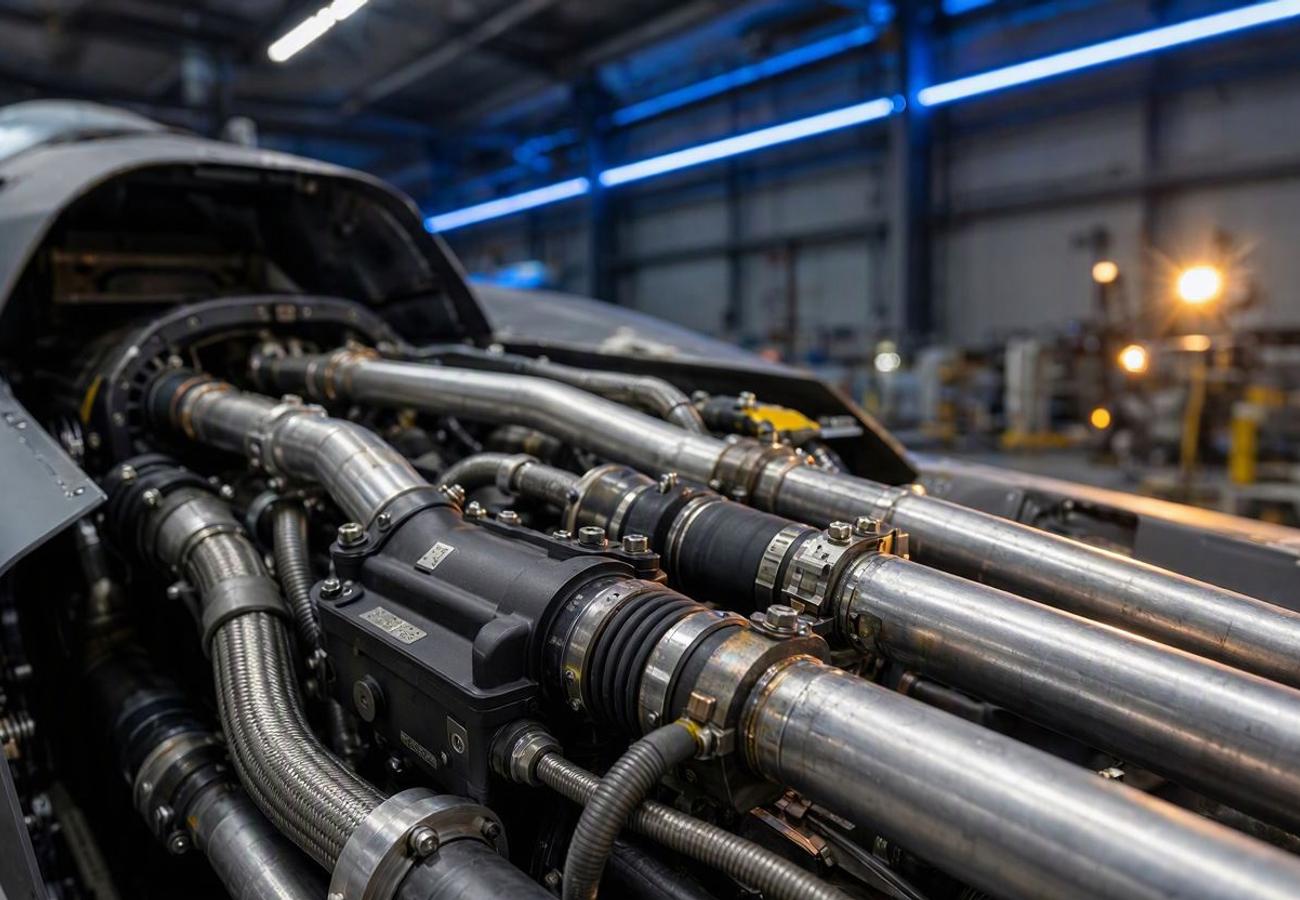
Image generated by AI
Thermal cooling capacity for the F-35 Lightning II is set to rise from 32 kilowatts to 40 kilowatts, representing a 25% increase in capacity designed to offset the heat generated by next-generation avionics. This shift is not merely a routine maintenance update but a strategic response to the escalating thermal loads created by the integration of high-performance sensors and computing hardware. As military aircraft evolve into flying data centers, the ability to dissipate heat becomes as critical as thrust or stealth.
The Thermal Gap in Numbers: P40 Performance Metrics
The introduction of the P40 upgrade by Honeywell Aerospace addresses a growing disparity between the F-35's original thermal design and its current operational requirements. The Power and Thermal Management System (PTMS) serves as the aircraft's circulatory system, managing everything from engine starts to environmental controls.
According to data provided by Honeywell, the P40 system delivers a cooling jump to 40 kilowatts. This is a necessary evolution because the F-35 continues to integrate advanced mission systems and sensors that produce significantly more heat than the airframe's initial specifications anticipated. Beyond the raw capacity increase, the P40 upgrade is designed to tackle reliability. By analyzing data from nearly 1 million flight hours, Honeywell identified specific causes for non-resettable in-flight shutdowns. The P40 implementation is projected to reduce these specific failure events by approximately 30%.
The scale of this deployment is massive. The existing PTMS architecture has already supported more than 1,100 F-35 aircraft. Because the P40 integrates via software improvements and targeted liquid-cooling enhancements, it requires no airframe modifications. This allows the upgrade to be synchronized with the planned Engine Core Upgrade (ECU), ensuring that thermal capacity grows in tandem with engine performance during scheduled maintenance windows.
Comparative Context: Thermal Scaling and Reliability
When comparing the P40 to the baseline PTMS, the move is an "intermediate" step. The industry benchmark for high-performance fighter jets is shifting toward modular thermal scaling, where systems can be upgraded without replacing the entire architecture.
The current trajectory shows a phased approach to cooling. While the jump to 40 kilowatts is the immediate goal, the architecture is designed to eventually scale to 62 kilowatts and beyond. This suggests that the International Air Transport Association (IATA) and military counterparts are seeing a broader trend: the "electrification" of aircraft systems is creating thermal bottlenecks that require iterative, rather than revolutionary, hardware changes.
| Metric | Baseline PTMS | P40 Upgrade | Future Projection |
|---|---|---|---|
| Cooling Capacity | 32 kW | 40 kW | 62+ kW |
| Capacity Gain | Baseline | +25% | +93% (vs Baseline) |
| Reliability (Shutdowns) | Baseline | 30% Reduction | TBD |
| Airframe Mod Required | N/A | None | Potential |
| Deployment Timeline | Active | 2029–2030 | Post-2030 |
This data indicates a strategic decision to avoid a complete system redesign. Replacing a deeply integrated system like the PTMS would require extensive qualification and testing, potentially grounding fleets or delaying the deployment of new sensors. By opting for a 25% capacity boost now, Honeywell provides a bridge to future capabilities while maintaining the existing repair and tooling infrastructure.
What This Means for Aviation Logistics and Operators
For those tracking the sustainment and operational readiness of the F-35 fleet, the P40 upgrade is a signal of reduced long-term maintenance pressure. Because the system utilizes existing technical-support infrastructure, operators will not need to invest in new tooling or technician retraining.
If you are analyzing the lifecycle costs of the F-35, the P40's ability to integrate during scheduled maintenance is a key efficiency gain. The synchronization with the Engine Core Upgrade means that aircraft downtime is minimized. Furthermore, the 30% reduction in non-resettable in-flight shutdowns directly translates to higher sortie rates and lower emergency recovery costs.
The Honeywell P40 upgrade is a significant development for the F-35 program, increasing its thermal capacity from 32kW to 40kW for the 2029 deployment. This enhancement is expected to improve the overall performance and efficiency of the aircraft, and more information can be found on the Lockheed Martin website. As the F-35 continues to evolve, it's essential to stay up-to-date with the latest developments and advancements in the field.
From a broader industry perspective, this reflects a trend seen in commercial aerospace as well. As noted by Statista, the demand for more powerful onboard computing in both civilian and military sectors is driving a surge in advanced liquid-cooling research. The move toward 40kW and eventually 62kW is a blueprint for how the industry will handle the "heat wall" of future aviation electronics.
Projecting the 2030 Thermal Trajectory
Based on the current timeline, the P40 will enter service between 2029 and 2030. This window is critical because it precedes the potential development of an entirely new PTMS architecture. The P40 acts as a "buffer," ensuring that the F-35 remains viable as it receives new mission equipment over the next five years.
The scalability of the PTMS—moving from 32kW to 40kW and eventually to 62kW—suggests that Lockheed Martin and Honeywell are planning for a significant increase in onboard power consumption. This likely points toward the integration of more powerful electronic warfare (EW) suites and perhaps laser-based defense systems, both of which are notoriously heat-intensive.
As the global fleet continues to expand, the reliance on a standardized, upgradable thermal system will be the primary driver of fleet availability. The P40 proves that the industry is moving away from "rip-and-replace" upgrades in favor of "software-defined hardware" enhancements that preserve existing fleet investments.
FAQ: F-35 P40 Thermal Upgrade 2026
Will the P40 upgrade require the F-35 to be grounded for long periods? No. The P40 is designed to be installed during scheduled maintenance and alongside the Engine Core Upgrade, meaning it does not require additional dedicated downtime or airframe modifications.
How does the P40 improve flight safety? The upgrade targets specific causes of non-resettable in-flight shutdowns identified over 1 million flight hours, with a projected 30% reduction in these events, thereby increasing overall mission reliability.
Is 40 kilowatts the maximum cooling capacity for the F-35? No. The P40 is an intermediate step. The existing architecture is designed to be scalable, with future phased upgrades capable of reaching 62 kilowatts or more.
When will this technology be operational in the fleet? Honeywell expects the P40 system to enter active service between 2029 and 2030.
Thermal management is the new frontier of aerial superiority.
Related Travel Guides
Disclaimer
This article is for informational and educational purposes only. It does not constitute legal, financial, or professional advice. While we strive to provide accurate and up-to-date information, travel policies, regulations, and conditions change rapidly. Always verify information with official sources before making travel decisions. Nomad Lawyer makes no representations about the accuracy, reliability, completeness, or suitability of the information provided. Readers should consult qualified professionals for advice specific to their circumstances. The views expressed in this article are those of the author and do not necessarily reflect the views of Nomad Lawyer.
Raushan Kumar
Founder & Lead Developer
Full-stack developer with 11+ years of experience and a passionate traveller. Raushan built Nomad Lawyer from the ground up with a vision to create the best travel and law experience on the web.
Learn more about our team →