
Hawaii's Iconic 90-Foot Hōlei Sea Arch Collapses into the Pacific: Travel Guide to Volcanoes National Park's Coastal Shift
The 90-foot Hōlei Sea Arch formed from a 550-year-old lava flow has collapsed into the Pacific Ocean. Here is how travelers can safely explore the evolving Chain of Craters coastline.

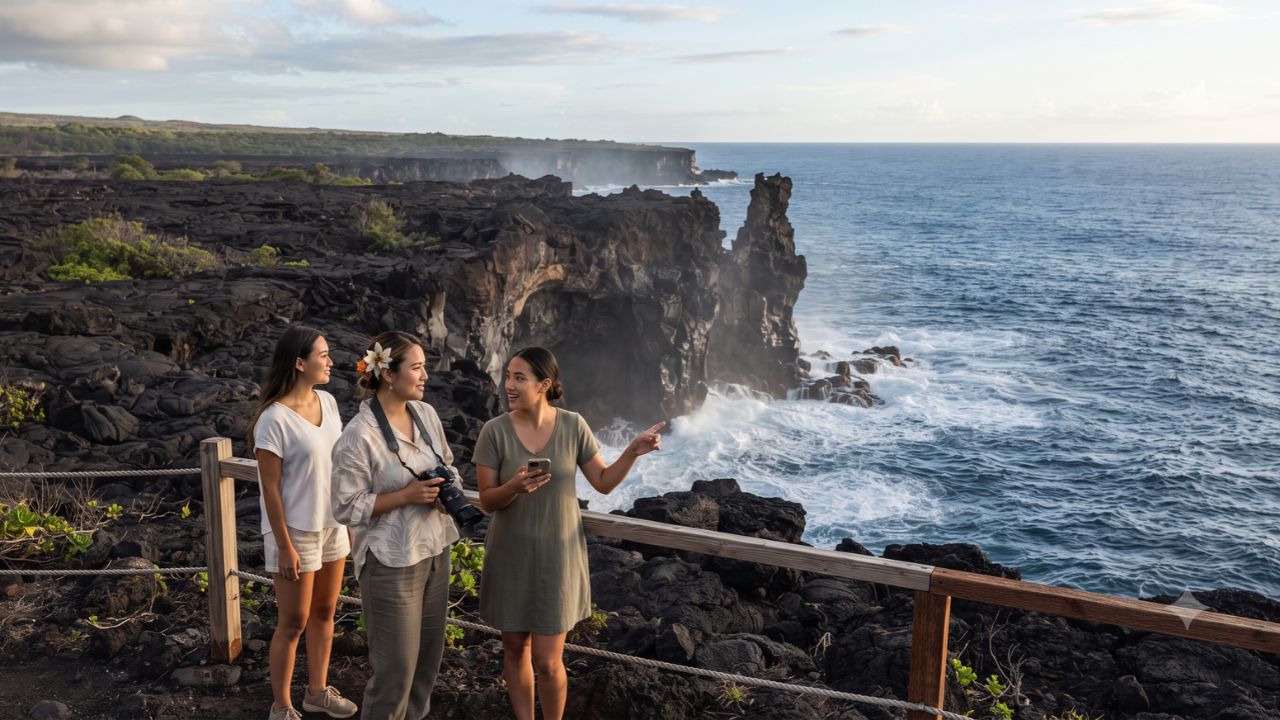
Carved into an ancient basalt lava flow dating back 550 years, the 90-foot Hōlei Sea Arch at the terminus of Chain of Craters Road collapsed into the Pacific Ocean between 23 September and 27 September 2026, permanently altering one of Hawaii's most recognizable geological vistas. Confirmed by rangers at Hawaiʻi Volcanoes National Park, the sudden disappearance coincided with heavy ocean swells from Tropical Storm Nolo, illustrating the raw, restless volcanic forces that continuously build and dismantle the Big Island's southern coastline.
The Disappearance of a 550-Year-Old Geological Wonder
For over half a millennium, the 27.4-meter (90-foot) natural rock bridge withstood crashing Pacific waves. The formation originated when molten basalt from Kīlauea poured into the ocean and cooled, creating fractured sea cliffs where differential wave action carved sea caves that hollowed into a freestanding arch.
However, structural instability accelerated dramatically following the cataclysmic 2018 Kīlauea summit collapse and lower East Rift Zone eruption. During that event, over 60,000 earthquakes rattled the island, destroying more than 700 homes, displacing 2,000 residents, burying 30 miles of roadway, and adding 875 acres of new land. The seismic shocks fractured the coastal cliffs supporting the arch.
In January 2020, park geologists detected widening fissures along the primary viewing platform, prompting the National Park Service to permanently close the cliff-edge overlook. A new, safer observation deck was constructed 1,000 feet inland in March 2020. Later that year, Tropical Storm Darby sheared away a major rock pillar from the arch's base. The eventual total collapse into the ocean between 23 and 27 September 2026 marks the natural conclusion of an evolving coastal cycle, leaving behind sheer vertical drops where the arch once stood.
Following the collapse, park authorities have issued strict warnings: visitors must stay behind protective perimeter barriers and avoid walking along unstable basalt fractures, which drop 90 feet straight into turbulent ocean currents.
Beyond the Sea Arch: Volcanic Landscapes and Cultural Heritage
Hawaiʻi Volcanoes National Park spans over 335,000 acres from sea level to the 13,677-foot summit of Mauna Loa, inscribed as an internationally protected biosphere and geological monument by the UNESCO World Heritage Centre:
- Chain of Craters Road Scenic Drive: This 19-mile paved route descends 3,700 feet from Kīlauea's caldera to the coastal plains, winding past historic cinder cones, prehistoric lava flows from the 1969–1974 Mauna Ulu eruptions, and ancient Hawaiian petroglyph fields at Puʻu Loa.
- Kīlauea Caldera and Halemaʻumaʻu Overlooks: The heart of Native Hawaiian spiritual reverence, Halemaʻumaʻu crater is venerated as the sacred home of Pelehonuamea (Pele), the deity of fire and volcanoes, as honored by the Hawaii Tourism Authority.
- Nahuku (Thurston Lava Tube): An easily accessible 500-year-old subterranean lava cave enveloped by giant native tree ferns (hāpuʻu) and rainforest canopies.
Economic and Park Operational Benchmarks
| Metric / Indicator | Official NPS Statistic (2024–2026) | Regional Tourism Significance |
|---|---|---|
| Annual Park Visitors | 1,433,593 Visitors (2024 Audit) | Reaches ~2.0 Million during peak eruptive cycles |
| Local Community Spending | $445 Million Direct Expenditure | Injected into Volcano, Hilo, and Kaʻū communities |
| Regional Economic Output | $571 Million Total Contribution | Supports 3,605 local hospitality and guiding jobs |
| Overnight Visitor Ratio | ~80% of Visiting Parties | Average overnight party spend: $763 per group/night |
| Standard 7-Day Vehicle Pass | $30 Private Vehicle ($25 Motorcycle) | Valid for 7 consecutive days of park entry |
| Hawaiʻi Tri-Park Pass | $55 Annual Pass | Covers HVNP, Haleakalā, and Puʻuhonua o Hōnaunau |
| Coastal Parking Capacity | 37 Spaces (3 Accessible Spaces) | Located at the end of Chain of Craters Road |
| Formation Height / Age | 90 Feet (27.4 m) / ~550 Years Old | Collapsed September 23–27, 2026 |
Visitor Insider Tips
- Timing Your Coastal Drive to Chain of Craters Road: The parking turnaround at the end of Chain of Craters Road contains only 37 vehicle stalls. Arrive before 9:00 AM or after 3:30 PM to secure parking without waiting in vehicle queues. Midday temperatures on the black basalt coastal plain frequently exceed 32 degrees Celsius with zero shade.
- Footwear and Basalt Safety: Never explore lava fields in flip-flops or open sandals. Fresh volcanic rock (ʻaʻā and pāhoehoe) is razor-sharp and brittle. Wear sturdy, ankle-supporting hiking boots with thick rubber soles and pack a minimum of two liters of water per person.
- Cultural Etiquette Regarding Lava Rocks: In Hawaiian tradition, removing basalt rocks, sand, or minerals from the park is considered deeply disrespectful (kapu). Leave all natural formations undisturbed and stay on marked trail pathways.
- Exploring Puʻu Loa Petroglyphs: Located at Mile Marker 16 along Chain of Craters Road, this 1.4-mile round-trip boardwalk trail leads to Hawaii's largest concentration of ancient rock carvings, containing over 23,000 distinct petroglyphic images (kiʻi pōhaku) documenting traditional birth ceremonies.
Cultural and Environmental Context
Volcanic tourism in Hawaii operates within living, sacred landscapes that require deep cultural sensitivity and adaptive destination management. For Native Hawaiians, volcanic activity and coastal erosion represent the physical expressions of Pele, commanding spiritual reverence rather than commercial exploitation.
Environmentally, the dynamic coastline serves as critical habitat for the endangered Hawaiian nēnē goose and Hawaiian hoary bat (ʻōpeʻapeʻa). The National Park Service balances visitor access with wildlife protection by enforcing seasonal roadside speed reductions and restricting night lighting to safeguard migratory seabirds like the Hawaiian petrel (ʻuaʻu).
FAQ: Visiting Hawaiʻi Volcanoes National Park in 2026
Is the Hōlei Sea Arch still visible?
No. The 90-foot arch collapsed into the Pacific Ocean between 23 and 27 September 2026; visitors can view the sheer volcanic coastal cliffs from inland viewpoints.
How much does it cost to enter Hawaiʻi Volcanoes National Park?
A private vehicle pass costs $30 and is valid for seven consecutive days. The Hawaiʻi Tri-Park Annual Pass costs $55 and covers three national park sites across Hawaii.
Is Chain of Craters Road open following the collapse?
Yes. Chain of Craters Road remains fully open to the coastal turnaround, though direct access to the cliff edge remains restricted for safety reasons.
How long does it take to drive Chain of Craters Road?
The 19-mile drive takes approximately 45 minutes one-way without stops, or 2.5 to 3 hours including stops at craters, petroglyph trails, and coastal lookouts.
The disappearance of the Hōlei Sea Arch reminds travelers that the Hawaiian islands are not static postcards, but living earth constantly being forged and reimagined.
Related Travel Guides
- Chain of Craters Road Scenic Itinerary: Craters, Lava Tubes, and Petroglyph Trails
- Kīlauea Caldera Hiking Manual: Exploring Halemaʻumaʻu Overlooks and Steam Vents
- Big Island Hawaii 7-Day Road Trip: From Hilo Rainforests to Kona Sunsets
- Native Hawaiian Cultural Etiquette for National Park and Sacred Site Visitors
Disclaimer
This article is for informational and educational purposes only. It does not constitute legal, financial, or professional advice. While we strive to provide accurate and up-to-date information, travel policies, regulations, and conditions change rapidly. Always verify information with official sources before making travel decisions. Nomad Lawyer makes no representations about the accuracy, reliability, completeness, or suitability of the information provided. Readers should consult qualified professionals for advice specific to their circumstances. The views expressed in this article are those of the author and do not necessarily reflect the views of Nomad Lawyer.
Raushan Kumar
Founder & Lead Developer
Full-stack developer with 11+ years of experience and a passionate traveller. Raushan built Nomad Lawyer from the ground up with a vision to create the best travel and law experience on the web.
Learn more about our team →