
Hidden Flight Delay Costs Hit $18 Billion for U.S. Travelers in 2026
New analysis reveals U.S. travelers bear approximately $18 billion annually in hidden flight delay costs—lost time and out-of-pocket expenses invisible on ticket prices. A comprehensive breakdown of delay impacts in 2026.

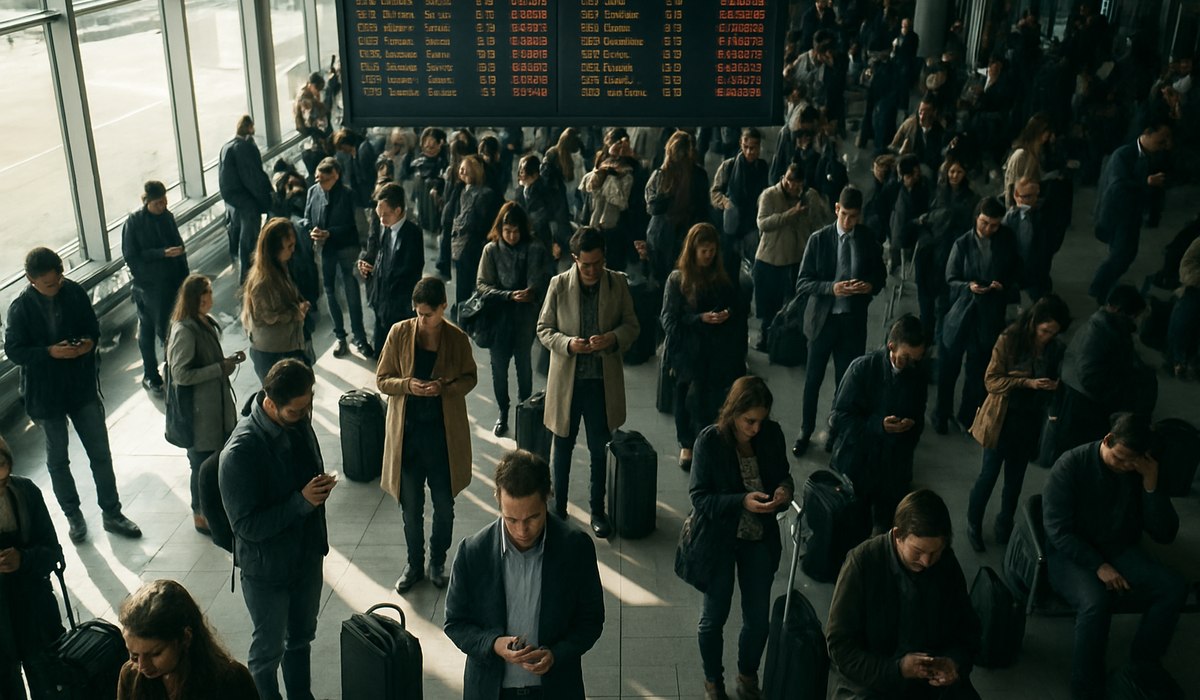
Image generated by AI
The $18 Billion Hidden Tax on American Air Travel
Flight disruptions across U.S. airports cost passengers approximately $18 billion annually in hidden expenses—a figure that extends far beyond what appears on your ticket receipt. A comprehensive 2026 analysis reveals that nearly one-third of the total economic burden from flight delays falls directly on travelers' shoulders, encompassing lost time, hotel stays, missed meals, and rebooking fees. This hidden financial toll affects millions of passengers navigating an increasingly unreliable domestic aviation system, with disruptions now affecting one in five flights during routine operations.
The cumulative impact represents a systemic challenge that regulators and airlines have largely overlooked. When you miss a connection, spend hours in an airport lounge, or book an emergency hotel room at midnight, you're absorbing costs that never appear in airline revenue reports. Yet they accumulate into a staggering $18 billion yearly burden borne entirely by American travelers.
The Hidden $18 Billion Tax on U.S. Air Travel
Understanding how analysts calculated this substantial figure requires examining three critical variables: the volume of disrupted passengers, average delay duration, and the economic value assigned to lost time.
Travel data from 2024 and early 2026 indicates that over one billion passengers flew domestically, with more than 23 percent experiencing measurable delays. When delays exceed three hours, passengers face cascading out-of-pocket expenses. Industry analysts apply an hourly time value of $45 to $50 per passenger—a methodology established by the Federal Aviation Administration and confirmed by economic research on major disruptions.
The calculation incorporates both time losses and direct expenses. A typical delayed passenger loses approximately one hour waiting, while severe disruptions extend waits beyond three hours. Multiply one billion passengers by average delay rates, apply standard time valuations, and factor in hotel rooms, rebooked flights, and meal expenses, and the $18 billion figure emerges as a conservative estimate. The actual burden likely exceeds this amount when accounting for missed medical appointments, disrupted family events, and long-term behavioral changes affecting future travel decisions.
This methodology builds directly on frameworks used by the FAA and private aviation analytics firms tracking on-time performance across carriers and airports.
How Delays Impact Passenger Wallets Beyond Missed Connections
Flight delays trigger a domino effect of secondary expenses that most passengers don't anticipate when purchasing tickets. A three-hour delay that forces you to miss your connection doesn't just mean rebooked flights—it means emergency hotel reservations, expensive airport meals, ground transportation, and potentially lost wages.
Research into 2024 disruption patterns reveals that weather-related slowdowns account for significant delay volumes, alongside traffic-management initiatives, air traffic control staffing constraints, and individual airline operational failures. Each category creates different cascading expenses. Weather delays often trap passengers overnight, triggering accommodation costs averaging $150-$300 per night at airport hotels. Missed connections force rebooking on alternative carriers, sometimes at premium prices when flights fill quickly.
Ground transportation costs multiply when delays extend beyond standard airport transfer windows. Ride-sharing services surge their rates during peak disruption periods. Families with connecting flights face meal expenses across multiple airports, which can easily total $100 for a family of four.
The U.S. Department of Transportation now requires automatic cash refunds for flights delayed more than three hours domestically, yet these refunds address only a portion of actual expenses incurred. Passengers must still front money for hotels and transportation, filing claims afterward—a burden that effectively becomes an involuntary loan to the travel industry.
Why Airlines and Regulators Have Overlooked Passenger Costs
The aviation industry's traditional cost calculations have systematically excluded passenger impact assessments from public discussions. Airlines report operational delay costs—fuel, crew overtime, maintenance delays—but passenger expenses remain largely invisible in regulatory filings and industry metrics.
The Federal Aviation Administration's historical delay cost estimates, often cited at $30-$35 billion annually, combine airline and passenger impacts without disaggregating the passenger burden. This aggregation obscures how much individual travelers actually lose. When regulators focus exclusively on operational efficiency and safety metrics, the human cost of disruptions disappears from policy conversations.
Airlines have incentives to minimize passenger cost visibility. Higher perceived costs of flying could shift demand toward alternative transportation or encourage policy changes requiring refund obligations. The 2024 Department of Transportation ruling requiring automatic refunds for significant delays represents a rare regulatory acknowledgment of passenger costs, yet compliance remains incomplete across carriers.
Private travel analytics firms have increasingly highlighted the passenger burden, but this research reaches limited audiences compared to industry-controlled narratives. Until passenger costs become a standard metric in aviation safety and efficiency discussions, the $18 billion annual burden will continue subsidizing an underperforming system.
What Travelers Can Do to Mitigate Delay Expenses
Despite systemic challenges, passengers can implement specific strategies to reduce out-of-pocket costs when disruptions occur.
Traveler Action Checklist
-
Purchase comprehensive trip insurance covering delays beyond two hours, including accommodation and meal expenses not covered by airline policies. Review exclusions carefully before traveling.
-
Monitor flights in real-time using FlightAware or your airline's app, enabling early detection of delays and proactive rebooking before situation escalates.
-
Understand your rights under current DOT regulations, including eligibility for automatic refunds on flights delayed over three hours domestically or six hours internationally.
-
Choose connecting flights strategically by avoiding tight connections during peak travel periods and selecting routes with historically better on-time performance data.
-
Bring receipts religiously for all delay-related expenses, documenting hotel stays, meals, ground transportation, and rebooking fees to support refund claims with your airline.
-
Document communication with airline representatives, requesting written confirmation of delay reasons and rebooking offers to establish clear records for compensation claims.
-
Research your airline's policy before purchasing tickets, comparing refund policies and delay-handling procedures across carriers on your intended route.
-
Consider credit cards offering travel protections that cover delay-related expenses, providing backup compensation when airline policies prove insufficient.
-
Build schedule flexibility into travel plans whenever possible, avoiding same-day connections and arriving with buffer time before important commitments.
-
File complaints with the U.S. Department of Transportation when airlines fail to provide required refunds, contributing to regulatory data that drives policy improvements.
Key Delay Cost Data: Breaking Down the $18 Billion Impact
| Metric | 2026 Estimate | Impact |
|---|---|---|
| Annual U.S. passengers experiencing delays | 230+ million | Over 23% of one billion total passengers |
| Average delay duration (routine operations) | 20-30 minutes | Compounds with multiple legs of journey |
| Passengers facing delays exceeding 3 hours | 45+ million | Qualify for DOT automatic refund requirements |
| Hourly time value per passenger | $45-$50 | Industry standard used by FAA and economists |
| Hotel expenses per overnight delay | $150-$300 | Primary out-of-pocket cost for passengers |
| Direct passenger cost annual total | $18 billion | Conservative estimate excluding stress and behavioral impacts |
| Airlines' operational delay costs | $30-35 billion | Separate from passenger expenses |
| DOT refund requirement threshold | 3+ hours domestic / 6+ international | Only addresses delays beyond this threshold |
What This Means for Travelers
The $18 billion figure demands immediate attention from anyone who flies domestically. This hidden cost fundamentally changes the true expense calculation for air travel, effectively adding a 15-25 percent surcharge to ticket prices once you factor
Disclaimer
This article is for informational and educational purposes only. It does not constitute legal, financial, or professional advice. While we strive to provide accurate and up-to-date information, travel policies, regulations, and conditions change rapidly. Always verify information with official sources before making travel decisions. Nomad Lawyer makes no representations about the accuracy, reliability, completeness, or suitability of the information provided. Readers should consult qualified professionals for advice specific to their circumstances. The views expressed in this article are those of the author and do not necessarily reflect the views of Nomad Lawyer.
Kunal K Choudhary
Co-Founder & Contributor
A passionate traveller and tech enthusiast. Kunal contributes to the vision and growth of Nomad Lawyer, bringing fresh perspectives and driving the community forward.
Learn more about our team →