
Hemingways Collection Redefines Eco-Luxury with River Camp Mara Integration
Explore how Hemingways River Camp Mara utilizes solar power and Maasai partnerships to lead sustainable luxury tourism in the Mara North Conservancy.

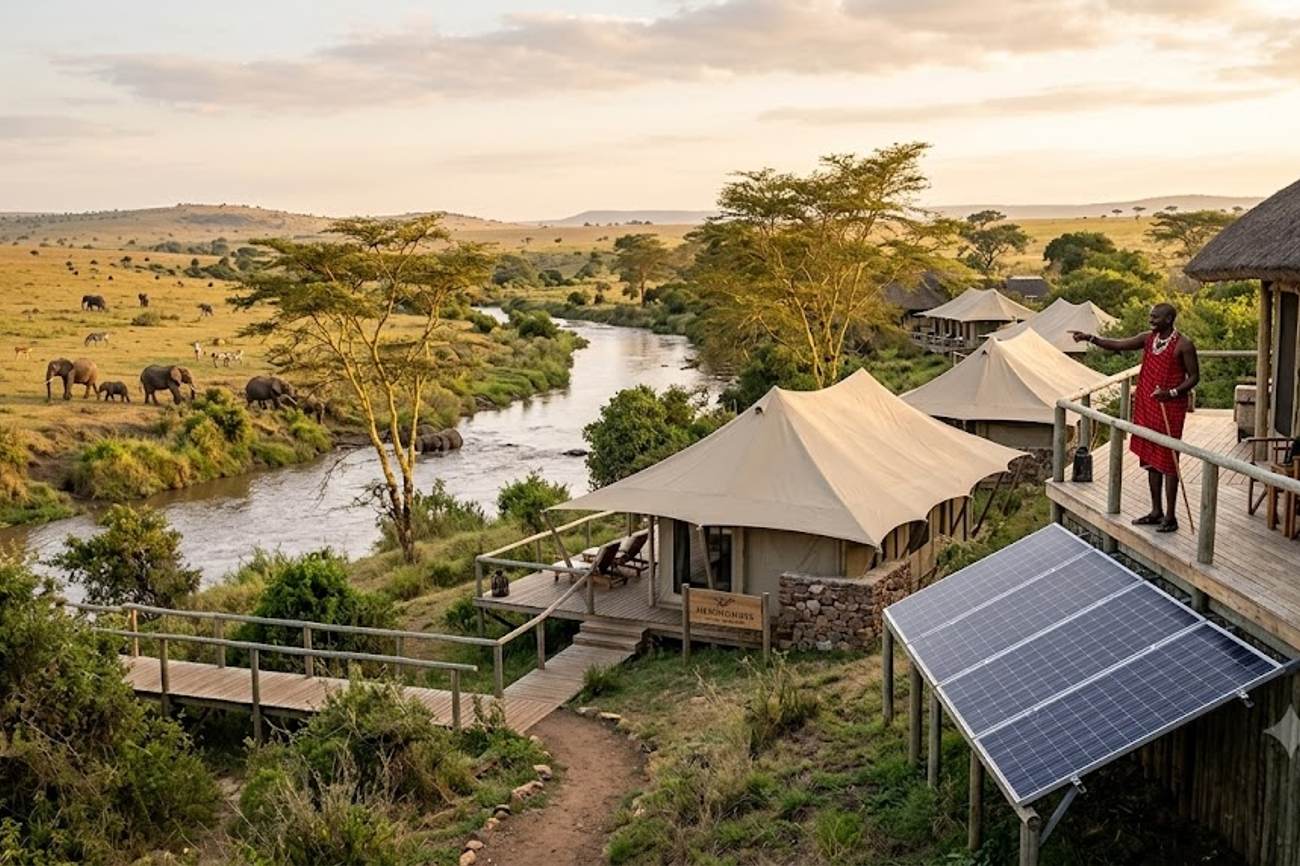
Image generated by AI
[Nairobi, September 11, 2026] — The landscape of high-end wildlife tourism in East Africa is undergoing a fundamental transformation as operators pivot toward conservation-led hospitality. River Camp Mara has officially joined the Hemingways Collection, establishing a new benchmark for sustainable development and cultural preservation within the exclusive Mara North Conservancy. This move signals a broader industry trend where elite properties are moving away from traditional luxury toward a model that balances heritage aesthetics with a near-zero ecological footprint.
The strategic acquisition and subsequent refurbishment of the property focus on three primary pillars: the protection of the Mara North ecosystem, the implementation of low-impact architectural standards, and the socio-economic empowerment of the local Maasai people. By aligning luxury hospitality with rigorous environmental stewardship, the property aims to prove that high-revenue tourism can actively regenerate rather than deplete natural habitats.
Strategic Ecosystem Protection via Mara North Conservancy
The operational success of River Camp Mara is deeply tied to the unique structure of the Mara North Conservancy. This entity functions as a non-profit partnership, creating a symbiotic link between high-end tourism operators and the Maasai landowners who hold the ancestral rights to the land. Unlike traditional national park models, this framework utilizes transparent land-lease agreements to ensure that the financial gains from tourism flow directly back to the indigenous community.
This conservancy model is essential for the survival of the greater Maasai Mara ecosystem. By capping the number of available beds and restricting the volume of safari vehicles, the conservancy prevents the "over-tourism" often seen in more accessible regions of Kenya. This low-density approach ensures that wildlife viewing remains an immersive experience, free from the congestion of mass-market tourism.
Industry data from the Kenya Wildlife Service indicates that this specific approach to land management has led to a measurable increase in regional biodiversity indexes over the last decade. By reducing habitat fragmentation and managing grazing zones, the conservancy provides a secure sanctuary for predators and migratory species, ensuring that the natural rhythms of the wilderness remain undisturbed.
Sustainable Architecture and Heritage Restoration
The recent renovation of River Camp Mara serves as a case study in "low-impact" luxury. The goal of the architectural overhaul was to modernize the guest experience without introducing permanent environmental degradation. To achieve this, the project utilized reclaimed timber and locally sourced materials, significantly reducing the embodied carbon typically associated with luxury construction in remote areas.
A primary feature of the redesign is the property's energy independence. The camp now operates on 100% solar power, eliminating the need for noisy, polluting diesel generators that often disrupt the serenity of the bush. Furthermore, the structural layout was meticulously planned to align with the riverine forest along the Mara River, ensuring that the physical presence of the camp does not obstruct the migratory corridors used by local fauna.
Water management has also been prioritized to protect the river's purity. The property has integrated advanced greywater recycling systems and strict organic waste management protocols. By blending traditional East African safari aesthetics—such as classic canvas and intricate woodwork—with modern eco-technology, the camp maintains a historical feel while operating with a futuristic approach to sustainability.
Socio-Economic Empowerment of Maasai Communities
True sustainability in the Kenyan safari sector requires more than just solar panels; it requires an equitable distribution of wealth. The partnership between the Hemingways Collection and the Mara North landowners is designed to ensure that tourism serves as a catalyst for regional development. A significant portion of the revenue generated by the camp is allocated toward local education, healthcare projects, and employment.
The camp's operational backbone consists of Maasai guides, artisans, and hospitality professionals. This ensures that the guest experience is rooted in authentic cultural representation rather than a curated performance. By employing local experts, the property provides direct financial empowerment to the community, reducing the reliance on unsustainable land-use practices.
Reports from regional tourism boards suggest that this community-based model is far more effective than the traditional "enclave resort" style. In these community-led models, a higher percentage of tourist expenditure remains within the local economy, creating a vested interest among the indigenous population to protect the wildlife and landscapes that attract visitors.
River Camp Mara Operational Overview
| Feature | Specification/Detail |
|---|---|
| Location | Mara North Conservancy, Kenya |
| Energy Source | 100% Solar Power |
| Land Model | Non-profit Maasai Land-Lease Partnership |
| Conservation Focus | Low-density tourism & habitat connectivity |
| Key Infrastructure | Greywater recycling & reclaimed timber construction |
| Peak Wildlife Season | July to October (Great Wildebeest Migration) |
The Real-World Impact on the Modern Traveler
For the traveler, the shift toward the Mara North model changes the fundamental nature of the safari. Instead of competing with dozens of vehicles for a single lion sighting, guests experience a curated, quiet environment where the wildlife is the priority. This transition from "sightseeing" to "conservation participation" allows visitors to see the direct impact of their stay—from the solar-powered lighting in their tents to the improved healthcare facilities in the neighboring Maasai villages.
From a logistical standpoint, the integration of River Camp Mara into a sustainable collection means that luxury no longer implies excess. It instead defines a refined experience where the "luxury" is the exclusivity of the wilderness and the knowledge that the visit supports the longevity of the ecosystem. This creates a higher value proposition for the ethical traveler who refuses to compromise on comfort but demands accountability in environmental impact.
Why This Matters: The Expert Perspective The evolution of River Camp Mara represents a critical pivot in the aviation and travel industry's approach to "destination fragility." As climate change threatens migratory patterns in East Africa, the only viable path for luxury tourism is one that removes the human footprint while maximizing the economic benefit to local protectors. For the industry, this proves that the most profitable model is also the most sustainable; by protecting the biodiversity of the Mara North Conservancy, the property ensures its own long-term commercial viability.
Related Travel Guides
Disclaimer
This article is for informational and educational purposes only. It does not constitute legal, financial, or professional advice. While we strive to provide accurate and up-to-date information, travel policies, regulations, and conditions change rapidly. Always verify information with official sources before making travel decisions. Nomad Lawyer makes no representations about the accuracy, reliability, completeness, or suitability of the information provided. Readers should consult qualified professionals for advice specific to their circumstances. The views expressed in this article are those of the author and do not necessarily reflect the views of Nomad Lawyer.
Raushan Kumar
Founder & Lead Developer
Full-stack developer with 11+ years of experience and a passionate traveller. Raushan built Nomad Lawyer from the ground up with a vision to create the best travel and law experience on the web.
Learn more about our team →