
Trackside Fire Cripples Heathrow Rail Links, Triggering Widespread London Transit Chaos
Rail services to Heathrow Airport resumed Sunday after a trackside fire destroyed power lines. Discover how this disruption impacted 84.5 million annual passeng

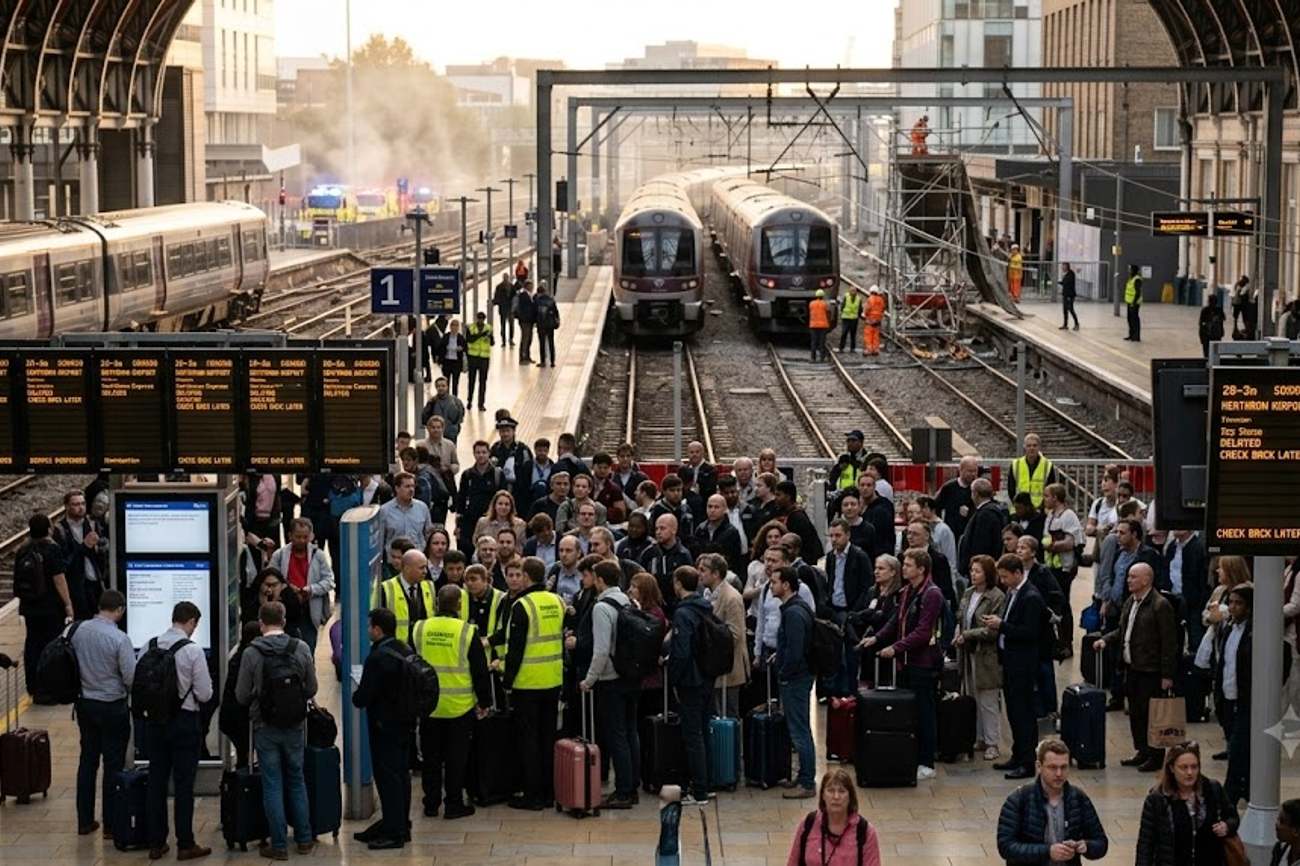
Image generated by AI
London Transit Gridlock Following Infrastructure Fire
[London, September 6, 2026] — Rail connectivity to Heathrow Airport has been restored following a severe infrastructure failure caused by a trackside fire that severed power supplies between London Paddington and the airport. The emergency began at approximately 4 pm on Saturday, September 5, when a blaze erupted near Scrubs Lane, destroying the electrical systems essential for train operations.
The London Fire Brigade deployed approximately 40 firefighters and six fire engines to combat the flames. While the fire was extinguished by Sunday morning, allowing for the resumption of services, the aftermath left a legacy of delays and displaced trains that continued to impact travelers throughout the following day.
Total Paralysis of Key Heathrow Rail Arteries
The fire acted as a choke point for one of the world's most critical transport corridors. Because the blaze destroyed the electricity supply beside the railway, all lines between London Paddington and the airport terminals were completely blocked. This caused an immediate cessation of services for the Heathrow Express and the Elizabeth line.
The disruption extended beyond airport transit, bleeding into the regional commuter network. Great Western Railway was forced to cancel services heading toward Reading, expanding the radius of the chaos to include thousands of non-airport travelers.
At London Paddington, the scene was one of significant congestion as departure boards displayed a cascade of cancellations. Arriving international passengers found themselves stranded at one of the capital's most high-pressure hubs, facing a sudden lack of reliable transport to their final destinations.
Overlapping Delays and Engineering Complications
The recovery process on Sunday morning was complicated by a convergence of emergency repairs and scheduled maintenance. While the fire-related emergency had technically ended, passengers encountered a second layer of disruption due to pre-planned engineering works on the Paddington-Heathrow corridor.
Specifically, some early Heathrow Express services remained unavailable until 07:25 on Sunday. This overlap created confusion for travelers who believed the network had returned to full capacity, proving that the "recovery phase" of a major infrastructure failure is often as volatile as the event itself.
Strategic Vulnerability of the UK’s Primary Aviation Hub
This incident underscores the strategic fragility of Heathrow’s surface access. As the UK's leading international hub, any failure in its rail connectivity has global ripple effects.
According to official annual reporting, Heathrow handled 84.5 million passengers in 2025, an increase from the 83.9 million recorded in 2024. The airport also managed over 475,000 aircraft movements during that period. When a single railway corridor fails, the resulting congestion impacts not only the passengers but also the surrounding hotels, corporate meetings, and airline connection windows.
The diversity of Heathrow's passenger base illustrates why transport resilience is a matter of national importance.
Heathrow Passenger Market Analysis (2025)
| Heathrow Passenger Market | 2025 Passengers | Year-on-Year Change |
|---|---|---|
| Europe | 34.0 million | +0.6% |
| North America | 20.6 million | -0.3% |
| Asia Pacific | 11.0 million | +2.6% |
| Middle East | 8.8 million | +2.8% |
| Africa | 3.4 million | +2.1% |
| Latin America | 2.2 million | -1.8% |
| UK | 4.6 million | -1.7% |
| Total | 84.5 million | +0.7% |
The continued growth in demand is evident in 2026 data, with the airport reporting 40 million passengers in the first half of the year—a 0.2% increase over the same period in 2025.
Alternative Transit Routes and Operational Hurdles
While the rail failure was comprehensive, alternative routes remained, though they were quickly overwhelmed. The Piccadilly line served as the primary backup, but Transport for London (TfL) reported severe delays on the Heathrow section during the peak of the Saturday disruption.
National Rail implemented emergency travel arrangements for Elizabeth line passengers, permitting the use of London buses and other Underground services depending on the specific ticket type.
Comparative Impact of Transport Alternatives
| Travel Option | Main Heathrow Connection | Role During Disruption |
|---|---|---|
| Heathrow Express | Paddington–Heathrow | Suspended during fire disruption |
| Elizabeth line | Central London–Heathrow | Suspended on affected section |
| Great Western Railway | Paddington–Reading and beyond | Major disruption |
| Piccadilly line | Central London–Heathrow | Available but delayed |
| London buses | Central London and west London | Alternative accepted for eligible tickets |
| Taxis/private hire | London–Heathrow | Available but vulnerable to road congestion |
For travelers with heavy luggage, the transition from high-capacity trains to the Underground is often impractical, leading to increased reliance on private hire vehicles and subsequent road congestion.
Simultaneous Airside Emergency Increases Pressure
Adding to the operational strain, a separate incident occurred on the airfield earlier on Saturday. A grass fire broke out on the southern perimeter of the Heathrow runway, forcing a temporary closure of the strip. This airside emergency resulted in at least two flights being diverted to other airports.
Although the London Fire Brigade extinguished the runway fire quickly, its timing created a "double-hit" scenario for airport operations. While officials confirmed there was no link between the airfield grass fire and the trackside electrical fire, the coincidence highlighted a broader vulnerability to fire risks. This follows a previous incident in August where another grass fire destroyed approximately one hectare of land near the southern runway.
Why This Matters (Information Gain & Experience)
For the modern traveler, this sequence of events proves that "airport arrival time" must be redefined. Traditionally, passengers calculate their arrival based on flight schedules; however, the Heathrow disruption demonstrates that surface access is now a high-risk variable.
From a logistical standpoint, the reliance on a single primary rail corridor (the Paddington-Heathrow line) creates a single point of failure. When this corridor collapses, the "overflow" into the Piccadilly line and road networks creates a systemic crash. Travelers should now view the journey from Central London to the terminal as a critical leg of the flight itinerary itself, rather than a mere transfer. The reality is that a 30-minute rail failure can translate into a missed international connection, regardless of how early the passenger arrived at the station.
Related Travel Guides
Disclaimer
This article is for informational and educational purposes only. It does not constitute legal, financial, or professional advice. While we strive to provide accurate and up-to-date information, travel policies, regulations, and conditions change rapidly. Always verify information with official sources before making travel decisions. Nomad Lawyer makes no representations about the accuracy, reliability, completeness, or suitability of the information provided. Readers should consult qualified professionals for advice specific to their circumstances. The views expressed in this article are those of the author and do not necessarily reflect the views of Nomad Lawyer.
Kunal K Choudhary
Co-Founder & Contributor
A passionate traveller and tech enthusiast. Kunal contributes to the vision and growth of Nomad Lawyer, bringing fresh perspectives and driving the community forward.
Learn more about our team →