
Hawaiian Airlines Axes Narrowbody A321neo Service on Honolulu-Oakland Route as Alaska Airlines Integration Accelerates
Breaking airline news and aviation industry updates for 2026.

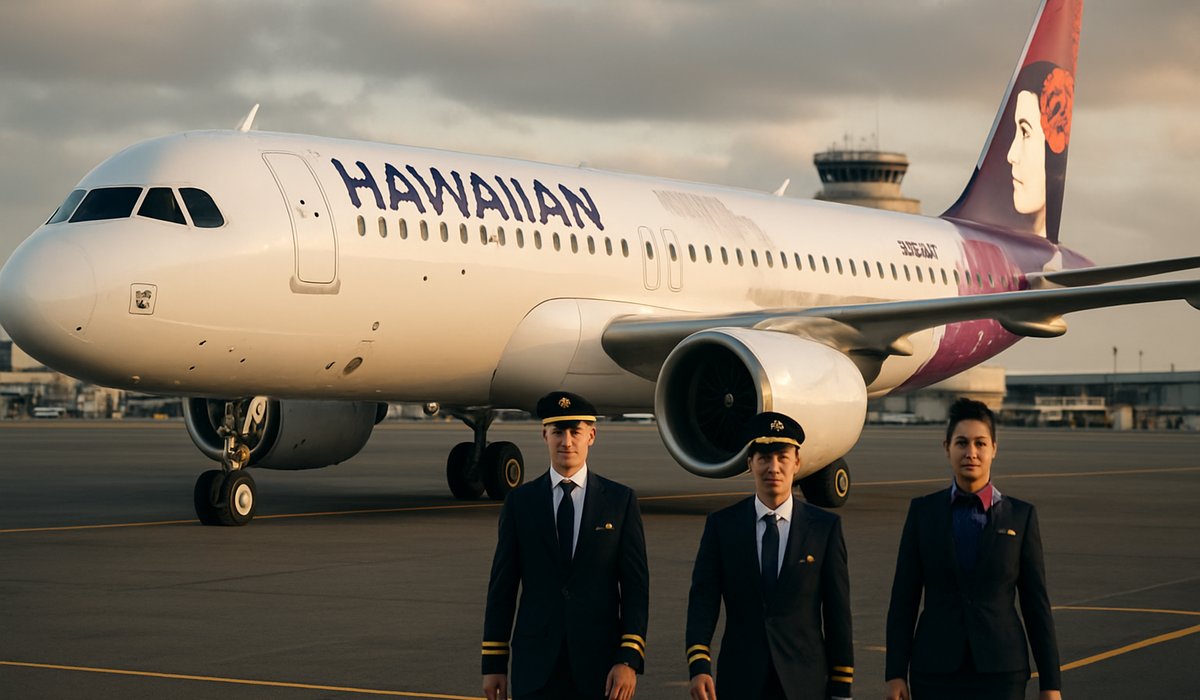
Image generated by AI
Hawaiian Airlines Axes Narrowbody A321neo Service on Honolulu-Oakland Route as Alaska Airlines Integration Accelerates
Strategic fleet redeployment signals shift toward larger widebody capacity on key Pacific corridor as carriers optimize post-merger operations
Major Route Restructuring Underway
Hawaiian Airlines is permanently discontinuing its Airbus A321neo operations between Honolulu and Oakland, marking a significant operational pivot as the carrier consolidates its network following Alaska Airlines' acquisition. The transition will be completed by mid-2026, with larger Airbus A330-200 widebody aircraft assuming full responsibility for the route during the lucrative summer travel season.
The decision underscores how legacy carriers are reshaping their Pacific regional networks in response to changing demand patterns, fuel economics, and fleet optimization strategies in an increasingly competitive aviation landscape.
Timeline and Fleet Transition Details
The phased withdrawal of the narrowbody A321neo—a fuel-efficient twin-engine aircraft designed for long-range regional routes—reflects a broader consolidation strategy following Alaska Airlines' acquisition of Hawaiian Airlines. Rather than maintaining dual aircraft types on the route, the merged entity is consolidating operations under Alaska's widebody fleet management.
The larger Airbus A330-200, a twin-engine widebody jet with substantially greater passenger capacity, will replace the A321neo operations entirely. This transition is expected to conclude during the high-demand summer months of 2026, positioning the carrier to capitalize on peak-season travel between California and Hawaii.
Industry Context: Fuel Costs and Fleet Optimization
The strategic shift reflects broader industry trends where airlines are reevaluating aircraft deployment patterns amid volatile jet fuel prices and labor cost pressures. While narrowbody aircraft like the A321neo excel at fuel efficiency, widebody jets can generate higher per-flight revenue through increased capacity, potentially offsetting higher operating costs on premium routes.
The Honolulu-Oakland corridor represents a crucial link connecting California's Bay Area to Hawaii's tourism and business hub, making it economically viable for larger aircraft deployment—particularly during peak travel months when load factors justify the additional seats.
Alaska Airlines Integration Continues
The consolidation exemplifies how Alaska Airlines is methodically integrating Hawaiian Airlines' operations into its broader network strategy. The merger, completed in late 2024, triggered significant fleet realignment discussions across both carriers' route maps.
By deploying Alaska's existing A330-200 fleet rather than maintaining Hawaiian's narrowbody A321neo aircraft, the combined carrier achieves operational standardization and reduces complexity in crew scheduling, maintenance, and aircraft utilization—key efficiency gains in an industry where margins remain razor-thin.
What Travelers Should Expect
Passengers on the Honolulu-Oakland route can anticipate expanded seating options and potentially improved revenue-management flexibility as larger aircraft assume the route. However, changes to baggage policies, seat configurations, and frequent-flyer benefits may accompany the transition as Alaska Airlines fully integrates Hawaiian's customer-facing programs.
FAQ: Hawaiian Airlines Fleet Changes and Pacific Route Operations
Q: Why is Hawaiian Airlines removing A321neo aircraft from the Honolulu-Oakland route? A: The decision stems from post-acquisition integration with Alaska Airlines, which is consolidating operations and deploying larger widebody A330-200 aircraft for improved capacity and revenue optimization on the premium Pacific route.
Q: When will the A321neo service end completely? A: Hawaiian Airlines will fully transition to Airbus A330-200 operations by mid-2026, with the changeover accelerating during the summer peak travel season.
Q: Will this affect ticket prices or baggage fees? A: Pricing and baggage policies may change as Alaska Airlines completes integration; passengers should monitor both carriers' official websites for policy updates.
Q: Are other Hawaiian Airlines routes affected by this fleet restructuring? A: The extent of broader fleet changes across Hawaiian Airlines' network will likely become clearer as the Alaska Airlines integration progresses through 2026.
Q: What are the advantages of widebody aircraft on this route? A: A330-200 jets offer significantly greater passenger capacity, allowing airlines to generate higher revenue per flight and better accommodate peak-season demand on the busy Hawaii-California corridor.
Related Travel Guides
Disclaimer
This article is for informational and educational purposes only. It does not constitute legal, financial, or professional advice. While we strive to provide accurate and up-to-date information, travel policies, regulations, and conditions change rapidly. Always verify information with official sources before making travel decisions. Nomad Lawyer makes no representations about the accuracy, reliability, completeness, or suitability of the information provided. Readers should consult qualified professionals for advice specific to their circumstances. The views expressed in this article are those of the author and do not necessarily reflect the views of Nomad Lawyer.
Preeti Gunjan
Contributor & Community Manager
A passionate traveller and community builder. Preeti helps grow the Nomad Lawyer community, fostering engagement and bringing the reader experience to life.
Learn more about our team →