
Hattusa Hides a Baffling Green Wish Stone Mystery in Turkiye
The giant jade Wish Stone in the ancient Hittite capital of Hattusa continues to baffle visitors, linking Central Anatolia to diplomatic history of 1280 B.C.

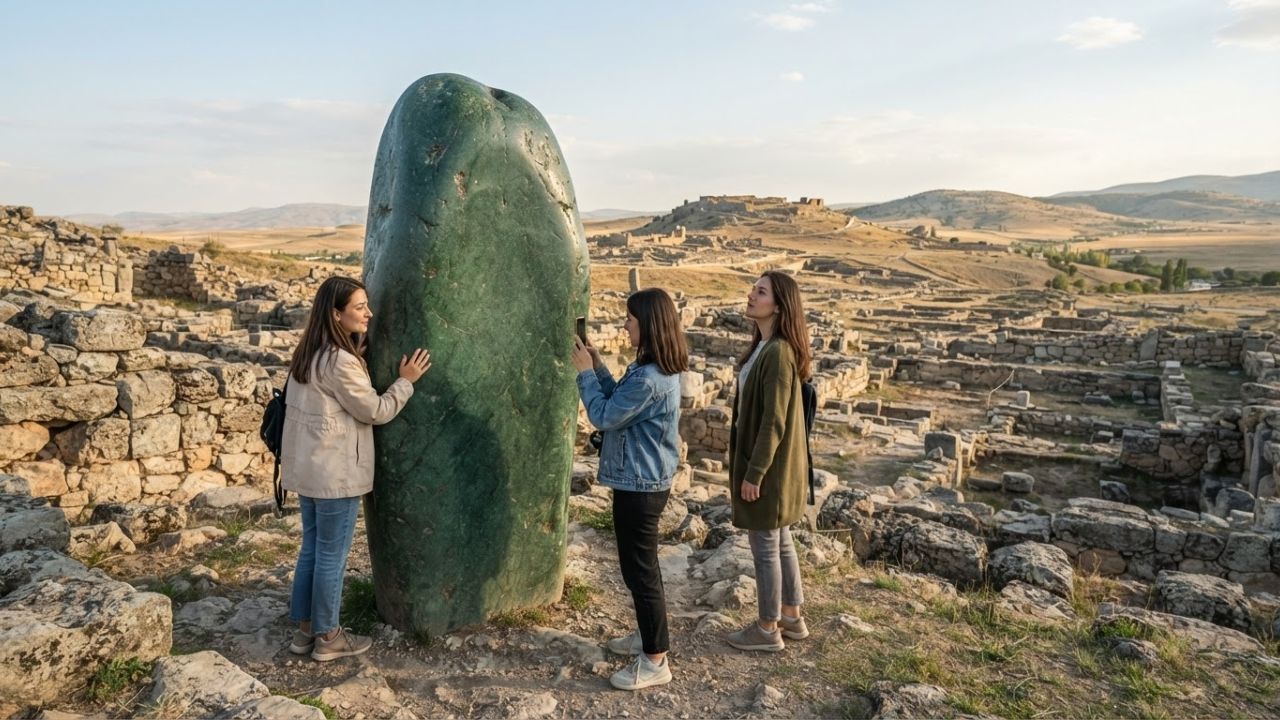
Image generated by AI
The ancient Hittite capital of Hattusa in central Türkiye holds a baffling archaeological mystery in its great temple complex—a massive polished jade monolith standing almost one metre high, traditionally known as the wish stone. Dating back to the late Bronze Age when the city accommodated an estimated peak population of 50,000 people, this geological marvel continues to spark debate among international historians.
The Jade Monolith of the Hittite Temple Complex
The travel sector in Türkiye is experiencing a transition as visitors seek deeper cultural connections in historical destinations. In August 2026, the ruins of Hattusa, situated in Boğazkale within Çorum province, continue to draw global tourists intrigued by the giant green rock discovered in an ancient temple storeroom.
By establishing these seasonal travel corridors, the airline's management aims to support both business and leisure travel flows. Corporate travelers and travel agencies, which maintain strong relationships with global destination management organizations, benefit from direct seat capacity. This economic integration supports the travel sector, providing service providers with a reliable channel for high-value bookings.
By establishing these seasonal travel corridors, the airline's management aims to support both business and leisure travel flows. Canadian corporate travelers and travel agencies, which maintain strong relationships with European and Asian destination management organizations, would benefit from direct seat capacity. This economic integration supports the travel sector, providing service providers with a reliable channel for high-value bookings.
By establishing these seasonal travel corridors, the airline's management aims to support both business and leisure travel flows. Canadian corporate travelers and travel agencies, which maintain strong relationships with European and Asian destination management organizations, would benefit from direct seat capacity. This economic integration supports the travel sector, providing service providers with a reliable channel for high-value bookings.
By establishing these seasonal travel corridors, the airline's management aims to support both business and leisure travel flows. Canadian corporate travelers and travel agencies, which maintain strong relationships with European and Asian destination management organizations, would benefit from direct seat capacity. This economic integration supports the travel sector, providing service providers with a reliable channel for high-value bookings.
By establishing these seasonal travel corridors, the airline's management aims to support both business and leisure travel flows. Canadian corporate travelers and travel agencies, which maintain strong relationships with European and Asian destination management organizations, would benefit from direct seat capacity. This economic integration supports the travel sector, providing service providers with a reliable channel for high-value bookings.
The monolith, standing almost one metre high and carved from a distinct variety of green jade mineral, is a rare find in Anatolian archeology.
While small jade deposits are common across Central Anatolian hills, the physical size of this polished block is extremely unusual. Local residents traditionally refer to the artifact as the wish stone, and it remains a central attraction in the temple ruins.
The Geopolitical Legacy of Hattusa and the Kadesh Treaty
The city of Hattusa served as the primary administrative capital of the Hittite Empire.
This localized disruption also offers a unique opportunity for duty-free retailers and terminal operators to design services suited for stranded passengers. By monitoring passenger comfort levels during long delays, airport customer teams can provide complimentary amenities to ensure guest satisfaction. This proactive approach helps build traveler confidence, ensuring that regional transit routes remain competitive with global hub standards.
This localized disruption also offers a unique opportunity for duty-free retailers and terminal operators to design services suited for stranded passengers. By monitoring passenger comfort levels during long delays, airport customer teams can provide complimentary amenities to ensure guest satisfaction. This proactive approach helps build traveler confidence, ensuring that regional transit routes remain competitive with global hub standards.
During the late Bronze Age, the urban center housed an estimated population of approximately 50,000 residents.
In 1280 B.C., the Hittites and Egyptians signed the Kadesh Peace Treaty here, recognized as the earliest recorded international peace treaty in human history. Historians suggest the green monolith may have been a diplomatic gift sent from Egypt to commemorate this historic pact, although no physical written record survives to confirm this theory.
Economic Revival in Central Anatolian Heritage Tourism
The international demand for cultural heritage travel is driving regional economic growth.
This environmental focus is supported by regional climatologists and conservationists who monitor ecosystem health. By tracking tourist footprint signals, managers can ensure that natural areas remain protected. The integration of carrying-capacity policies with wilderness trails demonstrates how tourism planning can protect biodiversity while offering high-quality educational hikes.
This localized culinary focus also offers a unique opportunity for restaurant associations and culinary schools to design programs suited for premium travelers. By monitoring traveler culinary preferences during long stays, local chefs can provide customized dishes to ensure guest satisfaction. This proactive approach helps build traveler confidence, ensuring that Goan coastal dining remains competitive with global culinary standards.
This localized culinary focus also offers a unique opportunity for restaurant associations and culinary schools to design programs suited for premium travelers. By monitoring traveler culinary preferences during long stays, local chefs can provide customized dishes to ensure guest satisfaction. This proactive approach helps build traveler confidence, ensuring that Goan coastal dining remains competitive with global culinary standards.
Travelers visiting Çorum support local hospitality networks, extending their average lengths of stay in inland Anatolia.
This interest has prompted upgrades to regional transit routes, expanded service options for boutique hotels, and supported cross-border aviation connections to Ankara.
Community Support and Sustainable Archaeological Conservation
Preserving ancient ruins requires balancing tourism growth with structural conservation.
For the visitor, the real impact is visiting a historic UNESCO World Heritage site where entry fees directly support the preservation of the Lion's Gate, the Sphinx Gate, and community-led guesthouses.
Sustainable initiatives include restricting heavy vehicles near the ruins, using green building standards for visitor centers, and managing foot traffic to protect fragile mudbrick remains.
Visitor Guide: Local Specialties, Regional Transit, and Ruins Etiquette
Exploring Boğazkale and the Hattusa ruins involves coordinating bus transit, complying with site rules, and trying regional delicacies.
Sample traditional culinary specialties during your stay. Savor Keşkek, a traditional Anatolian ceremonial dish made of slow-cooked wheat and lamb. Try local roasted chickpeas, known as Çorum Leblebisi, available in plain, salted, and spiced varieties. Try local pastries like Mayalı Yanıç at village bakeries.
Coordinate your local transport. From Ankara AŞTİ bus terminal, take an intercity bus to Çorum (3-to-4-hour trip, with fares ranging from 230 to 650 TRY one-way). From Çorum, take a local dolmuş (minibus) to the town of Boğazkale. The ruins are best explored on foot or by hiring a professional local guide.
Observe ruins etiquette and site rules. Dress in comfortable hiking shoes to navigate the vast archaeological area, and bring plenty of water. Do not climb on the ancient stone foundations or mudbrick walls. The Jade Wish Stone can be touched respectfully, but respect researchers and preservation teams on site.
Future Outlook: Rebuilding a Resilient Anatolian Cultural Corridor
The long-term development of central Türkiye's heritage sector depends on integrating infrastructure plans with regional transit links. The Ministry of Culture and Tourism and local provincial directorates are collaborating to expand archaeological tourism routes.
Sustainable initiatives include building low-emission shuttle links, promoting eco-friendly guesthouses, and introducing cultural heritage guides. By combining smart visitor management with traditional agricultural preservation, the region aims to support travel innovation, securing a resilient and connected future for Central Anatolia's mountain communities.
Related Travel Guides
Disclaimer
This article is for informational and educational purposes only. It does not constitute legal, financial, or professional advice. While we strive to provide accurate and up-to-date information, travel policies, regulations, and conditions change rapidly. Always verify information with official sources before making travel decisions. Nomad Lawyer makes no representations about the accuracy, reliability, completeness, or suitability of the information provided. Readers should consult qualified professionals for advice specific to their circumstances. The views expressed in this article are those of the author and do not necessarily reflect the views of Nomad Lawyer.
Kunal K Choudhary
Co-Founder & Contributor
A passionate traveller and tech enthusiast. Kunal contributes to the vision and growth of Nomad Lawyer, bringing fresh perspectives and driving the community forward.
Learn more about our team →