
The Great Harbour Crossing Reset: An Insider Guide to Navigating Halifax and Dartmouth During the Macdonald Bridge Closure
The Angus L. Macdonald Bridge closes for major maintenance from October 2 to 5, 2026, redirecting travelers to harbour ferries and scenic Dartmouth waterfront corridors.

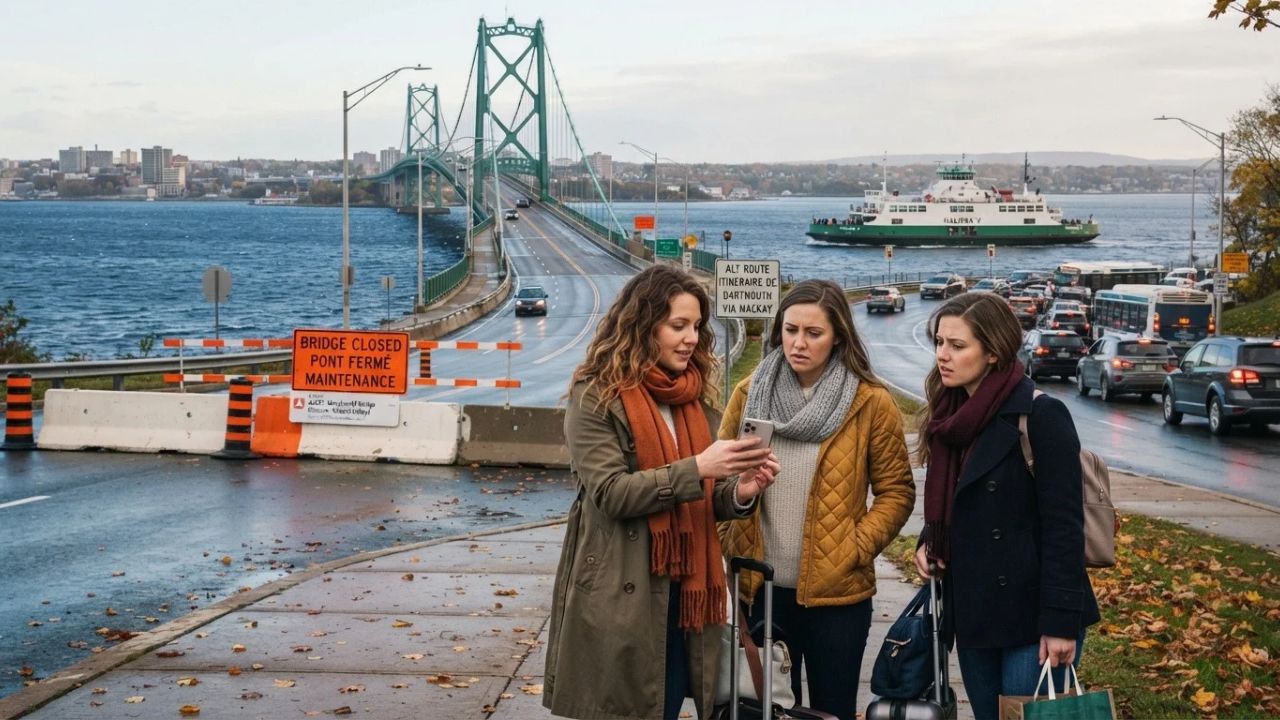
While over one hundred thousand vehicles cross the two suspension spans of Halifax Harbour every single day, the Angus L. Macdonald Bridge completely locks its gates to all motorized, pedestrian, and bicycle traffic from October 2 through October 5, 2026, under Project LifeSpan. Overseen by Halifax Harbour Bridges and the Government of Nova Scotia, the weekend-long shutdown allows engineering crews to conduct urgent structural inspections, tower restoration, and protective steel coating applications on the 71-year-old landmark.
With the companion A. Murray MacKay Bridge constrained by ongoing ramp construction along Massachusetts Avenue on the Halifax peninsula, travelers and weekend visitors are adapting by utilizing North America's oldest continuously operating saltwater passenger ferry system. By swapping congested vehicle detours for scenic 12-minute harbour crossings, visitors can explore the culinary scenes of both downtown Halifax and historic Dartmouth without traffic bottlenecks.
Cross-Harbour Transit & Driving Bypass Strategy Matrix
| Transit Mode / Route | Operational Status (Oct 2–5, 2026) | Travel Window & Frequency | Practical Traveler Strategy |
|---|---|---|---|
| Angus L. Macdonald Bridge | Fully closed to all vehicles, bikes, and pedestrians | 19:00 Friday to 05:30 Monday | Collect free bus passes (up to 4) at 125 Wyse Road admin building |
| A. Murray MacKay Bridge | Open with severe Halifax off-ramp bottlenecks | Continuous highway flow | Avoid Massachusetts Ave; use Windsor St, Kempt Rd, or lower Barrington |
| Alderney Ferry (Downtown) | Operating standard full weekend schedule | Every 15–30 minutes (06:30 – 23:30) | Best pedestrian route between downtown Halifax and central Dartmouth |
| Woodside Ferry (South Dartmouth) | Operating special weekend service | Frequent daytime crossings | Free commuter parking on Dartmouth side; direct access to Halifax core |
| Halifax Transit Cross-Harbour Buses | Rerouted over MacKay Bridge | Regular weekend schedules | Expect 20–30 minute transit delays during peak Saturday afternoon runs |
Why Project LifeSpan Matters to Maritime Travel
Constructed in 1955, the Angus L. Macdonald Bridge—affectionately known by locals as "The Old Bridge"—is an architectural icon connecting downtown Halifax with the City of Lakes in Dartmouth. Because coastal saltwater environments accelerate steel oxidation, continuous structural stewardship under Project LifeSpan ensures the long-term safety of the suspension cables, vertical hangers, and roadway deck.
During the closure window, active commuters who typically walk or cycle across the harbour can obtain up to four complimentary transit passes directly from the bridge administration headquarters at 125 Wyse Road in Dartmouth. Detoured municipal buses operate directly across the MacKay Bridge, maintaining essential transit equity for regional residents and travelers.
Exploring Kjipuktuk: The Twin Shores of Halifax and Dartmouth
Rather than viewing the bridge maintenance as an obstacle, seasoned travelers can use the weekend to embrace the maritime character of Nova Scotia's capital region:
1. The Historic Dartmouth Waterfront
Departing the Halifax ferry terminal, the 12-minute cruise across the harbour delivers travelers to Alderney Landing in downtown Dartmouth. Once a quiet industrial shore, the neighbourhood has evolved into a vibrant cultural hub featuring independent microbreweries along Portland Street, artisanal cider houses, and world-class bakeries. Visitors can browse the weekend Alderney Landing Farmers' Market, stroll the landscaped waterfront boardwalk, and take in panoramic skyline views of the Halifax Citadel.
2. The Halifax Peninsula and Historic Core
On the Halifax side, visitors can explore the star-shaped Halifax Citadel National Historic Site, an 18th-century hilltop fortress preserved by Parks Canada. Descending toward the water, the four-kilometer continuous wooden Halifax Waterfront Boardwalk features historic tall ships at the Maritime Museum of the Atlantic, local seafood shacks serving fresh Nova Scotia lobster rolls, and open-air public art installations.
3. The Vibrant North End Culinary Corridor
For those traveling via the MacKay Bridge detour, taking the Kempt Road exit leads directly into Halifax’s celebrated North End. Centered around Agricola Street and Gottingen Street, this district showcases inventive farm-to-table dining, bean-to-bar chocolate workshops, and craft distilleries highlighting local botanicals.
Visitor Insider Tips for Weekend Exploration
Navigating the Halifax regional municipality during major bridge maintenance requires local driving tactics and transit timing:
- Harbour Ferry Cost & Ticketing: A single adult ferry fare on Halifax Transit costs just $2.75 CAD (exact cash required or purchased via mobile ticketing). Transfers are valid for 90 minutes across all connecting buses, making it the most economical sightseeing cruise in eastern Canada.
- MacKay Off-Ramp Driving Tactics: If driving across the MacKay Bridge into Halifax, immediately bypass the closed Massachusetts Avenue ramp by following the lower Barrington Street lanes for downtown access or turning south onto Windsor Street to reach the South End and universities.
- Peggy's Cove Day Trip Routing: If heading to the iconic lighthouse at Peggy's Cove from Dartmouth or the airport corridor, take Highway 102 South to Highway 103 West, exiting onto Route 333 at Upper Tantallon to avoid peninsula traffic completely.
- Iconic Maritime Culinary Etiquette: When ordering an authentic Halifax Donair, remember that the sweet condensed-milk garlic sauce is served warm on grilled Lebanese pita; never ask for tzatziki or lettuce, which marks you instantly as a tourist.
- Ferry Photography Timing: Board the upper open deck of the Alderney Ferry during the late afternoon "golden hour" (around 17:30 in early October) to photograph the sun setting behind the suspension towers of the Macdonald Bridge and the ramparts of Citadel Hill.
Cultural and Environmental Context
The waters of Halifax Harbour—known as Kjipuktuk in the Mi'kmaw language, meaning "The Great Harbour"—have served as a sacred gathering place, trading route, and sheltered marine corridor for thousands of years. The contemporary ferry network, which first began commercial rowboat crossings in 1752, represents a living continuum of indigenous and maritime transport traditions.
From an environmental standpoint, utilizing passenger ferries and electrified public transit across the harbour significantly reduces vehicle idling and carbon emissions. Halifax’s municipal climate action plan, HalifACT, prioritizes active transportation corridors and low-emission electric harbour ferries, ensuring that the preservation of historic suspension spans works in harmony with the long-term ecological restoration of the harbour marine ecosystem.
FAQ: Navigating Halifax Bridge Closures in Autumn 2026
What time does the Macdonald Bridge close and reopen?
The Macdonald Bridge closes to all vehicles, pedestrians, and cyclists at 19:00 on Friday, October 2, 2026, and reopens at 05:30 on Monday, October 5, 2026.
How much does the Halifax-Dartmouth ferry cost?
A single adult fare is $2.75 CAD, which includes a 90-minute transfer valid on connecting Halifax Transit buses across the municipal network.
Where can I get free transit tickets for bridge shuttle buses?
Displaced pedestrians and cyclists can collect up to four complimentary bus tickets at the Halifax Harbour Bridges administration building located at 125 Wyse Road in Dartmouth.
What is the best driving detour into downtown Halifax?
When crossing the MacKay Bridge from Dartmouth, use the lower Barrington Street exit ramps to reach the waterfront and downtown core while avoiding the closed Massachusetts Avenue ramp.
As the harbour ferries glide across the cool autumn waters beneath silent suspension cables, Halifax reminds travelers that the best way to experience a coastal city is by leaving the car behind and taking to the sea.
Related Travel Guides
Disclaimer
This article is for informational and educational purposes only. It does not constitute legal, financial, or professional advice. While we strive to provide accurate and up-to-date information, travel policies, regulations, and conditions change rapidly. Always verify information with official sources before making travel decisions. Nomad Lawyer makes no representations about the accuracy, reliability, completeness, or suitability of the information provided. Readers should consult qualified professionals for advice specific to their circumstances. The views expressed in this article are those of the author and do not necessarily reflect the views of Nomad Lawyer.
Raushan Kumar
Founder & Lead Developer
Full-stack developer with 11+ years of experience and a passionate traveller. Raushan built Nomad Lawyer from the ground up with a vision to create the best travel and law experience on the web.
Learn more about our team →