
Guyana Tourism Surges 5.6% in August as Leisure Travel Tops 62%

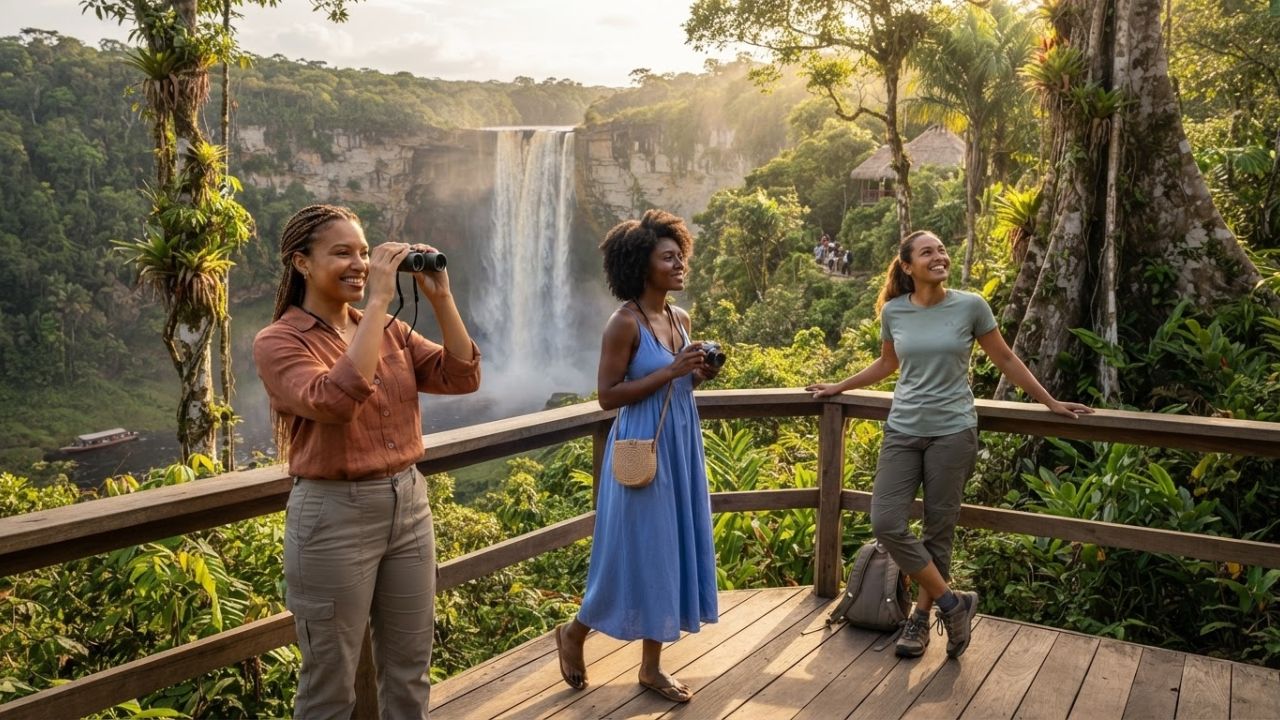
Guyana welcomed 48,582 international visitors in August 2026, marking a 5.6% year-on-year expansion that propelled the South American eco-destination to an 11% arrival surge across the first eight months of the year. Catalyzed by high-profile sporting fixtures like the Global Super League cricket tournament, visiting diaspora communities, and a decisive shift toward holiday exploration—with leisure travel commanding 62% of total arrivals—the nation is advancing steadily toward an unprecedented milestone of 500,000 annual visitors.
Official data released jointly by the Ministry of Tourism, Industry and Commerce and the Guyana Tourism Authority (GTA) highlights the country's rapid rise within the regional tourism market. By positioning its intact Guiana Shield rainforests, mighty river networks, and Amerindian heritage against conventional Caribbean sun-and-sand resorts, Guyana is carving out a high-value niche for international nature, wildlife, and adventure expeditions.
The Local Trend Revealed: Leisure Dominance and Global Inbound Streams
The August tourism performance demonstrates a structural shift in why and how international travelers are visiting Guyana:
- Sustained Inbound Growth Trajectory:
- August 2026 arrivals reached 48,582 visitors, expanding 5.6% compared to August 2025.
- Cumulative arrivals across the January–August 2026 period jumped 11% over the corresponding eight-month timeframe in 2025.
- Pushes the nation toward its strategic goal of surpassing 500,000 annual visitors.
- Geographic Origin Breakdown:
- United States (39%): Retains first place as Guyana's dominant overseas feeder market, driven by expanding direct commercial air connectivity from New York and Miami alongside a large North American diaspora.
- The Caribbean (33%): Serves as the second-largest inbound channel, underscoring deep regional integration and intra-island travel.
- Latin America (9%): Expanding connectivity via northern Brazilian overland links and regional South American flights.
- Canada (7%): Supported by direct routes out of Toronto Pearson and robust family heritage visits.
- Europe (5%): Generating long-stay eco-safari and birdwatching tourism from the United Kingdom and continental Europe.
- Other Global Markets (6%): Representing expanding trade, diplomatic, and adventure expeditions.
- Purpose of Travel Realignment:
- Leisure & Holiday Tourism (62%): Constitutes the dominant segment, proving that international visitors increasingly select Guyana specifically for wilderness trekking, river safaris, and nature retreats.
- Business Travel (14%): Sustained by commercial logistics, infrastructure modernization, and energy commerce.
- Other Motives (24%): Encompassing visiting friends and relatives (VFR) and educational exchanges.
- Sports & Cultural Catalysts:
- The staging of the Global Super League cricket tournament in August 2026 attracted international squads, regional supporters, and international broadcasting visibility, positioning Georgetown as an emerging cricket entertainment capital.
| Inbound Travel Metric | August 2026 Performance | 2026 Year-to-Date Performance | Key Significance / Driver |
|---|---|---|---|
| Total Visitor Volume | 48,582 Arrivals | +11% YoY Growth (Jan–Aug) | Trajectory targeting 500,000 annual visitors |
| United States Market Share | 39% Share | Leading Global Inbound Hub | Direct flights & Guyanese diaspora ties |
| Caribbean Market Share | 33% Share | Second-Largest Source | Regional sports, trade, and island hops |
| Latin America & Canada | 9% (Latin America), 7% (Canada) | Growing Secondary Inflow | Trans-Amazonian road links & Canadian diaspora |
| Leisure Travel Share | 62% of Total Arrivals | Clear Majority of Traffic | Rainforest eco-lodges & Kaieteur Falls excursions |
| Business Travel Share | 14% of Total Arrivals | Stable Commercial Base | Capital infrastructure & corporate development |
Cultural & Environmental Value: Community-Owned Eco-Tourism and Rainforest Stewardship
Guyana’s tourism framework models sustainable stewardship across the Guiana Shield, which protects one of the planet's densest expanses of primary tropical rainforest:
- Pioneering Indigenous Community-Owned Tourism (COT): In the interior Rupununi savannahs, indigenous Amerindian communities—including the Makushi and Wapishana peoples in villages like Surama and Rewa—own and operate their own eco-lodges. Visitor revenues directly fund local schools, solar power arrays, and conservation patrols that protect endangered species like the giant river otter, arapaima, and black caiman.
- Preserving Ancient Rainforest Corridors: Organizations like the Iwokrama International Centre for Rain Forest Conservation and Development utilize eco-tourism to showcase sustainable forestry. Visitors crossing the Iwokrama Canopy Walkway experience primary canopy biodiversity without contributing to habitat fragmentation.
- Diversifying the Caribbean Experience: By offering dramatic wilderness immersion—anchored by Kaieteur Falls, the world’s largest single-drop waterfall by volume at 741 feet—Guyana provides an environmentally grounded alternative to mass cruise ship tourism.
Visitor Insider Tips: Navigating Guyana’s Wilderness and Capital
- Target the Optimal Travel Seasons: Guyana experiences two dry seasons: mid-February to late April, and late August to late November. These windows provide the best conditions for interior savannah exploration, unpaved overland travel along the Linden–Lethem trail, and clear aerial charter flights to Kaieteur Falls.
- Plan Kaieteur Falls Morning Charters: Day excursions to Kaieteur National Park depart from Georgetown's Eugene F. Correia International Airport (OGL) aboard small propeller aircraft. Reserve morning slots to avoid afternoon thermal cloud build-ups, ensuring sweeping views of the Potaro River plunging into the gorge.
- Savor Authentic Guyanese Gastronomy:
- Order traditional Pepperpot—an indigenous Amerindian slow-cooked stew of beef, pork, or mutton seasoned with aromatic cassareep (thickened bitter cassava juice), cinnamon, and fiery wiri wiri peppers, eaten with thick slices of homemade plait bread.
- Feast on Guyanese chicken curry wrapped in soft, flaky dhalpuri roti, available at local street eateries along Bourda Market in Georgetown.
- Try hearty Cook-up Rice—rice simmered in fresh coconut milk with black-eyed peas, salted beef, and fresh thyme.
- Respect Village Council Protocols in the Interior: When visiting Amerindian villages, check in with the village Toshao (elected chief) or council office upon arrival. Dress respectfully, ask before photographing residents, and purchase genuine handicrafts directly from community cooperatives.
Tourism Outlook for the Republic of Guyana
Surpassing 48,000 monthly visitors and maintaining double-digit annual arrival growth signals a transformative chapter for Guyana. As the Guyana Tourism Authority continues to invest in interior aviation strips, community guide training, and sustainable accommodation, the nation is establishing a new paradigm for South American and Caribbean travel: one where conservation and indigenous empowerment drive economic prosperity.
Related Travel Guides
Disclaimer
This article is for informational and educational purposes only. It does not constitute legal, financial, or professional advice. While we strive to provide accurate and up-to-date information, travel policies, regulations, and conditions change rapidly. Always verify information with official sources before making travel decisions. Nomad Lawyer makes no representations about the accuracy, reliability, completeness, or suitability of the information provided. Readers should consult qualified professionals for advice specific to their circumstances. The views expressed in this article are those of the author and do not necessarily reflect the views of Nomad Lawyer.
Raushan Kumar
Founder & Lead Developer
Full-stack developer with 11+ years of experience and a passionate traveller. Raushan built Nomad Lawyer from the ground up with a vision to create the best travel and law experience on the web.
Learn more about our team →