
Aviation Updates: Greenland and Chile Emerge as Ultimate Escapes from Summer Travel Chaos in 2026
As intense heatwaves and airport disruptions paralyze traditional summer hubs, elite travelers are pivoting to Greenland, Chile, and Peru for extreme coolcation tourism.

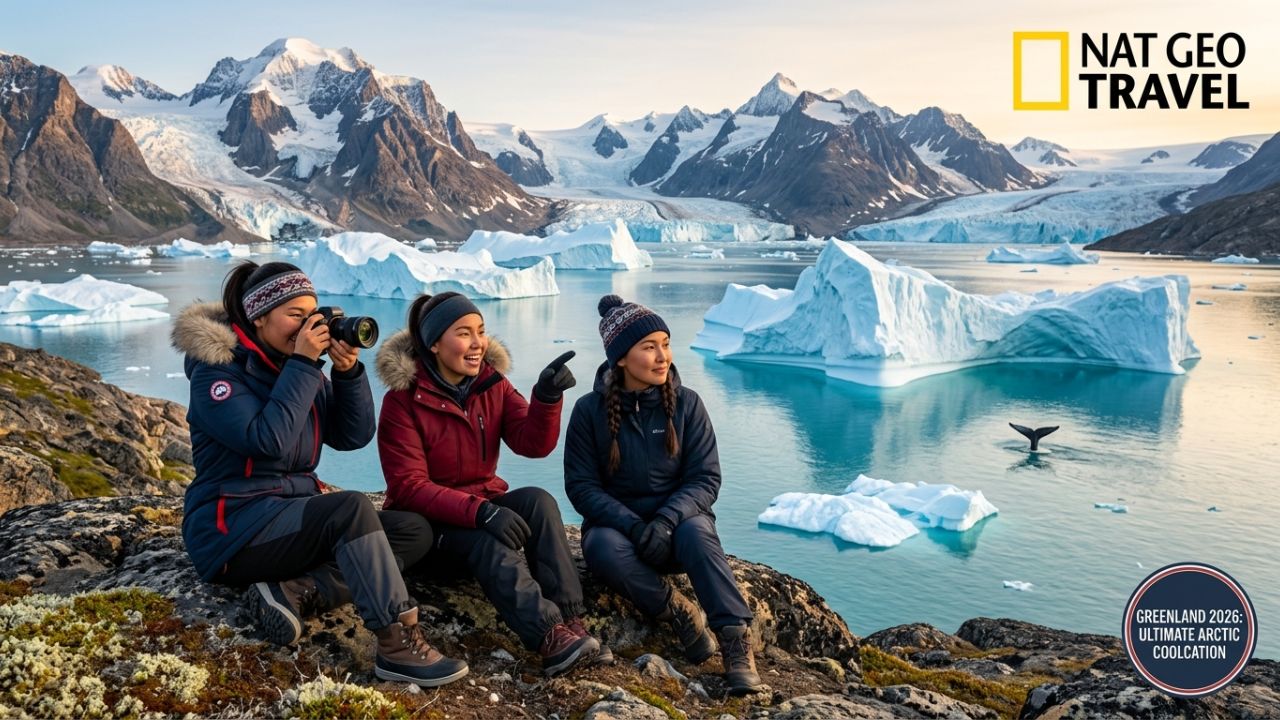
Image generated by AI
Aviation Updates: Greenland and Chile Emerge as Ultimate Escapes from Summer Travel Chaos in 2026
While massive flight cancellations paralyze overheated Northern Hemisphere transit hubs, strategic travelers are successfully pioneering the "coolcation" movement, seeking refuge in the pristine Arctic landscapes of Greenland and the towering peaks of Patagonia.
Image generated by AI
As mainstream airline news heavily documents an unprecedented wave of peak-summer airport disruptions and crippling flight cancellations, high-end international travelers are actively abandoning traditional tropical destinations. Driven by the agonizing realities of massive travel chaos and brutal global heatwaves, a highly sophisticated travel trend has officially dominated 2026: the "Coolcation." According to the highly anticipated Top 15 Coolcation Destinations in the Americas and Caribbean for 2026 report by Travel And Tour World (TTW), tourists are actively prioritizing colder, highly stable environments. Leading this massive geographic shift, Greenland has successfully secured the impressive #4 ranking, officially leaving behind highly competitive nature destinations across Chile, Ecuador, Brazil, Costa Rica, and Peru as the most dramatic coolcation environment across the Americas. By shifting focus toward these specialized, low-density regions, travelers are guaranteeing absolute climate comfort while effectively bypassing the severe transit meltdowns currently devastating traditional summer networks.
Expanded Overview: The Rise of Cold Climate Tourism
The global travel industry is currently undergoing a massive structural transformation. As continuous aviation updates confirm the operational collapse of mass-market summer hubs, "coolcation travel" has evolved from a niche preference into a primary defense strategy.
Tourists are deliberately avoiding overcrowded, heat-intensive zones, choosing instead to target high-altitude capitals, deep mist-covered cloud forests, and brutal icy frontiers. While Canada, the United States, and Mexico secured the top three spots in TTW’s ranking due to their massive aviation networks, Greenland’s #4 position is incredibly significant. Greenland offers the purest, most extreme coolcation environment in the Western Hemisphere. Although international connectivity remains challenging—mostly requiring specialized transit through Iceland or Denmark—its absolute exclusivity perfectly protects its delicate Arctic ecosystem from the mass over-tourism and transit gridlock currently crushing the rest of the world.
Section-Wise Breakdown: Greenland's Arctic Sanctuary
Greenland represents the absolute pinnacle of cold-climate tourism, operating as a massive island positioned squarely between the Arctic and Atlantic Oceans.
The capital city of Nuuk serves as the cultural heart of the nation, boasting temperatures that rarely exceed 15°C, ensuring visitors experience stunning fjords and pristine waterfront districts without heat stress. Further north, Ilulissat dominates the global travel imagination with its UNESCO World Heritage Icefjord, where towering glaciers continually calve massive icebergs into Disko Bay. For extreme adventure, Sisimiut, located just above the Arctic Circle, provides world-class dog sledding and rugged mountain hiking. Meanwhile, Tasiilaq in eastern Greenland offers highly isolated, culturally authentic Inuit experiences, and Kangerlussuaq serves as the ultimate scientific gateway for expeditions directly onto the ancient Greenland Ice Sheet.
Section-Wise Breakdown: The Andes and Patagonia
Beyond the Arctic, South America offers highly diverse coolcation profiles driven by extreme altitude and southern latitudes.
Chile dominates the southern temperate zone, anchored by Torres del Paine National Park in Patagonia, where freezing glaciers and iconic granite peaks maintain highly stable cool temperatures. The misty forests of Pucón, Valdivia, and Chiloé further enhance Chile's cool-weather dominance. Further north, Peru utilizes the extreme altitude of the Andes to deliver deep climatic comfort. The historic city of Cusco, alongside Arequipa, Huaraz (Cordillera Blanca), and the Sacred Valley (Urubamba, Ollantaytambo), provides perfectly cool, dry mountain air flawlessly blended with ancient cultural heritage. Similarly, Ecuador leverages high-altitude geography in Quito, Cuenca, Otavalo, and Baños de Agua Santa to maintain a permanent spring-like climate despite its equatorial location.
Section-Wise Breakdown: Cloud Forests and Highlands
Even traditionally tropical nations have successfully engineered highly lucrative coolcation ecosystems.
Costa Rica, famous for tropical beaches, successfully markets Monteverde Cloud Forest, San Gerardo de Dota, and Bajos del Toro, where intense high-altitude mist and deep forest canopies maintain highly refreshing temperatures year-round. In Brazil, the southern highlands of Serra Catarinense, including Campos do Jordão, Gramado, and Curitiba, offer an incredibly surprising cool escape, featuring alpine architecture and stark seasonal cooling that heavily contrasts with the intense Amazonian heat.
Flight Details: Coolcation Travel Matrices
The exact climatic telemetry, accommodation strategies, and aviation logistics required to navigate these highly specialized coolcation environments have been consolidated into the mandatory matrices below.
Table 1: Coolcation Climates
| Country | Main Coolcation Destination | Temperature Range | Key Climate Type | Secondary Cool Spots |
|---|---|---|---|---|
| Greenland | Nuuk | -9°C to 15°C | Arctic coastal | Ilulissat, Sisimiut, Tasiilaq, Kangerlussuaq |
| Chile | Torres del Paine | 5°C–22°C | Glacial mountain | Puerto Natales, Pucón, Valdivia, Chiloé |
| Ecuador | Quito | 9°C–21°C | Highland temperate | Cuenca, Otavalo, Baños, Mindo |
| Brazil | Serra Catarinense | 5°C–22°C | Subtropical highland | Campos do Jordão, Gramado, Canela, Curitiba |
| Costa Rica | Monteverde | 14°C–24°C | Cloud forest | San Gerardo, Bajos del Toro, Vara Blanca, Cartago |
| Peru | Cusco | 4°C–21°C | Andean high altitude | Arequipa, Huaraz, Puno, Sacred Valley |
Table 2: Where to Stay and How to Visit
| Country | Recommended Stay Locations | Best Areas/Hotels to Stay | How to Visit the Destinations | Suggested Duration for U.S. Travelers |
|---|---|---|---|---|
| Greenland | Nuuk, Ilulissat, Sisimiut | Nuuk waterfront hotels, Ilulissat iceberg-view lodges | Fly via Copenhagen/Reykjavik. Domestic travel via small aircraft/ferries | 7–10 days |
| Chile | Santiago, Puerto Natales, Punta Arenas | Lastarria (Santiago), Puerto Natales waterfront, eco-camps | International to Santiago/Punta Arenas. Domestic flights to Patagonia | 8–12 days |
| Ecuador | Quito, Cuenca, Baños | Historic Quito hotels, Cuenca boutique stays, Baños eco-lodges | Fly to Quito. Buses, private transfers, domestic flights between cities | 6–8 days |
| Brazil | Curitiba, Gramado, Campos do Jordão | Curitiba city hotels, Gramado alpine inns, Campos resorts | Fly to São Paulo/Curitiba. Rental cars/buses to southern highlands | 5–7 days |
| Costa Rica | San José, Monteverde, La Fortuna | San José transit hotels, Monteverde lodges, Arenal eco-resorts | Fly to San José. 4x4 vehicles, shuttle services for mountain regions | 6–9 days |
| Peru | Cusco, Sacred Valley, Arequipa | Cusco historic center hotels, Sacred Valley boutique lodges | Fly to Lima then Cusco. Trains, buses, guided tours for Andean routes | 7–10 days |
Table 3: U.S. Flight Access Overview
| Country | Main International Gateway | Typical Flight Duration from U.S. |
|---|---|---|
| Greenland | Nuuk / Ilulissat (via Iceland or Denmark) | 10–14 hours (with connections) |
| Chile | Santiago International Airport | 10–14 hours |
| Ecuador | Quito International Airport | 6–8 hours |
| Brazil | São Paulo / Curitiba | 8–11 hours |
| Costa Rica | San José Airport | 4–6 hours |
| Peru | Lima International Airport | 8–10 hours |
Table 4: Recommended Accommodation Types
| Traveler Type | Best Accommodation Choice |
|---|---|
| Budget Travelers | Hostels, guesthouses, local inns |
| Mid-Range Travelers | Boutique hotels, eco-lodges |
| Luxury Travelers | Arctic lodges, mountain resorts, 5-star hotels |
| Adventure Travelers | Expedition camps and remote stays |
| Cultural Travelers | Heritage hotels and colonial stays |
| Eco Travelers | Sustainable lodges and nature retreats |
Table 5: Best Time to Visit
| Country | Best Travel Season |
|---|---|
| Greenland | June–September |
| Chile | October–March (Patagonia season) |
| Ecuador | Year-round (best highlands: June–September) |
| Brazil | May–September (southern regions) |
| Costa Rica | December–April |
| Peru | May–October |
Passenger Impact: Mitigating Mass Transit Stress
For elite travelers, executing a specialized coolcation is the ultimate defense mechanism against summer travel chaos.
By actively choosing highly remote destinations like Ilulissat or Torres del Paine, passengers effectively decouple themselves from the massive, highly congested aviation corridors of Europe and North America. While specialized transit into Greenland or Patagonia requires meticulous logistical planning and premium capital, it completely shields the traveler from the anxiety of systemic flight cancellations and massively overcrowded international mega-hubs.
Industry Analysis: The Evolution of Global Demand
According to elite tourism strategists, this massive shift toward coolcations is a permanent evolution in traveler behavior.
Anup Kumar Keshan, Founder and Editor-in-Chief of Travel And Tour World, explicitly confirmed this reality. “As rising temperatures, extreme heat events, and changing climate patterns influence global travel decisions, an increasing number of travelers are seeking cooler environments, nature-driven adventures, and culturally immersive escapes,” Keshan stated. “Rising fuel costs, geopolitical tensions, extreme heat, and overtourism are driving travelers toward cooler, affordable, nature-focused destinations across the Americas and Caribbean in 2026.” By prioritizing ecological preservation and highly stable climates, these niche destinations are capturing the most lucrative demographics in modern global tourism.
Conclusion: A New Era of Climate-Driven Tourism
Ultimately, Greenland’s massive rise as a premier coolcation destination perfectly highlights how extreme geography and climate stability are permanently reshaping the future of global travel in 2026. As international passengers aggressively seek refuge from the catastrophic travel chaos and brutal heatwaves crippling traditional summer resorts, the icy fjords of Greenland, the towering peaks of Chilean Patagonia, and the high-altitude sanctuaries of Peru offer an incredibly powerful alternative. By deliberately targeting these diverse, low-density cool-weather corridors, travelers ensure they experience highly immersive, nature-driven journeys perfectly shielded from the relentless disruptions dominating the modern aviation grid.
Key Takeaways
- Coolcation Dominance: Travelers are heavily pivoting away from heat-intensive destinations to prioritize coolcations, seeking stable climates and lower tourist density to avoid severe summer travel chaos.
- Greenland's Rank: Greenland officially ranks #4 on TTW’s Top 15 Coolcation Destinations, offering extreme Arctic immersion via Nuuk, Ilulissat, and the massive Greenland Ice Sheet.
- Andean Refuges: Chile (Torres del Paine), Peru (Cusco), and Ecuador (Quito) utilize extreme southern latitudes and high-altitude geography to deliver perfectly cool, highly stable climates.
- Unexpected Escapes: Traditionally tropical nations like Costa Rica (Monteverde Cloud Forest) and Brazil (Serra Catarinense) provide highly lucrative, high-altitude cool-weather ecosystems.
- Strategic Avoidance: By traveling to these remote, highly specialized coolcation zones, tourists successfully bypass the severe flight cancellations plaguing overcrowded mainstream transit hubs.
FAQ: Americas Coolcation Travel 2026
Why did Greenland rank #4 on the TTW Coolcation list? Greenland secured the #4 position because it offers the purest, most extreme Arctic environment in the Western Hemisphere, though its ranking is slightly moderated by the complex aviation logistics required to reach its remote fjords.
What are the best coolcation spots in South America? Chile's Torres del Paine (Patagonia) and Peru's Cusco (Andes) are premier coolcation destinations, heavily utilizing extreme latitudes and high altitudes to provide stable, cool climates year-round.
How do coolcations help travelers avoid airport disruptions? By specifically targeting remote, specialized destinations rather than highly congested mass-market summer hubs, travelers effectively bypass the massive peak-season transit bottlenecks and flight cancellations dominating traditional aviation corridors.
Related Travel Guides
San Diego Airport TSA Fourth of July Travel Chaos 2026
Cape Town Winter Tourism Boom Travel Chaos 2026
Greenland Ice Sheet Expedition Packing Guide 2026
Disclaimer: This article is strictly for informational purposes. The coolcation rankings (TTW Top 15 2026), specific destination temperature ranges (-9°C to 24°C), and aviation logistics (flight durations, Iceland/Denmark connections) are based on the Travel And Tour World 2026 Coolcation Travel Research Report at the time of publication. International aviation connectivity, regional climate patterns, and domestic transportation availability (ferries, helicopters, local flights) are highly dynamic and subject to continuous modification. Travelers must explicitly verify exact flight routings, seasonal weather conditions, and necessary travel documentation directly with their chosen airline and local tourism boards prior to travel.
Disclaimer
This article is for informational and educational purposes only. It does not constitute legal, financial, or professional advice. While we strive to provide accurate and up-to-date information, travel policies, regulations, and conditions change rapidly. Always verify information with official sources before making travel decisions. Nomad Lawyer makes no representations about the accuracy, reliability, completeness, or suitability of the information provided. Readers should consult qualified professionals for advice specific to their circumstances. The views expressed in this article are those of the author and do not necessarily reflect the views of Nomad Lawyer.
Preeti Gunjan
Contributor & Community Manager
A passionate traveller and community builder. Preeti helps grow the Nomad Lawyer community, fostering engagement and bringing the reader experience to life.
Learn more about our team →