
Greece Summer Tourism 2025: July and August Stays Reach 41.6% of Annual Total
New Eurostat data reveals Greece remains one of the EU's most seasonally dependent tourism markets, with nearly 42% of all 2025 overnight stays concentrated in July and August.

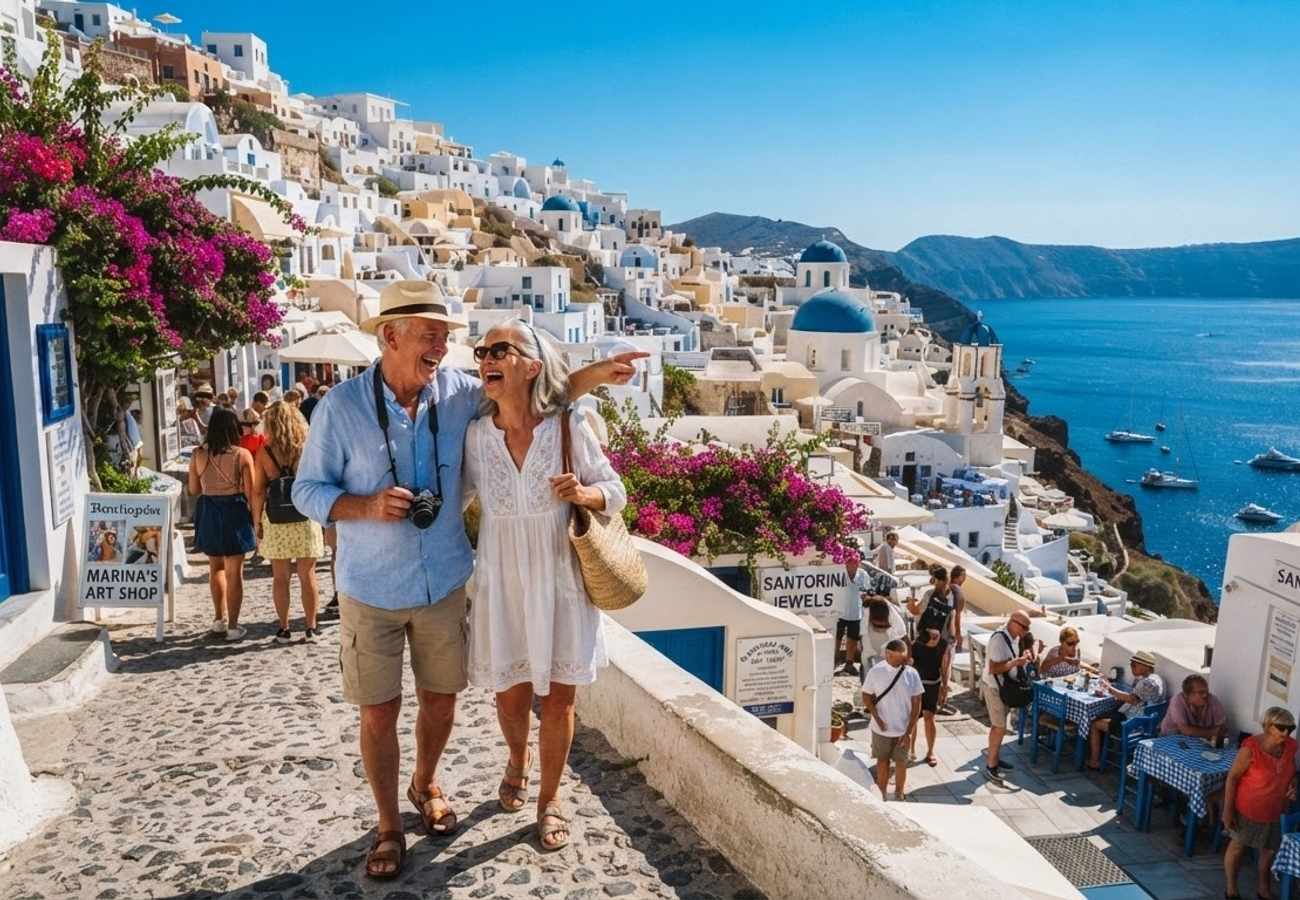
Image generated by AI
Recent data from Eurostat highlights a persistent trend in the Greek travel sector: an overwhelming reliance on the peak summer window. In 2025, 41.6% of all overnight stays in tourist accommodations occurred exclusively during July and August.
This concentration identifies Greece as one of the most seasonally volatile tourism markets in the European Union. While the volume of visitors remains a primary economic driver, the disparity between the summer surge and the winter lull presents a complex operational challenge for the nation's hospitality infrastructure.
Seasonal Concentration in the European Union
The data places Greece in the top three for seasonal concentration across the EU. This suggests that while the Mediterranean appeal remains an unmatched draw, the "sun and sea" product continues to overshadow other potential travel drivers.
Greece follows only Croatia and Bulgaria in terms of summer-heavy visitor distribution. This pattern is common across Southern and Southeastern Europe, where coastal geography and climate dictate travel behavior.
Comparative Seasonal Concentration (July & August 2025)
| Country / Region | Percentage of Annual Overnight Stays |
|---|---|
| Croatia | 54.5% |
| Bulgaria | 43.4% |
| Greece | 41.6% |
| European Union Average | 31.1% |
The Magnitude of the Peak-to-Trough Gap
The most striking aspect of the Eurostat findings is the sheer scale of fluctuation between the quietest and busiest months. In Greece, the number of overnight stays recorded in August was 20.5 times higher than those registered in January.
To put this in perspective, the broader European Union experienced a much milder swing. Across the EU, August stays were only 3.6 times higher than January stays. This confirms that Greece experiences a level of seasonal volatility far exceeding the continental average.
Economic Implications for the Hospitality Sector
The concentration of demand into a 60-day window creates a high-pressure environment for Greek tourism operators.
- Revenue Density: Hotels, resorts, and restaurants generate the vast majority of their annual turnover in two months, necessitating high efficiency and maximum occupancy.
- Employment Volatility: The industry relies heavily on seasonal contracts, leading to significant employment fluctuations between August and January.
- Infrastructure Strain: Island destinations and coastal hubs face intense pressure on utilities, transport, and public services during the peak surge.
- Underutilization: Conversely, high-quality infrastructure often sits dormant during the winter, representing a loss of potential economic utility.
Strategic Shifts Toward Year-Round Tourism
To mitigate these risks, Greek authorities and tourism boards are attempting to pivot away from a purely seasonal model. The goal is to transform Greece into a 12-month destination by diversifying the "travel product."
Current diversification strategies focus on:
- Cultural and Heritage Tourism: Promoting archaeological sites and city breaks in Athens and Thessaloniki during the shoulder seasons.
- Gastronomy and Wellness: Leveraging the Mediterranean diet and wellness retreats to attract health-conscious travelers in spring and autumn.
- Nature-Based Travel: Encouraging hiking, bird watching, and eco-tourism in the mountainous interior.
Despite these efforts, the 2025 data proves that the traditional summer holiday remains the dominant force in the Greek travel economy.
Drivers of Travel Behavior
Eurostat attributes these patterns to a combination of environmental and social factors. Climate remains the primary driver, as the Mediterranean's warmth is the main attraction for Northern European travelers.
Additionally, the synchronization of school holidays and corporate annual leave across the EU reinforces the July-August peak. These structural social patterns make it difficult for destinations to flatten the demand curve without significant shifts in how Europeans vacation.
The Greek tourism industry continues to balance the windfall of record-breaking summers against the systemic need for a more sustainable, year-round visitor economy.
Related Travel Guides
Disclaimer
This article is for informational and educational purposes only. It does not constitute legal, financial, or professional advice. While we strive to provide accurate and up-to-date information, travel policies, regulations, and conditions change rapidly. Always verify information with official sources before making travel decisions. Nomad Lawyer makes no representations about the accuracy, reliability, completeness, or suitability of the information provided. Readers should consult qualified professionals for advice specific to their circumstances. The views expressed in this article are those of the author and do not necessarily reflect the views of Nomad Lawyer.
Preeti Gunjan
Contributor & Community Manager
A passionate traveller and community builder. Preeti helps grow the Nomad Lawyer community, fostering engagement and bringing the reader experience to life.
Learn more about our team →