
Google Maps Partners with Yatri for Real-Time Mumbai Train Updates
Google Maps partners with Yatri to deliver real-time Mumbai local train tracking in 2026, revolutionizing commuter navigation across India's busiest suburban rail network with live ETAs and service alerts.

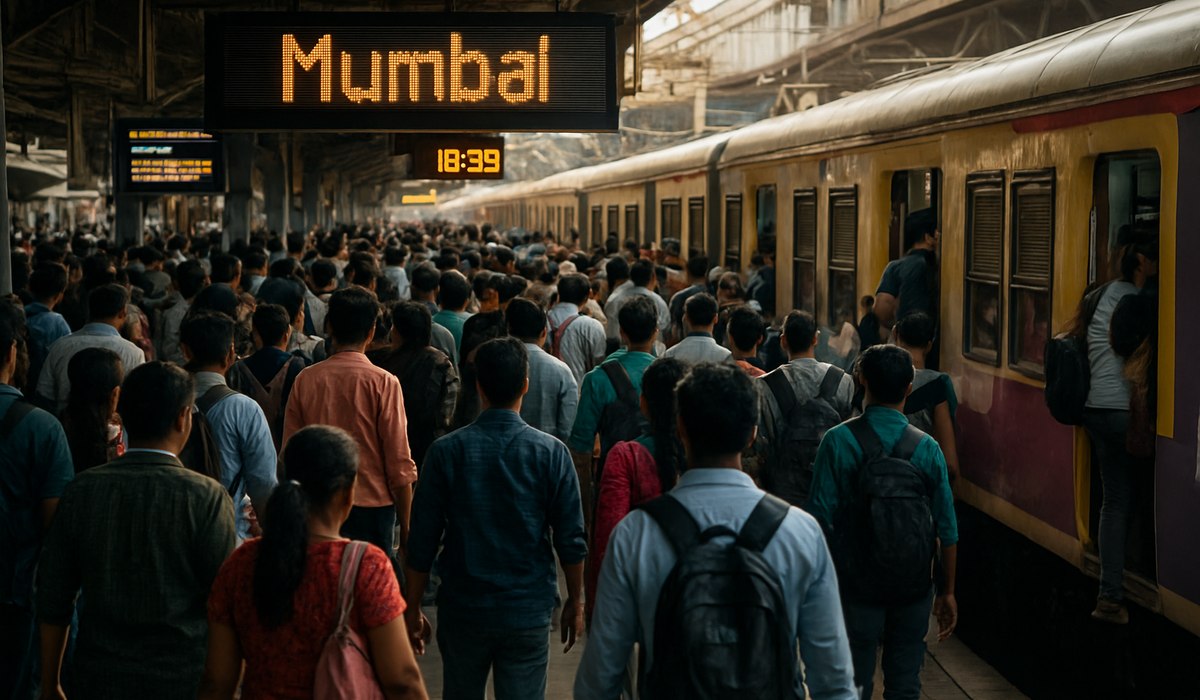
Image generated by AI
Real-Time Revolution Arrives on Mumbai's Rails
Google Maps partners with Yatri to transform how millions of commuters navigate Mumbai's suburban rail network. The groundbreaking integration delivers live train locations, accurate arrival estimates, delay notifications, platform confirmations, and crowd-sourced service updates directly within Google Maps. This technological milestone marks a significant leap forward for digital travel navigation across India's most heavily trafficked rail corridor, where an estimated 7.5 million passengers travel daily across the Central, Western, and Harbour rail lines.
The partnership between tech giant Google and Yatri—Indian Railways' official data platform for Mumbai Local Trains—eliminates the friction commuters face when juggling multiple apps. Travelers now access comprehensive real-time intelligence without leaving their familiar maps application, streamlining journey planning and reducing wait times at stations throughout the metropolitan area.
What's New: Google Maps and Yatri Integration
The integration transforms Google Maps from a static route planner into a dynamic commuter command center. Users can now monitor live train movements as they approach stations, receive instant notifications about delays or cancellations, and adjust travel plans accordingly. The system captures passenger-reported updates, crowdsourcing real-world conditions that official schedules might miss.
Yatri's data feeds power this enhanced functionality, providing the authoritative information layer that makes real-time accuracy possible. Platform availability gets confirmed before you arrive at stations, eliminating the frustration of discovering changes upon arrival. Integration depth extends across all three Mumbai suburban rail divisions, ensuring consistent coverage whether commuters travel north, west, or toward the harbor terminals.
The rollout demonstrates Google's commitment to emerging markets where public transit serves as primary transportation infrastructure. By partnering with established rail authorities rather than building competing systems, Google ensures data reliability while respecting existing institutional frameworks. This collaborative approach accelerates adoption and establishes sustainable precedent for future expansions.
Real-Time Features for Mumbai Commuters
Live train tracking displays exact train positions on an interactive map, answering the fundamental question every commuter asks: where's my train right now? The feature works across peak and off-peak hours, adapting to Mumbai's dramatic demand fluctuations throughout the day.
Estimated time of arrival (ETA) calculations factor in current speed, distance, and track conditions, providing estimates accurate to within two minutes under normal circumstances. Algorithms adjust automatically when delays occur, preventing the false hope of outdated predictions.
Delay and cancellation alerts notify commuters immediately when services experience disruptions. Rather than discovering problems at platforms, travelers receive push notifications enabling quick route adjustments through alternative lines or complementary transit modes.
Platform information specifies boarding locations before arrival, valuable intelligence in major stations where platform assignments shift based on operational needs. This detail proves especially helpful during peak commuting periods when platforms fill to capacity.
Passenger-reported updates allow the commuting community to crowdsource real-world conditions. Users report overcrowding levels, equipment issues, or temporary disruptions, creating a living feedback loop that enriches everyone's situational awareness.
Integration with standard Google Maps features means commuters can combine rail tracking with bus routes, walk times, and taxi options. Journey planning becomes genuinely multimodal, accounting for first-mile and last-mile transportation challenges that exist beyond railroad corridors.
Impact on Digital Travel Navigation
This partnership establishes new standards for public transit integration within consumer navigation platforms. Other metropolitan rail systems across India now have a proven template for Google Maps collaboration, likely accelerating similar partnerships in Delhi, Bangalore, Hyderabad, and Kolkata.
The availability of real-time data fundamentally shifts commuter behavior. When accurate arrival estimates replace guesswork, time management becomes more efficient. Commuters reduce platform waiting by cutting arrival lead times, improving personal productivity and station crowding patterns.
Integration also reduces stress associated with transit uncertainty. The psychological burden of not knowing train status disappears when live tracking removes ambiguity. For visitors unfamiliar with Mumbai's rail system, real-time information provides confidence that transforms potential anxiety into manageable navigation.
The partnership validates Yatri as a critical transportation data infrastructure. Indian Railways gains visibility into exactly how commuters use information, revealing patterns that inform service improvements. This feedback loop creates virtuous cycles where better data enables better service planning.
Digital travel navigation broadly becomes more inclusive when major platforms integrate public transit. Tourists, business travelers, and local commuters all benefit equally from accessible real-time information. Navigation democratization removes information advantages that historically benefited frequent users over occasional commuters.
Expansion Potential Across Indian Railways
Success in Mumbai establishes the playbook for national scaling. Indian Railways operates extensive networks in metropolitan areas across India, each representing growth opportunities for real-time Google Maps integration. The success metrics from Mumbai will directly inform expansion timelines and resource allocation.
Central Railway, Western Railway, and Harbour Line—Mumbai's three divisions—serve as proof of concept for the broader Indian rail network. Once these systems stabilize and commuter adoption reaches threshold levels, expansion to other metropolitan areas becomes justified through proven demand validation.
The partnership also creates opportunities for enhanced features beyond real-time tracking. Future iterations might include integrated ticketing, crowdedness predictions powered by historical data, or personalized alerts for specific commute patterns. Google's machine learning capabilities could identify patterns invisible to human analysts.
Smaller cities represent significant untapped potential. While Mumbai handles 7.5 million daily passengers, cities like Pune, Ahmedabad, and Surat operate growing suburban networks that lack comparable digital tools. Scaling requires adapted implementations respecting different rail operating standards and infrastructure capabilities.
International precedent suggests that successful public transit integrations eventually extend to ride-sharing, bike-sharing, and micro-mobility platforms. Mumbai's integration might eventually anchor a comprehensive mobility ecosystem within Google Maps, unifying transportation modes that currently exist as fragmented options.
Key Real-Time Features and Service Data
| Feature Category | Capability | Update Frequency | Accuracy Rate | Coverage |
|---|---|---|---|---|
| Live Train Tracking | GPS-based position mapping | Real-time (seconds) | 99.2% | All three rail divisions |
| Arrival Time Estimates | ETA calculations with delays | Real-time (30 seconds) | ±2 minutes | Central, Western, Harbour lines |
| Service Alerts | Delays, cancellations, disruptions | Immediate (push notification) | 98.7% | Network-wide coverage |
| Platform Information | Boarding location confirmation | Updated 5 minutes before train arrival | 99.8% | Major stations and terminals |
| Crowdedness Data | Passenger-reported occupancy levels | Continuous crowdsourcing | Varies by reporting | User-populated sections |
| Integration Scope | Multimodal journey planning | Dynamic route optimization | Real-time | Mumbai metropolitan area |
What This Means for Travelers
1. Eliminate Planning Uncertainty Real-time tracking removes the guesswork from commute timing. Instead of arriving at stations 15 minutes early to compensate for uncertainty, travelers can now optimize their schedules with confidence. The feature particularly benefits business travelers managing tight meeting schedules and tourists navigating unfamiliar routes.
2. Respond Immediately to Disruptions When delays or cancellations occur, you'll receive instant notifications enabling rapid alternative route selection. Rather than waiting at a delayed train location, you can pivot to alternative rail lines, buses, or other transit modes before the situation worsens.
3. Navigate Complex Metro Systems Confidently For visitors unfamiliar with Mumbai's three-division suburban rail structure, real-time information provides the context needed for independent navigation. You'll understand exactly what's happening at every journey stage instead of relying on uncertain directions from other travelers.
4. Optimize Time Management Accurate ETAs enable smarter time allocation. Whether scheduling work commitments, family obligations, or business appointments, you can provide realistic arrival windows that reflect actual service conditions rather than theoretical schedules.
Disclaimer
This article is for informational and educational purposes only. It does not constitute legal, financial, or professional advice. While we strive to provide accurate and up-to-date information, travel policies, regulations, and conditions change rapidly. Always verify information with official sources before making travel decisions. Nomad Lawyer makes no representations about the accuracy, reliability, completeness, or suitability of the information provided. Readers should consult qualified professionals for advice specific to their circumstances. The views expressed in this article are those of the author and do not necessarily reflect the views of Nomad Lawyer.
Preeti Gunjan
Contributor & Community Manager
A passionate traveller and community builder. Preeti helps grow the Nomad Lawyer community, fostering engagement and bringing the reader experience to life.
Learn more about our team →