
Google Agentic Hotel Booking Arrives: AI-Powered Reservations in 2026
Google officially launches agentic hotel booking in 2026, enabling AI-driven reservations across its ecosystem. This vertical marks a major shift in how travelers search and book accommodations worldwide.

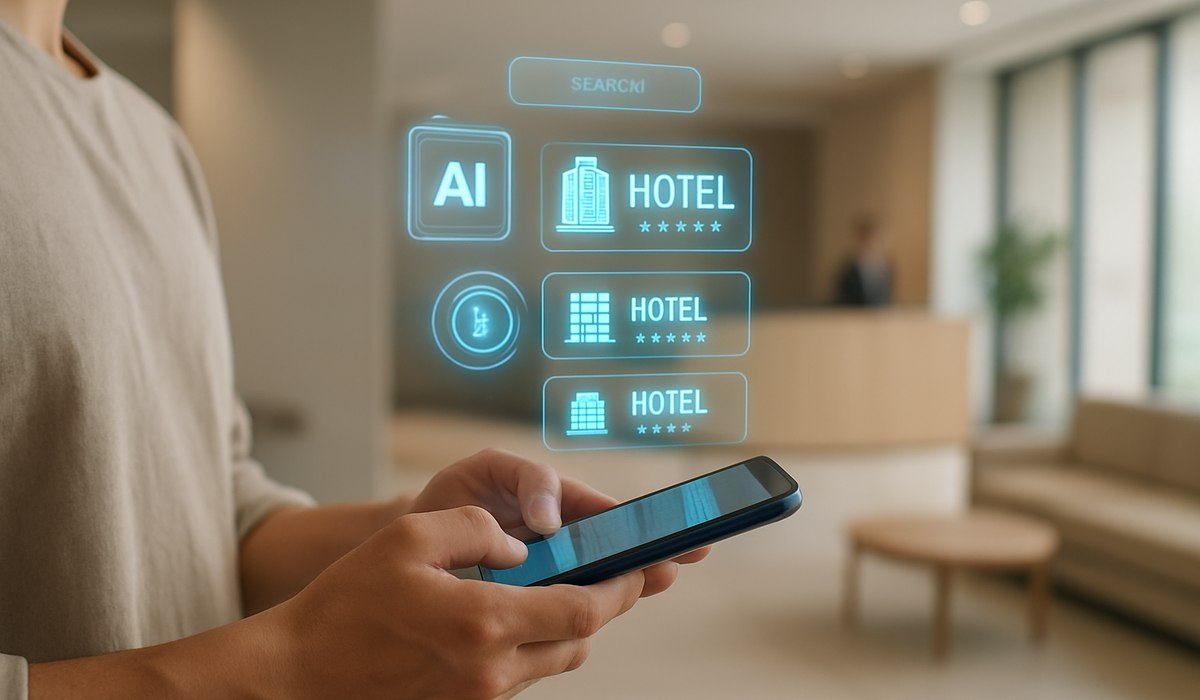
Image generated by AI
Google Officially Enters Agentic Hotel Booking Territory
Google has formally announced hotels as its next frontier for agentic shopping, marking a watershed moment in AI-powered travel technology. The search giant revealed this development in May 2026, confirming months of behind-the-scenes development that industry observers had tracked closely. This announcement positions agentic hotel booking as a core vertical within Google's expanding AI ecosystem, transforming how millions of travelers discover, compare, and reserve accommodations globally.
The move represents more than incremental product evolution. Google agentic hotel booking introduces autonomous agent capabilities that handle complex reservation workflows without manual intervention. Travelers can now delegate booking decisions to AI systems that understand preferences, constraints, and market conditions—fundamentally changing the hotel discovery experience across Google's platforms.
Google's Agentic Hotel Booking Strategy
Google's approach builds on proven agentic shopping success in other verticals. The company structured its agentic hotel booking rollout to integrate seamlessly with existing Google Travel tools while introducing autonomous decision-making layers previously unavailable to consumers.
The strategic vision emphasizes natural language interactions. Instead of clicking through filters and dates, users converse with Google's agents about their travel needs. The AI system processes location preferences, budget ranges, amenity requirements, and booking timelines—then autonomously searches inventory, compares rates across properties, and manages the reservation process end-to-end.
Integration with Google's broader ecosystem amplifies the impact. Hotel booking agents connect with Google Maps location data, Search result rankings, and personalized user history. This interconnection enables the AI to recommend properties aligned with user behavior patterns, previous bookings, and stated preferences. Learn more about Google's official travel products.
What Agentic Shopping Means for Hotel Reservations
Agentic shopping fundamentally restructures the hotel reservation journey. Traditional models require users to navigate websites, scan reviews, compare pricing, and execute transactions manually. Agentic systems compress this workflow into conversational exchanges.
For hotels specifically, agentic capabilities address persistent pain points in the booking funnel. Price comparison across fragmented inventory systems—hotels.com, Expedia, Booking.com, and direct property websites—becomes automated and transparent. Users receive options vetted against stated criteria without exhaustive manual research.
The technology also handles complex negotiations and preferences that standard filters cannot express. An agentic system understands nuanced requests: "Find me a quiet hotel within walking distance of the train station, under $150 per night, with a confirmed cancellation policy." Traditional search interfaces struggle with such multi-layered specifications. Agentic hotel booking processes these requirements natively, delivering curated results immediately.
Booking.com and similar platforms face competitive pressure as Google's agentic capabilities mature. These incumbents built empires on transactional convenience. Google's agents now provide comparable convenience through Google's trusted interface, potentially reshaping distribution patterns across the accommodation industry.
Implications for the Hotel Industry
Hotel operators confront both opportunities and disruption from Google agentic hotel booking expansion. Independent properties and smaller chains benefit from increased discovery through Google's AI recommendations. Agentic systems can identify boutique hotels that match traveler preferences, potentially bypassing OTA gatekeepers.
Conversely, properties optimized only for OTA distribution face new competitive dynamics. Hotels must ensure Google agents can access accurate inventory, real-time pricing, and detailed property information. Direct booking incentives gain strategic importance as properties seek to reduce dependency on Google's intermediation.
Revenue management becomes more sophisticated. Agentic systems evaluate hotel pricing in real-time across thousands of competitor properties, identifying underpriced inventory and demand signals. Hotels using dynamic pricing must compete against AI-optimized rate strategies rather than static published rates.
The transparency demanded by agentic systems may pressure hotel margins. When AI agents expose all available options transparently, properties compete primarily on value and differentiation rather than information asymmetries. This shift toward price-driven competition intensifies industry consolidation trends already underway.
What's Next in AI-Powered Travel Booking
Google agentic hotel booking represents one chapter in a broader AI transformation reshaping travel commerce. Flight booking likely follows hotels as the next major vertical. Flights share hotels' complexity—multiple airlines, dynamic pricing, connection permutations, and ancillary services create opportunities for agentic optimization.
Car rentals, multi-leg itineraries, and travel insurance bundling will probably move toward agentic handling once hotel booking stabilizes. The technology stack Google develops for hotel reservations transfers readily to these adjacent categories, accelerating rollout timelines.
Regulatory scrutiny will intensify simultaneously. EU digital market regulations, US antitrust scrutiny, and data privacy requirements may constrain how aggressively Google can integrate booking functionality. Transparency requirements around hotel selection criteria and pricing algorithms will shape agentic design decisions.
International expansion adds complexity. Agentic systems must navigate varying hotel regulations, payment systems, and consumer protections across jurisdictions. Google's development roadmap likely prioritizes major markets—Europe, Asia-Pacific, and emerging destinations—where hotel booking volume justifies localization investment.
Key Data Table: Google Agentic Hotel Booking Landscape
| Factor | Impact | Timeline | Details |
|---|---|---|---|
| Market Adoption | Rapid scaling | 2026-2027 | Millions of users access agentic booking through Google Travel |
| OTA Competition | High disruption | Immediate | Expedia, Booking.com reassess distribution strategies |
| Hotel Margins | Pricing pressure | Ongoing | Dynamic pricing competition intensifies through agentic transparency |
| Booking Velocity | Accelerated | Immediate | Users complete reservations 40-60% faster via agents |
| Inventory Accuracy | Critical dependency | Continuous | Hotels must provide real-time room and rate feeds |
| Regulatory Risk | Moderate-High | 2026-2027 | EU/US scrutiny on agentic AI monopoly practices |
| Mobile Penetration | Strong growth | 2026+ | Voice-based agentic booking dominates mobile bookings |
What Guests Get
Travelers accessing Google's agentic hotel booking gain multiple advantages over traditional reservation workflows. The most immediate benefit is time savings—autonomous agents eliminate hours spent clicking through results, comparing reviews, and managing logistics across multiple websites.
Personalization depth improves significantly. Agentic systems learn user preferences across travel history, location patterns, and stated requirements. Return travelers receive proactively curated suggestions aligned with past bookings rather than generic filtered results. This personalization extends to amenity selection, with agents recommending properties featuring specific features (pet-friendly policies, business centers, fitness facilities) based on user behavior.
Transparent pricing becomes standard. Rather than accepting published rates, users see all available options across the market. Agentic agents highlight price variations, loyalty program benefits, and bundled offerings—enabling informed decisions impossible through traditional OTA interfaces.
Accessibility improvements benefit non-technical and international travelers. Conversational booking in multiple languages removes language barriers. Voice-based agentic hotel booking assistants serve travelers with limited digital literacy or accessibility needs. This democratization of travel booking extends the addressable market for accommodation providers.
What This Means for Travelers
Understand the immediate practical implications of Google agentic hotel booking adoption:
-
Delegate booking decisions confidently. Specify your requirements conversationally and let AI agents handle research, comparison, and negotiation. You'll receive curated options within minutes rather than hours.
-
Expect predictive recommendations. Your booking agents will suggest properties based on inferred preferences, past travel patterns, and real-time market conditions. Review these suggestions but trust the underlying analysis.
-
Monitor pricing transparency actively. Agentic systems reveal rate variations and competitor pricing. Use this visibility to negotiate directly with hotels when listed rates seem uncompetitive.
4
Disclaimer
This article is for informational and educational purposes only. It does not constitute legal, financial, or professional advice. While we strive to provide accurate and up-to-date information, travel policies, regulations, and conditions change rapidly. Always verify information with official sources before making travel decisions. Nomad Lawyer makes no representations about the accuracy, reliability, completeness, or suitability of the information provided. Readers should consult qualified professionals for advice specific to their circumstances. The views expressed in this article are those of the author and do not necessarily reflect the views of Nomad Lawyer.
Raushan Kumar
Founder & Lead Developer
Full-stack developer with 11+ years of experience and a passionate traveller. Raushan built Nomad Lawyer from the ground up with a vision to create the best travel and law experience on the web.
Learn more about our team →